Introducing the MAC Modular Armored Carrier
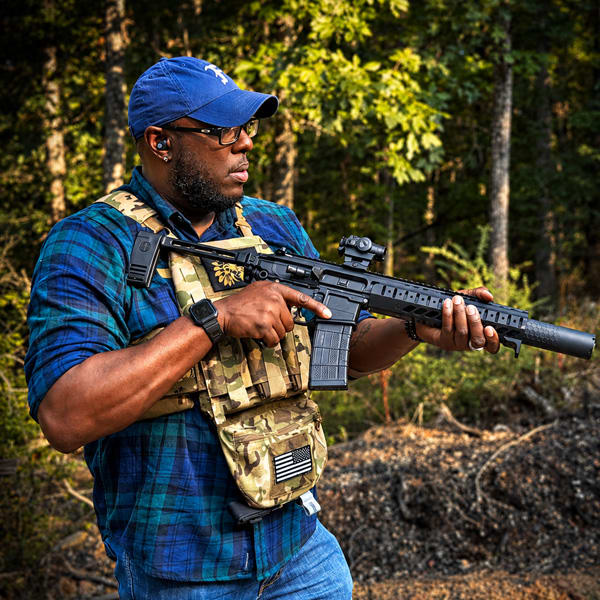
The video opens at Take Aim Range with a detailed look at the Classic Firearms Modular Armored Carrier, or MAC, alongside an HSGI battle belt and double decker taco mag pouches. The MAC is presented as a stiff, rugged plate carrier built from 600D Oxford fabric, contrasted with lighter carriers that may sacrifice durability. The host notes using this carrier for workouts and shooting sessions without noticeable wear, emphasizing its toughness. It is designed to fit medium to large plates, specifically 10x12 Premier Body Armor Level III plates. A spall liner is shown and explained as a layer intended to catch fragmentation from impacts rather than stop the bullet itself. The carrier features front and rear hook-and-loop panels for patches and identification, plus laser-cut MOLLE rated to hold up to 70 pounds of gear. An integrated admin pouch is highlighted for storing maps, paperwork, pens, or personal items. The segment transitions into demonstrating how to access the plate area via the bottom Velcro flap system, setting up the detailed installation steps that follow.
Front Plate Compartment, Spall Liner, and Cummerbund
The next section focuses on making the MAC easier to work on by folding the front flap’s lower Velcro tabs back and securing them so they stay out of the way. Attention shifts to the elastic MOLLE cummerbund, which combines stretch for breathing and movement with the ability to mount gear such as medical kits, magazine pouches, knives, or multi-tools. The presenter opens the lower flap to access the front plate compartment, revealing an additional internal material layer and Velcro straps designed to retain the armor plate and spall liner securely. A Premier Body Armor Level III plate and a spall liner dated 2016 are inserted, with emphasis on placing the plate high on the torso for proper coverage. The internal Velcro straps are tightened to lock the plate and liner in place, preventing bounce or shifting during dynamic activities like running with body armor. This segment underscores how the MAC balances comfort, flexibility, and secure retention of ballistic components.
Securing Plates, Rear Setup, and Quick-Release System
This segment demonstrates how the MAC uses multiple layers of Velcro flaps to secure the front plate and spall liner, creating a tight, stable fit and a clean exterior appearance. After the front is locked down, the presenter installs the rear plate and spall liner, mirroring the front’s retention system to ensure consistent protection on both sides. The video then explains how to adjust the cummerbund and elastic straps using a corded routing system that weaves through MOLLE-style loops. This design allows the carrier to be tailored to different body sizes, seasonal clothing layers, or mission requirements. A quick-release pull tab system is highlighted, enabling the user to rapidly shed the carrier in emergencies such as medical treatment or water hazards. Viewers familiar with military plate carriers will recognize the reassembly process, which is briefly acknowledged. The segment concludes with closing the rear flap, securing the side tabs, and preparing for a physical test of the carrier’s stability and function.
Fit, Mobility Test, and MAC Adjustability
The video continues with a combat roll demonstration to show how the MAC plate carrier behaves under sudden movement. During the roll, the carrier stays in place and the rear plate protects the user’s back without causing injury or uncomfortable shifting, illustrating proper fit and coverage. The presenter then revisits the MAC’s adjustability, explaining how height and width can be tuned using shoulder strap cords and elastic bands. These adjustments help position the plates correctly over vital organs while accommodating different torso lengths and body types. The elastic cummerbund and corded adjustment system allow fine-tuning for a snug but breathable fit, whether worn over light clothing or bulkier outerwear. This section reinforces that the MAC is designed not only for ballistic protection but also for mobility, enabling users to run, move, and perform dynamic tasks without the carrier bouncing or riding up. The focus remains on practical, real-world usability rather than purely static range use.
HSGI Loadout Details and Barrett M82 Giveaway
In the final portion, the presenter details a personal loadout built around HSGI (High Speed Gear) pouches mounted on the MAC and a padded belt. Taco and double-decker pouches are shown holding SureFeed AR magazines and FNX-45 Tactical pistol magazines, with an explanation of how the adjustable tension system lets these pouches securely retain a wide range of rifle magazines, including AK, AR, AR-10, M14, and SCAR mags. The padded belt and Cobra buckle are highlighted for comfort and security when carrying a full combat load. After covering the gear setup, the video shifts to a major promotion: a giveaway of a Barrett M82 .50 BMG rifle equipped with a Zeiss 4-16x50mm optic. Viewers are encouraged to visit ClassicFirearms.com to enter, subscribe to the channel, and enable notifications to stay updated on new products, armor offerings like the MAC, and future firearm giveaways.




















 Loading...