Recoil Basics and Pistol Stance Fundamentals
The video opens by addressing recoil management for new shooters, stressing that many people are more intimidated by the sound of an AR-15 than by its actual recoil. The focus then shifts to handgun control using an FNX-45 Tactical pistol equipped with a Trijicon RMR RM06 red dot. The importance of practicing with both optics and iron sights is emphasized so shooters can stay proficient regardless of setup. A basic fighting stance is demonstrated: the strong-side foot is slightly back, the body is bladed but stable, and the arms are fully extended without locking the elbows. Shoulder and upper body tension are used to absorb recoil, similar to bracing for a punch. The instructor explains how gun size, weight, and caliber affect felt recoil, noting that small, lightweight polymer pistols often kick more than heavier guns. High-recoil examples like the Desert Eagle .50 are mentioned to illustrate how larger calibers and lighter frames can dramatically increase recoil and the need for proper technique.
AR-15 Setup, Four Points of Contact, and Sling Use
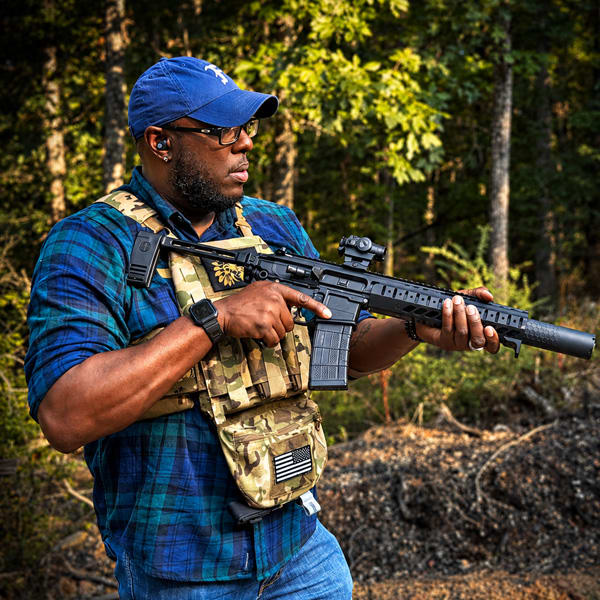
After demonstrating slow, controlled pistol shots from a staggered stance with the strong leg back, the video transitions to a basic AR-15 platform, specifically an LWRCI direct-impingement rifle. The rifle features an M-LOK rail, twist-fluted barrel, low-power variable optic, angled foregrip, and an A2-style muzzle device described as a compensator because of its top ports and closed bottom. Chambered in 5.56/.223, the rifle is shown to have very manageable recoil. The instructor highlights four key points of contact: stock to shoulder, firing hand on the grip, cheek weld on the stock, and the support hand on the forend. The support hand is called the most critical because it drives sight alignment, which ultimately determines hits. A squared stance, influenced by Marine Corps training, is recommended to maximize body armor coverage while still controlling recoil. The role of a sling is introduced, not only for stability but also for going hands-free, transitioning to a sidearm, and maintaining control of the carbine in dynamic situations.
Tight Slings and Pistol Caliber Carbines
The video expands on sling use by showing how a properly tightened sling dramatically increases stability on a carbine. With the sling adjusted snugly, the shooter can maintain a solid shooting position and manage recoil effectively, even with minimal grip from the strong hand. This technique is especially useful for longer-distance shots, such as Marine Corps known-distance courses out to 500 yards, where a stable platform is essential. The discussion then moves to pistol caliber carbines, using the Angstadt Arms UDP-9 with a pistol brace as an example. This compact platform offers rifle-like ergonomics and multiple points of contact while generating only pistol-level recoil. The UDP-9 is presented as an ideal option for shooters who want low recoil and fast follow-up shots in a small package. Adding a sling to a pistol caliber carbine is recommended to further enhance control, stability, and recoil management during rapid or sustained fire.
Barrett M107 Recoil Mitigation and Shooting Technique
Attention turns to extreme recoil management with the Barrett M107, a semi-automatic .50 BMG rifle weighing around 30 pounds with a 20-inch barrel. The rifle incorporates several recoil mitigation features, including heavy recoil springs under roughly 70 pounds of tension and a reciprocating barrel that moves under recoil to spread out the impulse. A large four-chamber muzzle brake vents gases to the sides, significantly reducing muzzle rise and rearward force. The video compares this brake to more common devices like the A2 birdcage and SureFire Warcomp, highlighting how different muzzle devices influence recoil characteristics. Despite the M107’s power, the instructor explains that with proper stance, solid shoulder placement, and familiarity with the rifle’s movement, shooters can achieve surprisingly fast and accurate follow-up shots. The segment reinforces that even very large rifles become manageable when weight, springs, muzzle devices, and shooter technique all work together.
Barrett Giveaway, Optic Setup, and Alex Zedra Collaboration
The final portion highlights a giveaway featuring a Barrett M107 equipped with an EOTech Vudu 3.5–18x optic, described as a powerful yet relatively easy rifle to shoot thanks to its recoil mitigation system. The host explains that the barrel’s reciprocation and robust recoil springs help tame the .50 BMG’s force, making the platform more approachable for trained shooters. A collaboration with Alex Zedra is promoted, noting her reputation from Call of Duty streams and real-world shooting skills. Viewers are told about a head-to-head run-and-gun video using multiple M107s, showcasing dynamic drills with the big rifles. To enter the giveaway, viewers are directed to ClassicFirearms.com, where they can follow listed entry methods and use the codeword “zedra” for extra entries. The video closes by inviting viewers to share their preferred methods of mitigating recoil in the comments, encouraging discussion about techniques and gear across different firearms platforms.



















 Loading...