Sig Spear .308 battle rifle overview and front-end setup
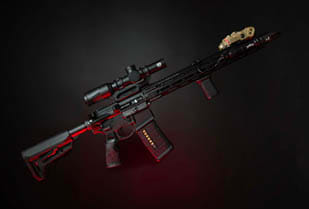
The video opens with a focused look at the Sig Spear configured as a modern .308 battle rifle. The host highlights enthusiasm for the platform and notes that it has been compared to other rifles in previous content, but here the emphasis is on a practical, real-world setup. At the muzzle, the factory Sig flash hider has been replaced with a SureFire three-prong flash hider to improve flash suppression and compatibility with SureFire accessories. Moving down the rail, the rifle wears a Cloud Defensive-style Rain weapon light, set up for both constant-on and momentary activation to support low-light use. Because the Spear’s rail is large and can be hard to manage, a Magpul XTM hand stop is added to give the support hand a consistent index point and better control. This front-end configuration is presented as a balanced approach for a .308 battle rifle intended for serious use rather than just range aesthetics.
Optic choices, stock configuration, magazines, and sling setup
Attention shifts to the Sig Spear’s top-end and rear configuration, starting with optics. The rifle is shown running an EOTech holographic sight paired with a flip-to-side magnifier, giving a fast dot for close work and magnification for mid-range engagements. The presenter explains that an ACOG or similar fixed-power optic could be a better choice if the rifle is expected to prioritize longer distances, underscoring that optic selection should match the intended role. At the rear, a Magpul SLM folding stock is installed, chosen for its compactness and ergonomics on a .308 platform. The stock’s size and folding capability affect how far back the optic can be mounted and how the rifle shoulders. Feeding the rifle is a 20-round Lancer “Gucci” magazine, while also noting compatibility with standard PMAGs. A Magpul sling is fitted to round out the setup, with the video briefly touching on sling attachment points and how the sling integrates with the overall handling of the rifle.
Ambidextrous controls and charging options on the Sig Spear
Later in the video, the focus returns to controls and handling, with a brief revisit of sling options leading into the Sig Spear’s ambidextrous features. The rifle is highlighted as being fully ambidextrous, catering to both right- and left-handed shooters and supporting modern manipulation techniques. A prominent feature is the large side charging handle, which allows the shooter to charge or clear the rifle without breaking cheek weld or coming off the optic. In addition to this side charger, the Spear retains a traditional rear AR-15/AR-10 style charging handle, giving users multiple ways to run the gun depending on preference, training background, or shooting position. This dual-charging arrangement is presented as a major ergonomic advantage, especially when compared to older battle rifle designs that lack such flexibility. The segment emphasizes that these ambidextrous controls contribute significantly to the Spear’s reputation as a refined, user-friendly .308 battle rifle platform.
XM7 program, .277 Fury role, and comparison to the SCAR
The discussion then broadens to the development context behind Sig’s newer battle rifle family. The video explains how the 6.8 cartridge, also known as .277 Fury, was developed for the XM7 program, which has since been adopted as the M7. This cartridge was specifically designed to better defeat Level IV body armor than legacy 5.56 NATO, addressing modern battlefield protection levels. The Sig Spear is positioned within this lineage, sharing design DNA with the military-focused platform while being chambered here in .308. The host compares the Spear to the FN SCAR, noting that the Spear is lighter and more completely ambidextrous, which improves handling and user adaptability. Performance is praised overall, with the implication that the Spear represents an evolution of the battle rifle concept. This segment ties the civilian .308 Spear setup back to the broader shift toward higher-pressure, armor-defeating cartridges and more ergonomic rifle designs in current military programs.
.277 Sig Fury versus .308 construction and safety warning
In the closing portion, the video focuses on ammunition specifics and an important safety warning. The presenter contrasts .277 Sig Fury with standard .308 Winchester/7.62 NATO, stressing that .277 Fury does not belong in this .308-chambered Sig Spear. Visual and construction differences are described to help viewers distinguish the rounds. The .308 round is shown with a polymer-tipped projectile and a conventional brass casing, representing a typical configuration for this rifle. By contrast, .277 Sig Fury uses a polymer tip, a brass body, and a steel end cap at the base of the case. This hybrid construction allows .277 Fury to run at higher pressures and achieve a better ballistic coefficient, resulting in hotter performance and improved armor penetration. The segment underscores that despite superficial similarities, these cartridges are not interchangeable, and loading .277 Fury into a .308 Spear would be unsafe and outside the rifle’s intended design.


















 Loading...