The video opens by positioning the Sig P365X Macro as a major evolution in the P365 family, aimed squarely at concealed carriers who want more capacity without moving to a bulky frame. The pistol is highlighted for its 17+1 capacity in a slim, compact package that still ends up smaller than a Glock 19. The host explains that this model effectively bridges the gap between the original P365 and the larger P320 or M18, giving users a middle-ground option that feels duty-capable yet remains easy to conceal. Early on, the discussion frames the Macro as a potential game-changer in the carry world, suggesting it could replace many shooters’ current everyday carry pistols by combining micro-compact dimensions with near-compact capacity.
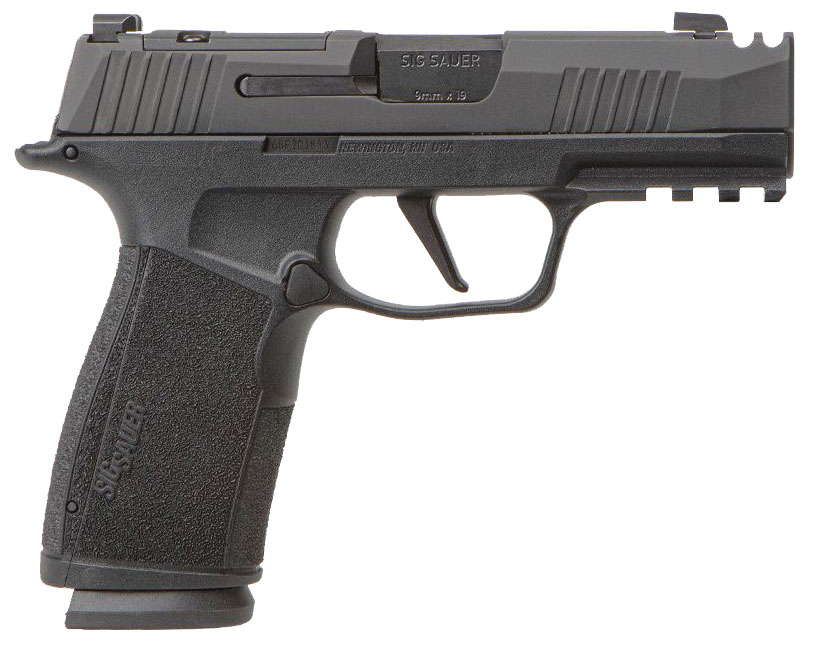
Attention then shifts to how the P365X Macro actually shoots. The host describes the recoil as a softer, more controllable snap rather than a sharp, unpleasant kick, especially compared to smaller micro-compacts. A key point is the built-in compensator integrated into the slide rather than the barrel. The barrel stops at the front sight, while the slide has venting ports that direct gases upward. This design helps keep the muzzle flatter under rapid fire, allowing the shooter to maintain a clear sight picture and get back on target quickly. The segment emphasizes that this factory-comped setup delivers real performance benefits without adding length or requiring a threaded barrel and separate compensator, making it more practical for everyday concealed carry.
The review then walks through the P365X Macro’s feature set tailored to concealed carry. It uses the familiar P365-style trigger, giving existing P365 owners a consistent feel while offering a clean, predictable break suitable for defensive use. The pistol comes with X-RAY style night sights, including a larger, more visible front sight that stands out in low light and speeds up target acquisition. Forward slide serrations are included for easier press checks and manipulations. A true Picatinny rail is built into the frame, allowing compatibility with popular compact weapon lights such as the Streamlight TLR-7 or TLR-8, though it is not sized for full-size lights like the SureFire X300 or TLR-1. The slide is cut for micro red dots, including optics like the Sig Romeo Zero, making the gun optics-ready out of the box.
Next, the host focuses on the controls and how they support real-world carry. The slide stop and other controls are described as low-profile yet still easy to use, striking a balance between accessibility and avoiding accidental activation under recoil or during a high grip. This helps prevent riders from unintentionally overriding the slide stop, which can cause reliability issues. The overall ergonomics are framed as a blend of the P365’s slimness with more of a full-hand grip, thanks to the extended frame and 17-round magazine. This gives shooters better control without dramatically increasing printing under a cover garment. The segment reinforces that the Macro is designed as a serious concealed carry tool, not just a range toy, with every feature—from grip size to sight configuration—aimed at making it a practical everyday defensive pistol.
The discussion then broadens to compare the P365X Macro with other popular SIG models and competing platforms. The host contrasts it with the original P365 and P365 XL, noting that the Macro offers significantly higher capacity and a more controllable shooting experience while remaining smaller than many compact pistols. It is also compared to the P320 and M18, which provide duty-size performance but are larger and harder to conceal for many users. The Macro is presented as occupying a sweet spot between micro-compact and full-size duty gun. Price is acknowledged as approaching the $1,000 range, putting it above many standard carry pistols, including common Glock models. However, the host suggests that the combination of capacity, integrated compensator, optics readiness, and overall shootability makes it a strong contender to replace traditional Glock 19-style carry guns.
As the review moves toward its conclusion, the host talks more directly about MSRP and where buyers might find the P365X Macro. The pistol is recognized as a premium-priced option, often sitting near the top of the concealed carry market in terms of cost. Despite this, the host repeatedly stresses that the price point should not be the primary deciding factor for a defensive firearm. Instead, the focus is on the value delivered by the Macro’s feature set: 17+1 capacity, built-in compensator, night sights, optics-ready slide, and a rail that supports modern compact lights. Availability at various dealers is mentioned, with the implication that street prices may be somewhat lower than MSRP. The segment frames the Macro as a high-value package for those willing to invest in a top-tier carry gun rather than simply shopping by lowest price.
In the final segment, the host makes an emphatic case that the Sig P365X Macro will likely become the new primary concealed carry gun. The decision is framed around performance, capacity, and features rather than cost. Price is repeatedly downplayed, with the argument that when a pistol fits the carry role this well, budget concerns become secondary. The host suggests that selling existing Glocks can offset the purchase, effectively trading out of the older platform into the Macro. This idea is reiterated multiple times, sometimes in a glitched or looped fashion, underscoring a strong commitment to switching platforms. The closing message is clear: for the host, the P365X Macro’s combination of shootability, capacity, and carry-friendly size justifies replacing current Glock carry guns and adopting this SIG as the everyday concealed carry choice.




















 Loading...