The livestream opens with the host wrestling with a connection error to Rumble, repeatedly trying to get the platform to cooperate before finally removing it as a destination. While apologizing and mentioning he is in touch with support, he keeps the mood light by chatting with viewers about their day, what trucks they drive, and what they do for a living. There is some quick back-and-forth about watching sports and adjusting audio levels so everyone can hear clearly. The focus soon shifts to everyday carry, with the host highlighting his Springfield Hellcat Pro as the new EDC. He explains that it has a threaded barrel and that he personally hand-stippled the grip, planning to show a photo on-screen. Viewers are asked what they carry, leading to mentions of a Glock 34 and households that run both a P365 X-Macro and a Hellcat Pro, setting up comparisons between those platforms.
Conversation deepens around everyday carry pistols, especially the Springfield Hellcat Pro versus the SIG P365 X-Macro. The host notes that a Glock 34 can be a bit large for concealed carry depending on body size and clothing. He then pulls up a photo of his black Hellcat Pro with a threaded barrel and walks through the extensive grip work. Using a Dremel and stippling tools, he created a very aggressive, grippy texture while keeping the borders and lines clean. He explains how he can tune the coarseness further and mentions reshaping and smoothing an “accelerated pad” area for better control. This leads into his broader DIY background, including restoring cloudy headlights and smoking taillights on cars. Chat suggests future projects like stippling a 1911 front strap and other non-SIG pistols, and he talks about wanting to keep experimenting with custom grip work on more guns.
The host briefly mentions using a wood-burning kit to customize a firearm grip, clarifying it is not a SIG but still something he is proud of. The topic then shifts hard into car culture and his history with performance vehicles. He recalls starting with a 1997 Pontiac Trans Am 5.7 LT1 running Flowmaster exhaust, laughing about being a cocky high-school kid who would race anything on the road. Later came a 2006 Mustang GT and, more notably, a 2003 Mustang Cobra Terminator making around 455 wheel horsepower and 478 pound-feet of torque. He describes dream classics like a 1970–1971 Mach 1 and a 1969 Chevelle SS. Most of this stretch focuses on drag racing a zinc yellow 2003 SVT Cobra with a Whipple supercharger, 2.76 pulley, intake, mid-pipe, cat-back, tune, and slicks. He recounts record-setting passes, beating a theoretically faster Trans Am through better driving, and the addictive whine of the blower, before mentioning later Mustangs like a 2007 GT and a 2004 Screaming Yellow Cobra.
Performance car talk continues with a rundown of his progression: the 2003 Cobra, a 2007 Mustang GT, a 2004 screaming yellow Cobra, and eventually a 2011 Shelby GT500 upgraded with a 2013 GT500 supercharger. He notes that setup made roughly 700 wheel horsepower and jokes that it would outrun a friend’s 2020 automatic GT500, keeping the tone playful. The conversation then swings back to firearms and everyday carry. He revisits the Hellcat Pro, describing a black model with a threaded barrel and aggressive hand stippling, alongside an FDE Hellcat Pro. The threaded barrel is admitted to be mostly for looks and may slightly compromise carry efficiency, especially once taller or specialized sights are added. Viewers chime in with their own EDC choices, including Hellcat Pros, Walther PDP F-Series, and Glock 19s. The host asks for feedback on how the Hellcat Pro compares to the Glock 19 in thickness, size, and concealment, while mentioning his own duty experience with Glock 17 and 19 pistols.
Discussion turns to Glock 17 and Glock 19 use for both duty and concealed carry. The host explains that a Glock 17 can be concealed with the right body type and clothing, though the 19 is often easier. He introduces the Springfield Echelon, clarifying it was sent to him without strings attached and has become his primary sidearm. He plans to stipple it himself, similar to the Hellcat Pro, and critiques the rear white U-shaped sight as distracting when paired with a red dot, noting Springfield offers a two-dot alternative. The stream then drifts into music, with positive reactions to Knocked Loose and recommendations for Propane tracks known for heavy rhythm guitar. Toward the end of this section, he compares LPVOs, ACOGs, and red dot plus magnifier setups. LPVOs like the SIG Tango6 are praised for capability but criticized for weight, especially when combined with accessories like a DBAL, leading him to favor a lighter red dot with an EOTech G43 magnifier for versatile close and mid-range use.
The optics discussion continues with more nuance. LPVOs with 6x–8x magnification are described as superior for distance and ideal for military applications, while a red dot and magnifier combo is considered lighter and more than adequate for most civilian and law enforcement roles. The host briefly compares the Shadow Systems CR920 and Canik MC9, admitting limited hands-on time with the MC9 but acknowledging its strong reviews and better price point. Odin Works receives a generally positive, though limited-experience, endorsement. On pistol optics, he says he has not yet used the Trijicon RCR but that the RMR’s build quality is immediately obvious. Music returns as a topic when he calls Buckethead the greatest guitarist of all time, ranking him above Dimebag Darrell and Synyster Gates. Addressing viewers in restrictive states, he asks for specific use cases before recommending rifles, notes that 300 Blackout can work for suburban home defense but is not ideal for heavy range use, and previews an upcoming bolt gun series featuring a U.S. Arms Co Azrael with an EOTech Vudu 5-25, which he has used to make easy hits on 8-inch plates at 500 yards.
The host elaborates on long-range shooting, saying that once a rifle is properly dialed in, hitting an 8-inch plate at 500 yards feels almost like shooting a pistol at 10 yards. This has sparked a growing interest in precision and distance work. He revisits the Springfield Echelon, framing it as a purpose-built duty gun and his current primary sidearm, but cautions law enforcement officers to wait for high round-count and torture-test data before adopting it widely. A viewer challenges a previous claim that police kill 10,000 dogs a year; he acknowledges the figure may be inaccurate and invites corrected information to be sent to the Classified Arms Instagram. The conversation then dives into FBI caliber history after the 1986 Miami shootout, covering the move from 9mm to 10mm, the development of .40 S&W as a reduced 10mm due to recoil and qualification problems, and the eventual return to 9mm once modern loads like the Federal G2 9mm outperformed .40 and .45 in FBI testing.
Continuing the caliber discussion, the host explains that in FBI testing a specific 9mm load, a Federal G2 round the Bureau helped design, actually outperformed contemporary .40 and .45 offerings. Ten millimeter failed mainly because of excessive recoil, larger cartridge size, reduced capacity, and heavier guns, not because of poor ballistics. He stresses that recoil management and capacity are as critical as terminal performance, joking that something like .50 AE might meet ballistic goals but is useless if shooters cannot control it. Drawing on experience as a crime scene investigator in Illinois, including work in Cook County and Chicago, he describes seeing numerous autopsies and recovered projectiles from calibers such as 7.62x51, 7.62x39, 5.56, 9mm, .40, .45, and .357, concluding that modern 9mm performs surprisingly well in the real world. The tone then lightens with Q&A about never personally confiscating weapons, the status of Illinois’ assault weapon ban, joking references to Call of Duty, and quick opinions on Zastava and Zenith firearms while he starts trying to log into a game during the stream.
The host works through logging into Call of Duty live, mentioning shader optimization, Season Five updates, and some confusion with Streamlabs or OBS. He ultimately leans on StreamYard despite concerns about stream quality. After joining a friend in a party, they trade lighthearted banter about being live and decide to queue up Gun Game while waiting for another friend, Justin, to join. He experiments with screen sharing and layout options, trying to enlarge the gameplay window and asking viewers to confirm that audio and video are acceptable. Jokes about being a “pro streamer” and encouragements for donations and subscriptions keep the mood playful. Amid the gaming chatter, he shifts to movies, referencing the original Terminator and revealing that a new “top five guns of Terminator” video was filmed earlier that day, complete with some Arnold-style cosplay, giving viewers an inside look at upcoming channel content.
While playing, the host talks about his in-game preferences, mentioning an M4 and the Lochman 7.62, which resembles a G3 or HK-style rifle. He emphasizes that he is not a serious gamer and usually turns the computer off when not streaming. He outlines his daily routine: early mornings, meditation, running, gym time, breakfast, then either heading to work or sitting at the computer to create content for his own brand, trying to avoid unnecessary screen time. Responding to a suggestion to try hunting, he shares a vivid dream of being in the wilderness with a teenage daughter he does not yet have, describing it as the most peaceful feeling he has experienced and fueling a strong desire to hunt and escape city life. Between multiplayer lobby jokes about bots and AI callouts, he answers a viewer question about .22 LR HK MP5-style rifles, enthusiastically recommending them for plinking and briefly mentioning fun .22 AK-47 clones while asking who manufactures the MP5 .22 variants.
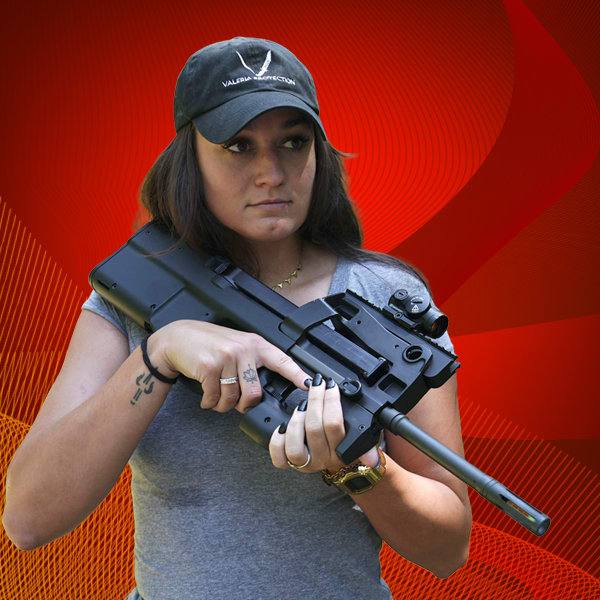
A viewer’s interest in an HK MP5-style .22 LR prompts more endorsement of .22 plinkers, including a .22-caliber AK-47 clone he describes as very fun. He then attempts a Call of Duty domination match on stream but runs into severe choppiness and lag using StreamYard. Various fixes are tried, such as removing his camera and changing screen-share options, but the performance remains unwatchable. To prove his PC is not the bottleneck, he pulls up his personal Twitch channel, showing smooth 1080p gameplay and listing hardware specs like an RTX 3080 and 64 GB of DDR3 RAM. He then showcases his Turkish-language YouTube channel, explaining that most of his content is in Turkish and outlining how building his own brand led to a role with SAR USA and eventually to working with Classic Firearms. He notes that his time is now split roughly 50/50 between Classic and his personal brand and teases potential bullpup review content, including the Tavor X95.
The host explains how SAR USA discovered his work, hired him as head trainer, and how he later transitioned to Classic Firearms after that contract ended. He mentions that Clint and Alec previously produced a bullpup top-five video and floats the idea of revisiting bullpup rankings. Shifting to AR-15s, he describes building up a Smith & Wesson M&P15 that has run roughly 5,000 rounds without cleaning, using it as an example of reliability. He jokes about hijacking Clint’s “top five AR-15s of 2023” by swapping the order of LWRC and ADM. Quick-hit opinions follow: praise for the Chris Vector in .45 ACP as a great but unconventional gun, criticism of the SAR B6’s ergonomics and controls despite reliable function, and enthusiasm for the Irmo Crossfire 9mm as a full-metal pistol under $400 that impressed him. Answering lifestyle questions, he talks about favorite foods to cook, favoring simple, clean meals like seasoned chicken tenderloins with rice and salad, contrasting how he feels after clean food versus burgers or B-Dubs, joking about wanting five or six peanut butter and jelly sandwiches, mentioning family genetics, and briefly acknowledging he can play guitar but is hesitant to do so on stream.




















 Loading...