M14, 7.62 NATO, and .308 vs 7.62x51 Basics
The discussion opens with the M14 rifle chambered in 7.62 NATO and the central question of why NATO, including countries like England, ended up adopting 7.62x51. The hosts clarify the relationship between .308 Winchester and 7.62x51 NATO, stressing that while the external dimensions are essentially the same, the specifications differ slightly. Typical .308 commercial loads are rated around 62,000 PSI, while 7.62 NATO is closer to 60,000 PSI, reversing the pressure relationship seen with 5.56 NATO versus .223 Remington. Despite these differences, they note that .308 and 7.62x51 are generally considered safely interchangeable in most modern rifles. They reference specific platforms such as the HK MR762 A1, FN SCAR 20, SCAR 17, and an Aero Precision .308 build, explaining that these rifles routinely run both .308 and 7.62 NATO without issues. This technical foundation sets up the broader historical and political exploration of how the U.S. moved from .30-06 to 7.62x51 and then influenced NATO to follow.
.30-06, the Garand Legacy, and Subcaliber Trends
Attention shifts to the long service life of .30-06 and the M1 Garand. The cartridge predates World War II, served heavily through that conflict and Korea, and even saw limited use in Vietnam, while the Garand still appears in ceremonial roles today. The hosts highlight magazine-fed evolutions of the Garand design, including Italy’s BM59 and U.S. Navy conversions of M1 Garands to 7.62 NATO, illustrating how existing platforms were adapted to the newer cartridge. They then describe a broader historical trend toward smaller or so-called subcaliber cartridges. Advances in projectile design, propellants, and case technology allowed shorter, lighter rounds to match or exceed the downrange energy of older, larger cartridges. In this context, 7.62x51 NATO represents a step down from .30-06 in length and weight while retaining similar performance. The Springfield Model 1903’s evolution from .30-03 to .30-06, developed in 1906 and officially adopted around 1907, is used as an earlier example of iterative cartridge refinement.
From .30-06 to 7.62x51: Development, Adoption, and Full-Auto Goals
The video compares adoption timelines, noting that .30-06 was developed in 1906 and adopted in 1907, while .308 Winchester appeared in 1952 and was standardized as 7.62x51 NATO by 1954. Early semi-automatic rifles in .30-06, primarily M1 Garand variants, sometimes struggled with feeding and reliability due to the longer action and en bloc clip system. This is contrasted with modern semi-auto magnum rifles, such as Nemo’s 300 Win Mag platforms, which demonstrate that reliable semi-auto operation with powerful cartridges is now achievable. The hosts outline the developmental path of 7.62x51, starting with experimental .300 Savage-based cases around 47 mm, then moving to 49 mm when shortened .30-06 cases were tried, and finally settling on the 51 mm case length. Design goals included creating a lighter, more compact rifle with reduced recoil, higher cyclic rate, and near-.30-06 power. These aims produced battle rifles like the M14 and FN FAL with full-auto capability, though the speakers emphasize that in real combat, controlled semi-automatic fire is far more effective than indiscriminate automatic bursts.
U.S. Push for 7.62x51 and Rejection of .280 British
The hosts argue that recoil from 7.62x51 NATO in battle rifles is manageable but still significant, reinforcing their view that semi-automatic fire is preferable for accurate engagement. They then examine how the United States became firmly committed to 7.62x51 and pushed it as the NATO standard, despite strong alternative proposals. The .280 British cartridge, favored by England, Belgium, and Canada, offered lower recoil while remaining effective at typical rifle engagement distances, and it showed promising controllability in full-auto. However, the U.S. rejected this foreign-developed intermediate cartridge, insisting on a full-power 7.62 round that closely mirrored .30-06 performance. The segment portrays NATO’s eventual adoption of 7.62x51 as driven more by American political and strategic influence than by a neutral technical consensus. European allies expected a compromise in the form of adopting the FN FAL platform, but the U.S. ultimately selected the M14, essentially an updated Garand, reflecting domestic industrial interests and a desire to maintain a traditional rifle image.
M14’s Short Standard Service but Long Career and Naval Roles
The M14 is described as the shortest-lived standard-issue U.S. service rifle, quickly replaced by lighter 5.56 platforms, yet it remains one of the longest-serving rifles overall. It continues to appear in ceremonial color guards and has been used extensively as a designated marksman rifle due to its accuracy and 7.62x51 chambering. The U.S. Navy still qualifies sailors on the M14 for shipboard security roles, valuing its power and reliability in maritime environments. A specialized M14-based line-throwing system is also discussed, where blanks are used to launch a projectile carrying a line between ships or from ship to shore, demonstrating the platform’s adaptability beyond direct combat. These examples underscore how a rifle that saw a brief tenure as the primary infantry weapon nonetheless carved out enduring niche roles. The segment bridges into economic and logistical considerations that made 7.62x51 and its commercial twin, .308 Winchester, particularly attractive to the United States.
Logistics, Politics, and the Missed .280 British Opportunity
The conversation highlights that .308 Winchester and 7.62x51 NATO were appealing to U.S. planners because they leveraged existing .30 caliber projectiles and much of the .30-06 manufacturing infrastructure. This continuity simplified production, tooling, and supply chains while still delivering a more compact cartridge. The hosts argue that NATO’s adoption of 7.62x51 was largely a consequence of U.S. pressure rather than a balanced evaluation of all contenders. They revisit the .280 British, noting evidence that it offered better long-range performance and controllability in full-auto than 7.62x51, potentially enabling a more effective general-purpose rifle for average soldiers. By insisting on a full-power round, the U.S. may have sacrificed controllability and ammunition loadout advantages that an intermediate cartridge could have provided. This segment frames the choice of 7.62x51 as a politically driven compromise that locked NATO into a powerful but demanding cartridge, setting the stage for the later shift toward lighter 5.56 ammunition.
From 7.62 to 5.56 and the Rise of 6.8x51/.277 Fury
The hosts point out the irony that after pushing NATO to adopt the higher-recoiling 7.62x51, the U.S. soon transitioned to 5.56 NATO to gain lighter recoil, smaller rifles, and the ability for soldiers to carry more ammunition. NATO followed this shift as well. Modern developments, particularly widespread body armor and more open, long-range combat environments, have renewed interest in more energetic cartridges. This leads into a detailed look at 6.8x51, also known commercially as .277 Fury, developed for the Next Generation Squad Weapon program. The hybrid case design uses a steel head with a brass upper body, allowing significantly higher chamber pressures than traditional brass cases. The result is a slightly smaller-diameter projectile than 7.62 but with higher muzzle velocities, cited at over 3,100 feet per second and more than 3,200 foot-pounds of energy from relatively short, suppressed barrels. Despite this new adoption, the hosts emphasize that 5.56 will remain in service for decades due to enormous stockpiles and historical precedent with long-lived calibers like 7.62x54R.
6.8x51 vs 7.62x51, 7mm Lineage, and Enduring 7.62 NATO Appeal
The video contrasts 6.8x51 with 7.62x51, noting that 6.8 uses a smaller-diameter bullet but achieves higher velocity and greater downrange energy thanks to its high-pressure hybrid case. This modern 6.8 concept is linked back to older 7mm-class ideas, including the .280 British, suggesting that current developments are revisiting intermediate-caliber principles with advanced materials and ballistics. Despite these innovations, the hosts emphasize that 7.62 NATO remains a favorite cartridge due to its proven reliability, global availability, and versatility as an all-around round for hunting, precision, and combat roles. While it is more expensive and heavier than 5.56, its performance at extended ranges and against barriers keeps it relevant. The discussion underscores that 7.62x51 has become a benchmark standard, influencing how newer cartridges like 6.8x51 are evaluated in terms of energy, trajectory, and battlefield utility, even as militaries experiment with next-generation ammunition technologies.
AR-10 Popularity, SCAR 20 Setup, and Alternative AR Calibers
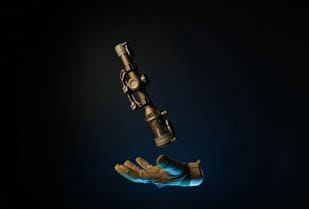
The hosts remark that building an AR-10 is often easier than assembling an AR-15, contributing to the popularity of 7.62 platforms among enthusiasts. They highlight the SCAR 20 giveaway rifle, detailing its configuration: a Leupold Mark 5 HD 3.6–18x first focal plane optic mounted in a Spuhr mount, a Tango Down vertical grip, a Geissele Super SCAR two-stage trigger breaking around 2–3 pounds, a SureFire ProComp two-chamber muzzle brake, and an Accu-Tac bipod. This setup illustrates how 7.62 rifles are optimized for precision and designated marksman roles. The conversation broadens to alternative AR calibers such as 6.5 Grendel and 6.8 SPC, which were developed as potential improvements over 5.56 for the AR platform. The variety of chamberings underscores the modularity and versatility of the AR ecosystem, where shooters can tailor rifles to specific missions or preferences. The video closes by inviting viewers to consider whether choosing 7.62 NATO over .280 British and now moving toward 6.8/.277 represents the best long-term path.











 Loading...