The video opens by introducing the ECM Precision R11, an all-metal, billet aluminum grip module designed to make a Sig Sauer P365 feel closer to a 2011-style handgun. The host explains Sig’s modular fire control unit (FCU) system, contrasting it with Glock’s non-modular serialized frame. On the P365, the FCU is the serialized component and can be dropped into different grip modules, enabling upgrades like the R11 without replacing the firearm itself. Compatibility is clearly outlined: the R11 works with larger P365 variants such as the P365 XL and XMacro, and it can also be paired with the P365 Fuse slide. However, it is not compatible with the smaller, standard P365 slide. This section sets the stage for how the R11 aims to change the feel, balance, and performance of the P365 platform through a competition-inspired, metal grip module.
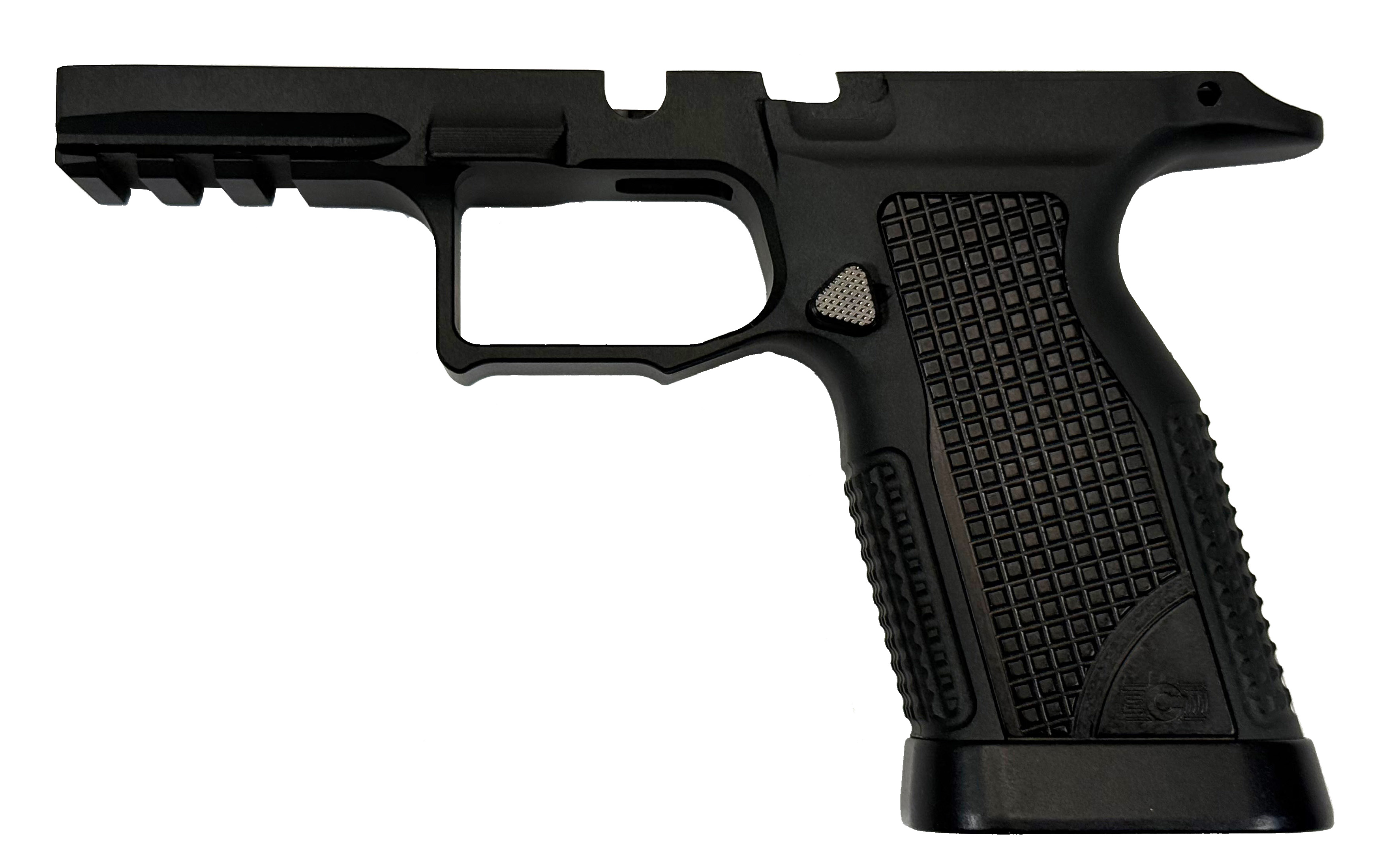
The next section dives into the R11’s construction and ergonomics. The grip module is machined from billet aluminum and features built-in gas or accelerator pedals on both sides, giving shooters a strong indexing point for the support-hand thumb. An integrated flared magwell improves reloads, with options for more aggressive magwell designs. Interchangeable aluminum side panels ride on a track system, and the beavertail geometry resembles a CZ Shadow, promoting higher grip and better recoil control. A key upgrade is the robust aluminum magazine release, which replaces the stock two-piece polymer design known to break under hard use; an older grip is shown missing its mag release to illustrate this failure point. The R11 also incorporates a double undercut, a slight finger groove, and a bottlenecked grip area for improved purchase, plus a flat-front trigger guard and Picatinny rail that better accommodate lights and lasers. Visually and functionally, it evokes 2011-style pistols like the Mac 9 from Military Arms Corporation.
At the range, the focus shifts to how the ECM Precision R11 changes the shooting characteristics of the P365 platform. The built-in gas pedal wings on both sides of the grip provide a firm, non-flexing surface for the support-hand thumb, allowing strong downward pressure that significantly reduces muzzle rise. Mounted with a Fuse slide, the pistol shows extremely flat behavior under rapid fire, with noticeably less flip than a typical, snappy P365. The host notes that the metal construction and aggressive ergonomics make the gun feel more like a compact 2011, especially during fast strings. While acknowledging that the protruding gas pedals may create some holster compatibility challenges, the video emphasizes the performance benefits: better control, faster follow-up shots, and a more stable sight picture. The R11’s design clearly targets shooters who prioritize shootability and recoil management over minimal bulk.
The final section highlights how the R11 grip module affects recoil, muzzle rise, and dot tracking across different slide setups. The host compares a P365 equipped with a Fuse slide and an XMacro comp slide, noting that both combinations feel dramatically flatter with the R11 frame than with standard polymer modules. Even with the lighter, shorter compensated slide, the pistol no longer feels harsh or snappy. Red-dot tracking is described as excellent, with the dot rarely leaving the glass during rapid mag dumps, underscoring how much the gas pedals and beavertail geometry stabilize the gun. The designer’s background in 2011s and competition shooting is credited for the frame’s performance-focused features. The video concludes by strongly recommending the ECM Precision R11 for P365 XL, XMacro comp, and Fuse users who want a flatter-shooting, more controllable pistol for competition or serious range work, while reminding viewers to verify slide and holster compatibility.





















 Loading...