The video opens in the Classic Firearms warehouse instead of the usual studio, with Caleb, Matt, and Jason standing around a large wooden crate. Matt calls it an old-school crate opening and a legendary lot drop, explaining that longtime viewers will remember similar surplus crate videos from years past. They introduce the contents as a crate of surplus Zastava M83 revolvers, chambered in .357 Magnum, all-steel construction, six-shot, traditional double-action/single-action wheelguns. As the lid comes off, rows of revolvers are revealed, each wrapped and stacked in the crate. Matt explains that production ran from about 1983 through the late 1990s, with several iterations like the original M83, the M83 87, and the M83 93 or 94. He notes that these were originally built as duty sidearms for police and other law-enforcement style users. While they all share the same basic mechanical design, the hosts immediately point out that there is a surprising amount of variation from gun to gun in terms of grips, markings, and cosmetic wear, which is exactly what they want to show by digging through the crate on camera.
As they start pulling revolvers from the crate, the focus shifts to the wide variety of grips and overall surplus condition. Some examples wear original factory wood grips with the Zastava emblem medallion inlaid on the side, giving a classic service-revolver look. Others have black polymer grips, and some show a synthetic wood-style material in different shades. A few stand out with very aggressive finger-groove grips or obviously custom-carved wood panels, suggesting that individual officers or owners personalized their sidearms during service. The hosts emphasize that all of these are considered surplus in good, serviceable condition, but cosmetic details vary widely: holster wear on the muzzle and cylinder, small dings, handling marks, and differences in grip style and color. They stress that this is the nature of surplus—each revolver has its own character and history written into the finish and furniture.
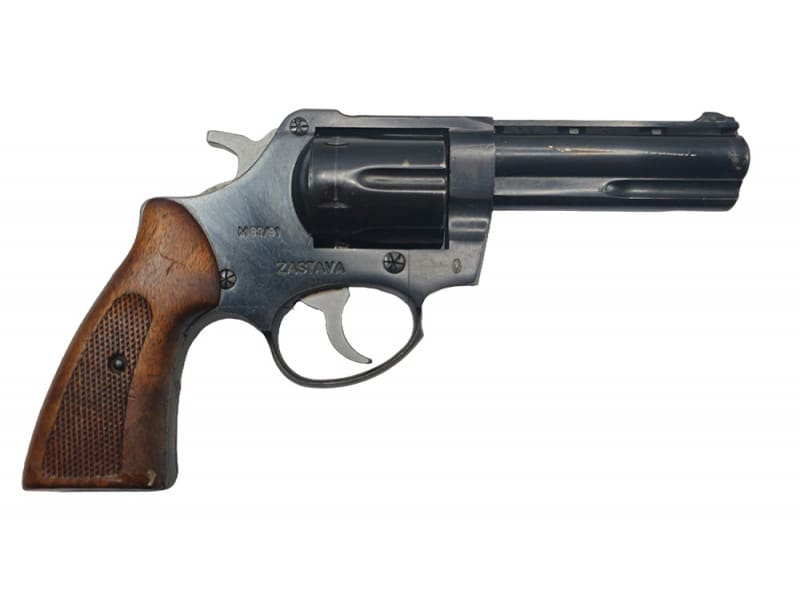
The conversation then turns to how customers will actually receive one of these revolvers when ordering from Classic Firearms. Matt explains that the guns are being sold by finish and barrel length, so buyers can choose, for example, a 4-inch blued model or another listed configuration. However, the specific grip style and minor cosmetic details are random. The team describes it as luck of the draw: when an order comes in for a certain configuration, staff will go to the crate or storage racks and pull one that matches the requested finish and barrel length, then box it up. They mention that a hand-select option is likely to be available for an additional fee. With hand-select, staff will look through around ten examples to pick one with better overall cosmetic appearance—less wear, nicer grips, or cleaner finish—while still staying within the same surplus grading. Mechanically, they are all checked to be functional, but hand-select is aimed at customers who care more about looks and want a nicer-looking example from the batch.
After showing the cosmetic variety, the hosts talk about mechanical feel and markings. They handle several revolvers, working the actions and dry-firing to demonstrate that trigger pulls can vary slightly from gun to gun, as is common with surplus duty revolvers. Some have surprisingly smooth single-action breaks and decent double-action pulls, while others feel a bit heavier or slightly gritty, reflecting production tolerances and years of service. They point out rollmarks and model codes on the frames and barrels, such as M83 followed by two-digit numbers that indicate different production runs or later iterations like the 87 and 93 series. Date codes and factory markings help approximate when each revolver was made. The hosts note that these small differences in markings and mechanical feel add to the individuality of each piece, making them interesting not just as shooters but also as collectible surplus sidearms with traceable production history.
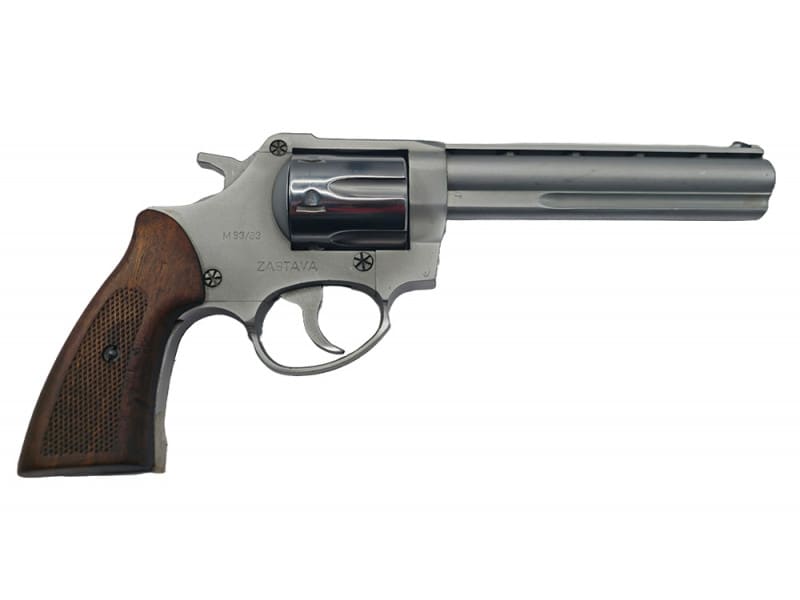
The video then highlights the main configuration differences available in this lot. The hosts show the 4-inch blued revolvers first, describing them as the classic duty-length option that balances sight radius, velocity, and carryability. They also reference other variations in the batch, including different barrel lengths like 6-inch models and alternate finishes such as nickel, which may be shown or discussed as part of the broader offering. The 4-inch guns are presented as practical choices for home defense, range use, or even field carry, while the longer-barreled versions are framed as better suited for target shooting, hunting small game, or general range fun where maximum sight radius and performance from the .357 Magnum cartridge are desired. Regardless of configuration, the hosts emphasize that these are robust, all-steel revolvers built to handle duty use, and that customers can choose the barrel length and finish they prefer when placing an order, while accepting that grips and minor cosmetic traits will be random.
The hosts circle back to the history and intended role of the M83 platform. They explain that these revolvers were originally designed as sidearms for police and similar agencies, built to be durable, reliable, and straightforward to maintain. Over time, as agencies modernized and moved to more contemporary semi-automatic pistols, these revolvers were phased out of frontline service and eventually entered the surplus market. The team notes that this transition is what makes it possible for Classic Firearms to offer them now at surplus pricing. They discuss how, in the modern context, these revolvers appeal to several types of buyers: collectors who appreciate Cold War–era service guns, shooters who want a solid .357 Magnum revolver for the range, and enthusiasts who enjoy the uniqueness and character that comes with surplus firearms. The combination of law-enforcement heritage, sturdy construction, and varied cosmetic details gives each revolver a story and a certain nostalgic charm.
As the crate unboxing winds down, the hosts summarize what customers should expect when ordering. They reiterate that buyers can select from the listed finishes and barrel lengths, that all guns are surplus in good functional condition, and that grips and small cosmetic features are random unless the hand-select upgrade is chosen for better appearance. They encourage viewers who like what they see to check the product listing on the Classic Firearms website for current availability, pricing, and any updated options. The team then shifts into a more general closing message, thanking returning viewers who have followed the channel through many surplus crate openings and welcoming new viewers who may have found the video while researching the M83 or surplus revolvers in general. They invite everyone to subscribe, explore other videos on surplus firearms and modern guns, and stay tuned for future lot drops and warehouse-style unboxings.
In the final segment, the video transitions into an outro that focuses on a promotional contest associated with the channel. The host repeatedly encourages viewers to check out the current giveaway or contest, urging them to visit the Classic Firearms site or follow the provided links for details on how to enter. The audio in this section becomes somewhat repetitive and slightly distorted, with phrases looping and truncating, but the intent remains clear: the channel is running a promotion, and viewers are invited to participate. No new technical information about the revolvers is introduced here; instead, the emphasis is on viewer engagement, appreciation for the audience, and a reminder to like, subscribe, and come back for more surplus crate openings and other firearms-related content.





















 Loading...