The video opens by framing firearms for hiking and camping as tools for self-defense rather than dedicated hunting rigs. The hosts stress that remote trails and campsites can expose people to unpredictable threats, from wild animals to dangerous individuals, where immediate help is unlikely. The emphasis is on self-reliance and being prepared, not on going into the woods to hunt. They discuss how weight, bulk, and practicality matter more in the backcountry than pure ballistic performance, since gear must be carried for long distances. This sets up the criteria for their picks: reliability, manageable size, and sufficient stopping power for realistic trail encounters. The conversation establishes that different users may prioritize different trade-offs, such as capacity versus caliber, but the core goal is a defensive firearm that can be comfortably carried and quickly deployed if needed while hiking or camping.
The hosts introduce the CZ 600 Trail as a strong rifle candidate for hikers and campers who want more reach and power than a handgun. This compact bolt-action weighs about 6.1 pounds and comes in practical calibers like 5.56, .300 Blackout, and 7.62x39, giving users flexibility based on their preferred ammunition and expected threats. A key advantage is its use of STANAG magazines, allowing compatibility with common AR-style mags for easier logistics and higher capacity than traditional bolt guns. The rifle features an adjustable length of pull, helping it fit different shooters and making it more comfortable to carry and shoulder in outdoor clothing or packs. Priced under $1,000, it is presented as a relatively affordable, versatile option. At the same time, the hosts acknowledge that many hikers still gravitate toward pistols because even a light rifle adds noticeable weight and bulk when strapped to a pack or carried all day.
Attention then shifts to sidearms, starting with .45 ACP pistols, especially 1911-style handguns. The hosts highlight classic single-stack 1911s, including a Tisas M1911 A1-style clone, as appealing for their ergonomics, shootability, and .45 ACP’s strong terminal performance. They note, however, that traditional single-stack 1911s trade capacity for power, so carrying extra magazines is recommended for trail use. Double-stack 1911-style pistols are mentioned as a way to gain more rounds while keeping the familiar 1911 trigger and controls. The discussion covers practical carry methods for hiking and camping, such as belt holsters, chest rigs, or discreet fanny packs that keep the gun accessible while wearing backpacks or outdoor gear. Overall, .45 ACP is framed as a confidence-inspiring caliber for those worried about larger threats, with the caveat that weight, magazine capacity, and total carried ammo must be balanced against the realities of long hikes.
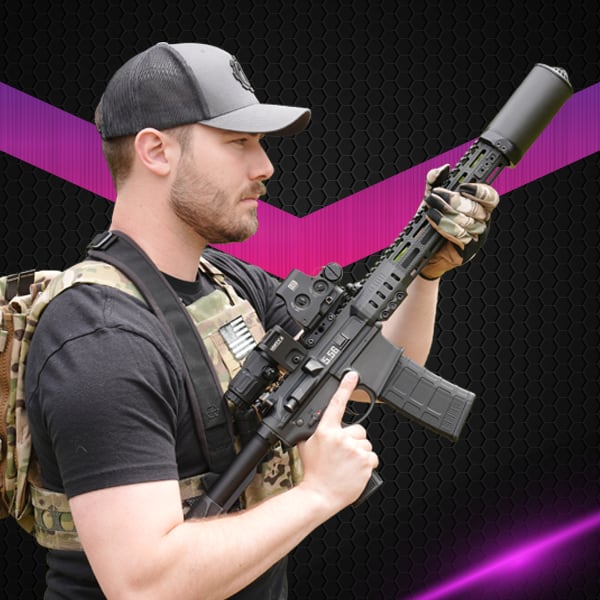
The video moves on to 9mm handguns, using examples like the Glock 17 to illustrate why many hikers favor this caliber. 9mm offers high capacity, low recoil, and widely available ammunition, making it easy to shoot well and carry plenty of rounds. Some people even trust 9mm on big game with proper loads, though one host expresses a personal preference for larger calibers like 10mm or .45 ACP when serious animal threats are a concern. The discussion then broadens to semi-auto .300 Blackout platforms as powerful trail guns, highlighting a CMMG Dissent with an MSRP around $1,800 as a representative example. Supersonic .300 Blackout loads are recommended for maximum energy and effectiveness in defensive scenarios. These compact semi-autos can deliver rifle-level performance in a relatively short package, but the hosts acknowledge the trade-offs: more weight, more bulk, and the hassle of carrying a long gun in or on a backpack compared to a simple holstered pistol.
As the video wraps up, the speaker turns to the audience and repeatedly asks what their own top five guns for hiking and camping would be, emphasizing that the question is about trail and campsite defense rather than dedicated hunting setups. It is noted that the discussed firearms could still be pressed into hunting service in a pinch, with a lighthearted reference to shooting “Bambi” underscoring the idea that unexpected situations can arise in the wild. The host reminds viewers that on the trail, “you never know,” reinforcing the theme of preparedness. The closing minutes focus on appreciation, with multiple thanks for viewers’ support and business, along with a warm religious blessing of “God bless.” The video ends on a friendly, optimistic note, promising to see viewers in the next installment and repeating the cheerful farewell phrase, “Happy trails,” several times as the sign-off.





















 Loading...