The video opens with Kyle and Jason introducing a discussion about five common mistakes they see with duty and full-size pistols. They clarify that they are talking about guns used for work, home protection, and serious training, not just casual range toys. Kyle mentions that he’ll be focusing more on duty guns, but the same ideas apply to home-defense full-size pistols and training setups. They joke about heading to the range with a full-size gun, holster, and gear, only to realize you’ve made some big setup mistakes. They invite viewers to add other mistakes in the comments and then move straight into mistake number one, which both of them consider extremely important: over-modifying your gun.
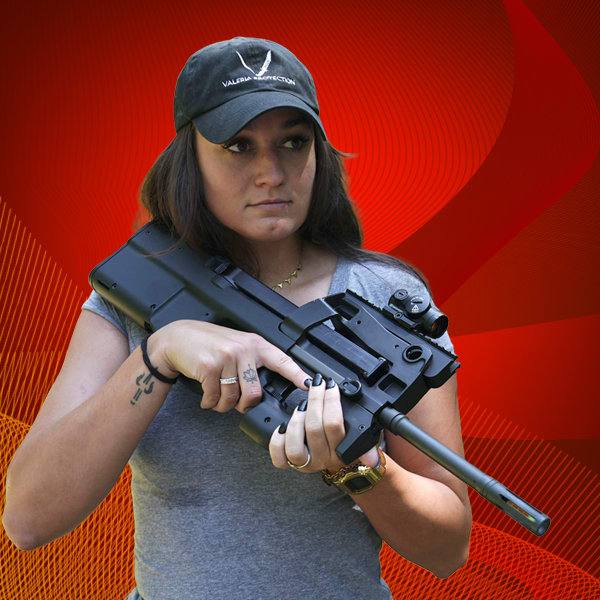
Kyle and Jason describe how easy it is to go overboard with modifications, especially on popular platforms like Glocks that have huge aftermarket support. Kyle holds up a Taran Tactical Combat Master, similar to the one seen in the movie Ballerina, as an example of how far a pistol can be taken with custom work. They stress that this kind of build can be fine if you truly understand what you’re doing and how all the parts interact, but many people just start bolting on parts because they look cool or are trending online. They talk about shooters who buy a Glock, Smith & Wesson, or similar pistol and immediately start adding ported barrels, big slide window cuts, compensators, oversized optics, and flared magwells without thinking through the consequences. The hosts emphasize that every change affects how the gun behaves and that a duty or defensive pistol should be set up for consistency and robustness, not just style points.
The hosts drill down into how specific modifications can upset the balance of a pistol. They mention people who port the barrel, cut large windows in the slide, add a compensator, and then never touch the recoil spring or test with different ammunition. By removing slide mass and venting gas, you change the timing and energy that cycles the gun. Jason notes that everything has to work together in harmony for the pistol to run correctly: slide weight, recoil spring rate, and ammo power level all interact. They repeat that there is no free lunch—if you gain something in one area, you usually give up something in another. A gun tuned around a narrow set of conditions might feel great on the square range with one specific load, but it can become picky or unreliable when exposed to different ammo, dirt, or weather. For a duty or home-defense role, they argue that this kind of narrow tuning is a bad idea, and that factory ammo and near-stock configurations tend to give the most dependable performance.
Kyle and Jason move into the topic of triggers, calling out the trend of dropping very light, competition-style triggers into pistols that are carried for work or defense. They reference a trigger in the roughly mid-two-pound range and compare it to the more typical four-and-a-half to five-pound triggers found on many service pistols. While they admit that a light, crisp trigger can feel fantastic and help with precision on the range, they warn that under stress, with adrenaline, movement, and possibly physical contact involved, such a light trigger can be a liability. They talk about startle responses, sympathetic squeezes, and the realities of drawing and holstering under pressure. Their point is that duty guns need a trigger that balances shootability with a reasonable margin for error, and that chasing the absolute lightest pull weight is not a smart tradeoff for people who carry a gun professionally or for serious personal protection.
The conversation shifts to legal and departmental policy issues. The hosts explain that many agencies have clear rules about what can and cannot be changed on issued or approved pistols, especially when it comes to triggers and internal safety systems. Ignoring those policies can put an officer’s job and coverage at risk. They also discuss how prosecutors or civil attorneys might portray a heavily modified pistol in court, using things like ultra-light triggers, race-gun parts, or flashy cosmetic work to paint the owner as reckless or obsessed with making the gun more dangerous. Even if the actual incident was justified, the appearance and configuration of the firearm can influence how a jury feels about the case. Kyle and Jason recommend keeping duty and defensive pistols close to factory spec in critical areas and making sure any upgrades can be clearly explained as reliability, durability, or usability improvements rather than attempts to make the gun more extreme.
Kyle and Jason then talk about finding the right balance between performance and simplicity. They acknowledge that some upgrades—like quality optics, better sights, or proven reliability parts—can be very helpful. The problem comes when people stack too many changes at once or add features they don’t fully understand. Every extra control, tuned internal part, or specialized accessory adds complexity, potential failure points, and training requirements. They stress that for many users, especially those who are not enthusiasts or who share guns within a department or household, a simpler, more straightforward setup is usually better. They encourage viewers to focus on fundamentals such as grip, sight picture, and consistent trigger control instead of chasing hardware shortcuts. In their view, a modestly improved but still duty-appropriate pistol will often outperform a heavily modified build in real-world conditions because it is easier to run under stress and easier to maintain.
The hosts tackle the debate over external safeties versus the KISS (keep it simple, stupid) philosophy. They explain that for shooters who train a lot and have strong habits, additional manual safeties can be managed, but they do add steps and complexity that must be executed correctly under stress. A simple striker-fired pistol without extra levers can be faster and more straightforward to bring into action, which is why many agencies prefer that style. On the other hand, they acknowledge that in some environments—especially where guns are handled frequently, holstered and unholstered often, or used by people with less training—an external safety can provide an extra layer of protection against unintended firing, particularly during holstering or physical struggles. They emphasize that there is no one-size-fits-all answer: whichever route is chosen must be backed up by realistic training, clear policy, and an honest assessment of the user’s skill level and context.
As they wrap up, Kyle and Jason admit that their opinions on modifications, trigger weights, and external safeties are likely to be controversial. They describe the topic as very touchy and say they fully expect some viewers to disagree strongly in the comments. They invite respectful discussion and ask people to consider the real-world implications of their setups rather than just what looks cool online. The hosts thank viewers for watching and for supporting the channel and the company, noting that their content is possible because of that ongoing support. They close the video with a friendly sign-off and a blessing, saying they look forward to seeing everyone in the next installment.




















 Loading...