The video opens by defining what actually turns a standard AR-15 into a long-range setup. The hosts explain that almost any AR-15 can be configured for extended-distance shooting if the core components, especially the barrel, are chosen correctly. Rather than focusing on exotic or rare platforms, they emphasize configuration and quality over hype. The discussion frames the AR-15 as a flexible platform that can be tuned for precision, not just close-quarters or general-purpose roles. Viewers are introduced to the idea that long-range performance starts with a solid foundation: a straight, consistent barrel, a rigid upper, and a setup that supports repeatable accuracy. This sets the stage for the detailed breakdown of a specific long-range build and the reasoning behind each component choice, showing how thoughtful parts selection transforms a familiar rifle into a capable precision tool.
The conversation moves into barrel selection as the cornerstone of a long-range AR-15. The hosts stress that a quality barrel is non-negotiable for consistent accuracy at distance. They name-check respected manufacturers such as Criterion, Proof Research, Compass Lake Engineering, Bartlein, and Ballistic Advantage, explaining that these companies are known for tight tolerances, good chambering, and reliable performance. The segment highlights how barrel profile, length, and manufacturing method can influence harmonics, heat management, and overall precision. Rather than prescribing a single “best” option, the hosts frame these brands as trusted starting points for a serious build. The takeaway is that investing in a proven barrel from a reputable maker is the most important step in turning an AR-15 into a legitimate long-range rifle, and that cutting corners here undermines the rest of the setup.
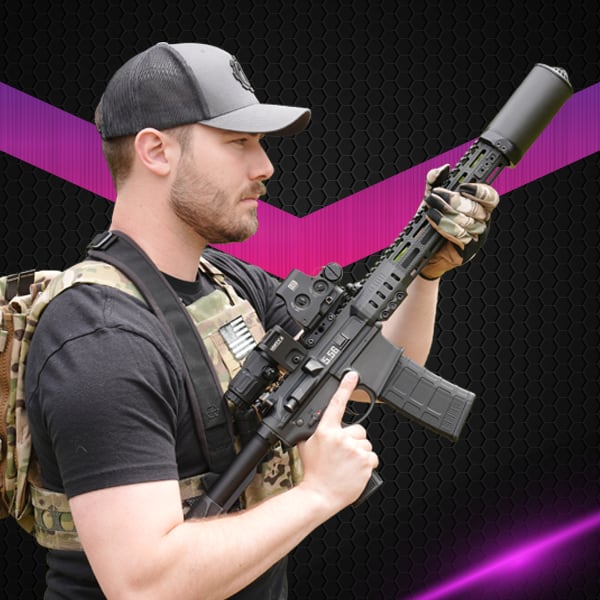
With the fundamentals laid out, the hosts introduce the primary rifle used to illustrate a long-range configuration: an LMT MARS-L. They present this rifle as a complete, purpose-built example of how to assemble a precision-focused AR-15. The MARS-L platform is highlighted for its quality and modern features, making it a strong base for stretching the capabilities of 5.56 or similar cartridges. The hosts begin walking through the rifle from back to front, explaining how each component supports stability, control, and repeatability. This segment sets up the detailed component breakdown that follows, using the LMT as a concrete reference rather than staying in the realm of theory. Viewers see how a premium base rifle can be enhanced with carefully chosen accessories to create a dedicated long-range setup that still retains AR-15 ergonomics and familiarity.
Attention turns to the rear of the rifle, where the hosts focus on shooter interface and ergonomics. The LMT MARS-L is outfitted with a B5 PRS-style adjustable stock, chosen for its ability to fine-tune length of pull and cheek height for a stable, repeatable shooting position behind magnified optics. This adjustability is presented as especially important for long-range work, where consistent eye alignment and comfort matter over extended sessions. The rifle also wears a Magpul K2+ grip, which offers a more vertical angle and rubberized texture, giving better wrist alignment and control when shooting from prone or supported positions. Ambidextrous controls built into the MARS-L lower are highlighted as a modern convenience, allowing both right- and left-handed manipulation of the safety and magazine release. These features collectively improve handling and make the rifle more adaptable to different shooters and shooting positions.
The hosts then cover fire control and gas management, two areas that significantly affect shooter comfort and precision. The rifle is equipped with a Geissele SSA-E X two-stage trigger, fitted with a lightning bow shoe. This trigger is described as offering a clean, predictable break with a defined first stage, helping shooters call their shots and avoid disturbing the sight picture at the moment of firing. The lightning bow profile provides a consistent finger placement and feel. Moving to the charging handle, they point out a Geissele model chosen specifically for its gas-blocking rear shelf. This feature is valuable on suppressed or high-round-count setups, where excess gas can blow back into the shooter’s face. By reducing gas intrusion and improving trigger control, these components contribute to a more comfortable, controllable long-range rifle that encourages precise, deliberate shooting.
Next, the video highlights the rifle’s monolithic upper receiver, a key structural choice for a long-range AR-15. The hosts explain that a monolithic design, where the upper and handguard are a single continuous piece, helps maintain a consistent zero when mounting accessories such as lasers or clip-on optics. Because there are no separate joints or flex points between the receiver and rail, devices attached along the top rail retain alignment with the primary optic more reliably. This is especially important when using aiming lasers or night-vision and thermal clip-ons that must stay precisely in line with the day scope. The continuous Picatinny rail on the upper provides ample mounting space while preserving rigidity. The segment underscores that structural integrity and repeatable mounting surfaces are just as important as the optic itself when building a long-range-capable AR-15 intended for varied lighting and engagement conditions.
The hosts then focus on the rifle’s advanced sighting options, particularly the integration of a DNT Optics Hydra thermal unit. They explain that this device can function either as a standalone thermal optic or as a clip-on mounted in front of the primary scope. In clip-on mode, the shooter can retain their familiar day optic’s reticle and adjustments while gaining thermal imaging capability for low-light or obscured conditions. The monolithic upper and continuous rail help ensure that the Hydra stays aligned with the scope, preserving point of impact. The segment illustrates how modern long-range AR-15 builds can blend traditional magnified optics with thermal technology to expand the rifle’s usefulness into night shooting, hunting, or specialized roles. This combination demonstrates that a long-range AR-15 is not limited to daylight paper punching but can be configured for serious field applications requiring target detection and engagement in challenging environments.
Styling and heritage come into play as the hosts describe how the build pays homage to the classic Mark 12 SPR concept. They note that the rifle’s Picatinny-railed upper and overall silhouette echo the traditional Mark 12 style, a platform known for its precision role within the AR family. The continuous top rail and accessory mounting options reflect that legacy, allowing the addition of optics, lasers, and clip-ons in a way that feels familiar to those who appreciate the SPR lineage. While the build uses modern components and a monolithic upper, the visual and functional nods to the Mark 12 underline the idea of a purpose-built, semi-automatic precision rifle. This segment ties the contemporary LMT MARS-L configuration to a broader history of designated marksman and special purpose AR-15 setups, showing how current technology can coexist with proven design philosophies.
The discussion shifts to support gear, focusing on the Harris bipod mounted to the rifle. The hosts explain why a quality bipod is essential for a long-range AR-15, providing a stable front support for prone or bench shooting. They talk about bipod placement along the rail, weighing the benefits of mounting it farther forward for maximum stability versus slightly rearward for easier access and manipulation. The segment emphasizes that placement is not purely aesthetic; it affects how the rifle tracks under recoil and how quickly the shooter can adjust position. Using the Harris as an example, they highlight its proven reliability and adjustability. This portion reinforces that a long-range build is more than just barrel and optics: support equipment like a well-positioned bipod plays a major role in real-world accuracy, comfort, and the ability to exploit the rifle’s full precision potential.
As the technical breakdown winds down, the hosts touch on the topic of rattle-canning rifles, using this build as a springboard to discuss finish and personalization. They talk about the practicality of spray-painting an AR-15 for camouflage, glare reduction, or simply to give it a unique look that reflects the owner’s preferences. The conversation suggests that a long-range setup does not have to remain in pristine factory colors to be effective; in many field applications, a subdued, broken-up paint job can be beneficial. They frame rattle-can finishes as a low-cost, reversible way to adapt the rifle to specific environments or tastes. This segment underscores that while precision components are critical, there is also room for individual expression and practical customization, rounding out the idea of a long-range AR-15 as both a tool and a personal project.
In the closing portion of the video, the hosts shift from hardware to how viewers actually use their AR-15s. They repeatedly invite the audience to share their favorite AR-15 setups and primary use cases in the comments. Specific applications are called out, including casual plinking, dedicated long-range shooting, varmint hunting, and PRS-style competition. PRS is mentioned multiple times as a key discipline where a well-configured AR-15 can shine. The hosts express interest in the variety of roles the platform fills for different shooters and encourage feedback on how others would employ a similar long-range configuration. This segment functions as a wrap-up and engagement call, signaling that the technical overview is complete while opening the door for community discussion about practical applications, preferences, and experiences with long-range AR-15 builds.





















 Loading...