The discussion opens with Smith & Wesson concealed carry options, including the Shield, Shield Plus Performance Center with compensator, and the Bodyguard 2.0. The focus quickly shifts to the new Shield X, but its origins are traced back to the original Shield, which was at one time the most sold CCW pistol on the market. That first Shield offered a slim, compact profile with 10+1 capacity and an optional 13+1 extension. It was not feature rich, but its size, capacity, and the familiar M&P texturing made it a popular concealed carry choice. Smith & Wesson essentially shrank the M&P performance and feel into a smaller, easier-to-carry package that set the stage for later developments.
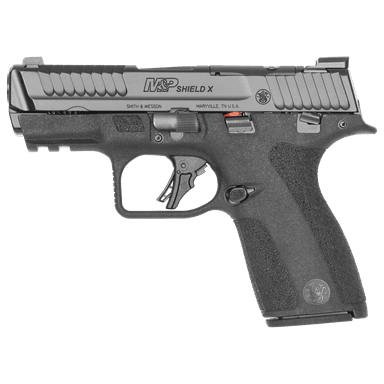
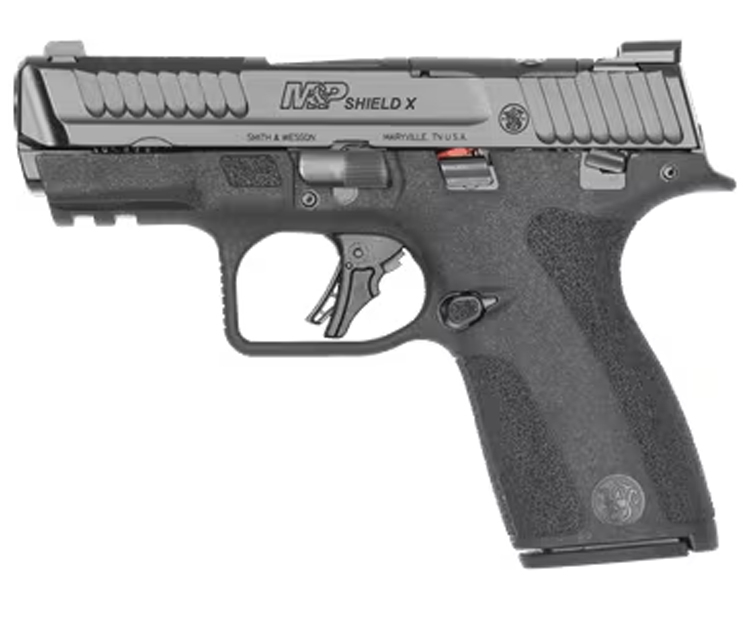
Attention then turns to how the Shield X responds to modern concealed carry expectations. It adds forward slide serrations for a more secure press check and comes optic ready out of the box. The ergonomics are substantially redesigned, with a more pronounced beavertail intended to accommodate larger hands and provide better control for a wide range of shooters. The grip texture is more aggressive than earlier versions, drawing inspiration from the Bodyguard 2.0 while scaling it into the Shield format. Capacity increases to a 13+1 flush-fit magazine, with an optional 15+1 magazine that extends both grip length and on-board ammunition, bringing it closer to compact duty pistols while remaining oriented toward concealed carry.
The Shield X retains traditional M&P styling, including a distinctive rear slide profile and a top-mounted loaded chamber indicator. The trigger is the newer style used on recent Shields, replacing the older hinge trigger. It incorporates a trigger safety, a defined wall, a crisp break, and a short reset that returns directly to the wall. The pistol ships with a high-visibility front sight and a blacked-out rear, along with slide serrations and anti-glare relief cuts to aid sight focus. The slide is cut for Shield RMSc-footprint optics, opening up a wide range of micro red dot options. The frame features a squared-off trigger guard that can accept more capable weapon lights such as the TLR-7 Sub, rather than being limited to smaller units like the TLR-6, while still offering a low-profile thumb safety that is easy to use without being intrusive.
At the range, the host runs three pistols: the original Shield 9 Plus, the Shield Plus Performance Center with compensator, and the new Shield X. The original Shield 9 Plus is described as compact and purpose-built for concealed carry, but its short grip forces frequent hand readjustment, especially for larger hands, even though extended magazines exist. Moving to the Performance Center Shield Plus, the longer sight radius and compensator are noted, along with an extended magazine that slightly improves grip length. The trigger on this model is praised, and the compensator’s effect is noticeable, but the emphasis remains on how these earlier Shields feel in the hand and manage recoil compared to the upcoming Shield X evaluation.
The Shield X is then tested with both its flush and extended magazines. The revised ergonomics immediately stand out, allowing a full firing grip without needing to shift hand position, even with the flush magazine. The extended beavertail keeps the shooter’s hand clear of the slide and contributes to control under recoil. With the extended magazine installed, capacity increases and the grip becomes even more secure. During live fire, the pistol stays firmly in the hand and does not feel like it wants to jump or shift, reinforcing the impression that the new frame design and texture significantly improve shootability over earlier Shield variants while maintaining a slim, concealed-carry-friendly profile.
The Shield X’s 15-round extended magazine places it in the same capacity range as compact pistols like the Glock 19 and M&P 9C, while still keeping a grip width around one inch or less. It remains optics ready and can mount a practical weapon light, which broadens its role beyond basic concealed carry. The host notes a personal dislike for the distinctive rear sight profile, likening it to a ship or whale tail, but otherwise emphasizes the pistol’s strong trigger, ergonomics, and capacity. With an MSRP around $599 and an expected street price near $499, the Shield X is framed as a logical evolution from earlier Shields and as a 9mm option that feels somewhat like a larger, more capable Bodyguard with significantly improved grip and control.





















 Loading...