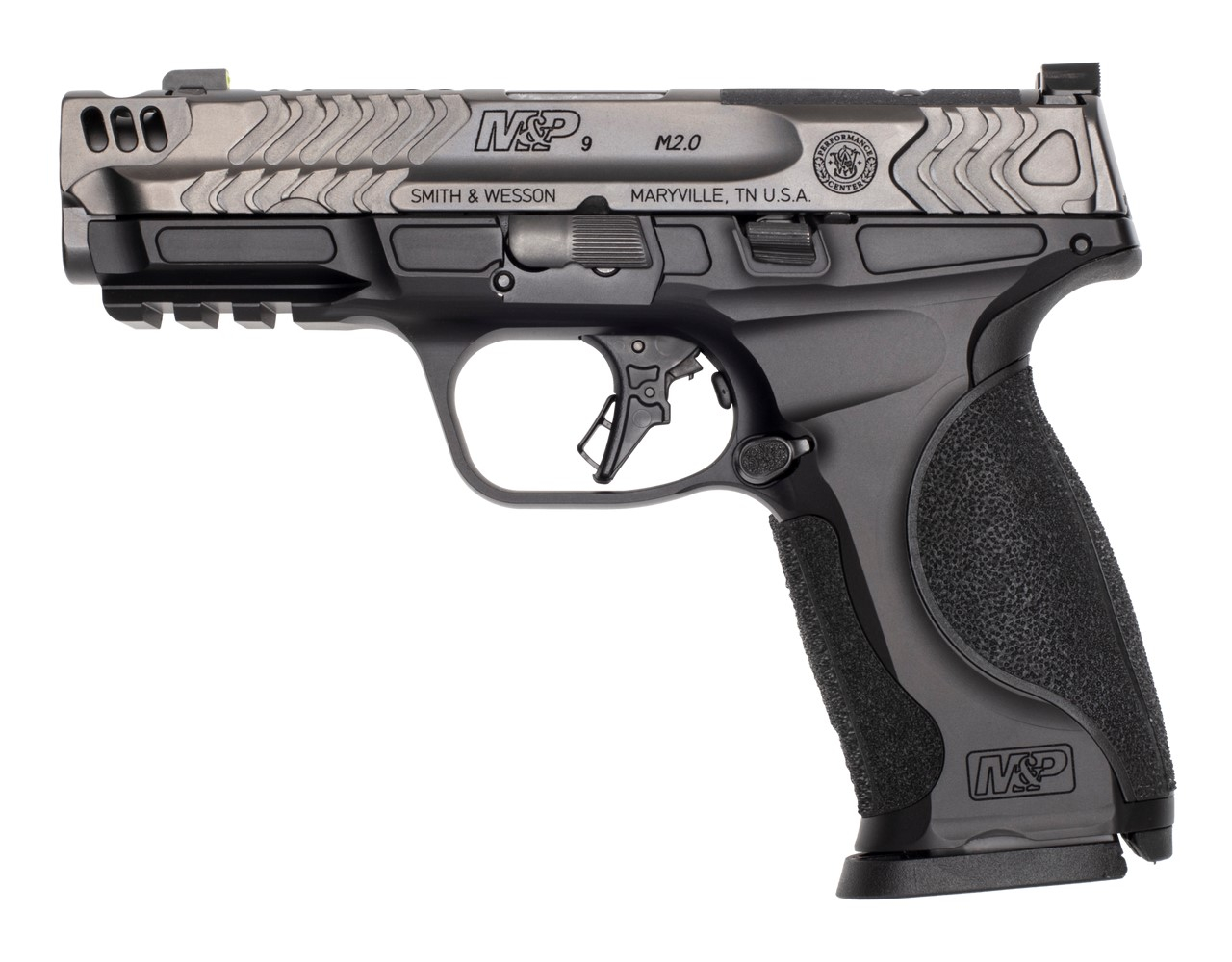
The video opens with an introduction to the Smith & Wesson M&P 2.0 Metal Comp Carry, positioned as a new favorite in the M&P lineup. The hosts immediately compare it to the original polymer M&P, pointing out that despite the new aluminum metal frame, the overall weight is almost identical to the OG polymer version. They emphasize the high machining quality and durability of the metal construction, noting that it gives the pistol a more premium feel without adding bulk. Attention is drawn to the aggressive grip texture, well-executed slide serrations, and window cuts that aid manipulation. Shared features with the earlier M&P models include interchangeable backstraps and an optic-ready slide, making it easy to mount popular red dots. The hosts explain that this Metal Comp Carry uses an integrated, ported barrel compensator with an overall barrel length around 4.25 inches, setting the stage for a direct shooting comparison with the original M&P.
The discussion moves deeper into ergonomics and controls on the M&P 2.0 Metal Comp Carry. The pistol retains the familiar M&P grip angle and contour but benefits from the rigidity and feel of the aluminum frame. The aggressive grip texture is highlighted as a major upgrade for control, especially under recoil or with sweaty or gloved hands. Slide serrations and window cuts are described as both functional and visually appealing, giving better purchase for press checks and manipulations. The trigger is described as essentially a single-action, flat-faced design with a defined wall and crisp break, a notable improvement over early M&P triggers. Interchangeable backstraps allow shooters to tailor the grip size, and the optic-ready slide supports modern carry optics setups. The hosts express confidence in the M&P 2.0 Metal platform overall and prepare to validate these impressions on the range by shooting both the OG M&P and the new compensated metal carry model back-to-back.
On the range, the hosts begin with the original M&P 9mm to establish a baseline. They note how securely the pistol locks into the hand thanks to its aggressive grip texture, which keeps the gun from slipping even when hands are sweaty, oily, or otherwise compromised. This texture is praised for performance but acknowledged as a trade-off in comfort, especially for concealed carry against bare skin or for shooters with more sensitive hands. The original M&P’s recoil characteristics are described as entirely manageable but more pronounced compared to the new Metal Comp Carry. This segment underscores how the OG model still performs well, yet leaves room for improvement in recoil control and overall shooting comfort. The hosts use this experience to set up a direct comparison, transitioning to the Metal Comp Carry to see how the compensator, metal frame, and updated features change the feel, recoil impulse, and sight tracking during rapid fire.
Switching to the M&P 2.0 Metal Comp Carry, the hosts immediately remark that it feels better in the hand despite its similar overall design. The compensator and metal frame combine to deliver noticeably less felt recoil and a softer, flatter recoil impulse than the original M&P Metal and polymer versions. A high-visibility front sight aids rapid acquisition and can co-witness with optics or be swapped for Smith & Wesson or aftermarket night sights. The compensator’s benefits come with trade-offs: increased blast, more flash, extra noise, and additional dirt and debris, especially evident when using a weapon-mounted light at night, where a dust cloud can obscure the target. The integrated comp also prevents adding a suppressor. The hosts still conclude that the compensated model offers a superior shooting experience but at a higher cost, with MSRP over $1,000 and expected lower street prices. They express interest in a non-compensated and possibly tactical variant, then invite viewer feedback on the M&P lineup and this Metal Comp Carry specifically.





















 Loading...