Green shirts, merch plug, and AR-15 accuracy challenge setup
The video opens with friendly trash talk as the hosts argue over whose AR-15 is the most accurate, quickly forming informal teams around their preferred rifles. They notice everyone coincidentally wore green shirts, turning it into a lighthearted plug for their branded apparel and even baby gear available on their site. After reintroducing the cast—Ka, Ryan, Brandon, and Jason—they explain that this episode focuses specifically on accuracy, not reliability or durability. The plan is a structured range test to see which rifle prints the tightest groups. Each AR-15 is briefly introduced: a personal LWRC featuring a custom light bar, T-Rex Arms light setup, Modlite, and Geissele trigger; a Geissele Super Duty with a 14.5-inch pinned and welded barrel; a 12.5-inch Griffin-based build; and an older URGI/block 2 style rifle. The tone stays competitive but playful as they set expectations for a data-driven comparison at 100 yards.
Rifle line-up, ammo selection, and fair test methodology
The hosts continue ribbing each other over rifle choices, comparing an OG Block II M4A1 style build to a Daniel Defense rifle and emphasizing that this is an accuracy shoot-off, not a torture test. They outline the ammunition lineup: Black Hills Mk 262, IMI Razor Core 77-grain, Federal Gold Medal Premium .223 Remington, and PMC X-TAC 55-grain ball. All rifles share a 1:7 twist rate, keeping barrel characteristics consistent. To eliminate optic bias, they use a single Leupold Mark 5HD 5-25x scope, moving it from rifle to rifle. The target layout is standardized, with each ammo type fired in five-round groups at specific quadrants so results are easy to compare. When they start reviewing the Geissele Super Duty’s target, they note multiple pairs of shots going through the same hole, identify one or two obvious flyers as shooter error, and estimate group sizes in the 1 to 1.5 MOA range, with IMI Razor Core already standing out.
Geissele Super Duty accuracy results with multiple loads
Attention turns fully to the Geissele Super Duty’s performance at 100 yards. With the shared Leupold Mark 5HD mounted, the rifle consistently produces roughly 1 to 1.5 MOA groups across the tested loads. The hosts point out tight clusters where two or more rounds share the same hole, reinforcing that the platform is mechanically capable and that some outliers are likely shooter-induced flyers. IMI Razor Core 77-grain impresses them most, repeatedly delivering sub-MOA groups and very consistent point of impact. Surprisingly, 55-grain loads also group well from the 1:7 twist barrel, contradicting assumptions that heavier match bullets are always required for accuracy. They emphasize how the Super Duty’s 14.5-inch pinned and welded barrel, combined with quality ammo, can rival longer-barreled rifles in precision. This segment sets a benchmark for the rest of the test, as other rifles will be judged against the Geissele’s tight, repeatable groups with both match and ball ammunition.
LWRC, Griffin 12.5-inch, and early Daniel Defense results
The focus shifts to the LWRC rifle, which delivers some of the best groups of the day. With IMI Razor Core, the LWRC prints sub-MOA clusters, while other loads hover just over 1 MOA, showing the rifle is not overly ammo-sensitive. Federal Gold Medal groups visibly walk left on the target, suggesting a different point of impact rather than a loss of precision. PMC X-TAC 55-grain FMJ, a more budget-friendly ball load, still manages sub-2 MOA performance, reinforcing that the LWRC shoots a wide range of ammunition well. Next, a Griffin Armament build with a 12.5-inch barrel is tested at 100 yards. Despite the shorter barrel, it achieves around 2 MOA with Mk 262 and notably tight groups with IMI Razor Core when using the scope, challenging assumptions that compact barrels cannot be accurate. Early shots from a Daniel Defense rifle also look strong, hinting that the classic configuration will hold its own against the more modern builds.
Deep dive on Daniel Defense groups and overall MOA recap
This segment zeroes in on the Daniel Defense rifle’s full set of groups. Using Mk 262 and IMI Razor Core, the rifle produces tight, respectable clusters, confirming that quality match ammo can make even an older-style setup shine. Federal Gold Medal Match and 55-grain XTAC ball show more inconsistency, and the shooters attribute some of the looser groups to ammo variability rather than poor fundamentals. They then recap the entire test: the LWRC averages about 1.36 MOA across four groups, another rifle comes in at a clean 1 MOA average, and the Daniel Defense “OG” averages around 1.6 MOA. The hosts still consider that performance impressive and, more importantly, consistent. They briefly touch on barrel profile and length, noting that heavier or longer barrels may hold accuracy better when hot. References to units like LC and Delta Force underscore that similar configurations have seen serious use, and Griffin is praised for strong manufacturing and an excellent ambidextrous lower option.
Ambi controls, barrel length debate, and future test ideas
Conversation turns to ergonomics and configuration choices. The hosts highlight Griffin’s ambidextrous lower and mention Daniel Defense’s Ambi R3 lower, pointing out how modern AR-15s increasingly cater to left-handed shooters and those who prefer mirrored controls. They reiterate that several rifles in the test effectively achieved around 1 MOA accuracy, especially when fed IMI Razor Core, which emerges as a standout performer. A debate follows over how much barrel length truly affects 100-yard accuracy. One host argues that 16-inch barrels have been consistently a bit tighter in his experience, though the difference compared to 12–12.5-inch or 10.3-inch Mark 18-style barrels is not dramatic at this distance. They invite viewers to suggest future content: budget AR-15 accuracy shootouts, dedicated barrel length comparisons, and even AK versus Galil accuracy testing. Feedback is requested on whether the current testing format, with shared optics and standardized targets, feels fair and useful.
Rumble bonus content and premium rifle giveaway promotions
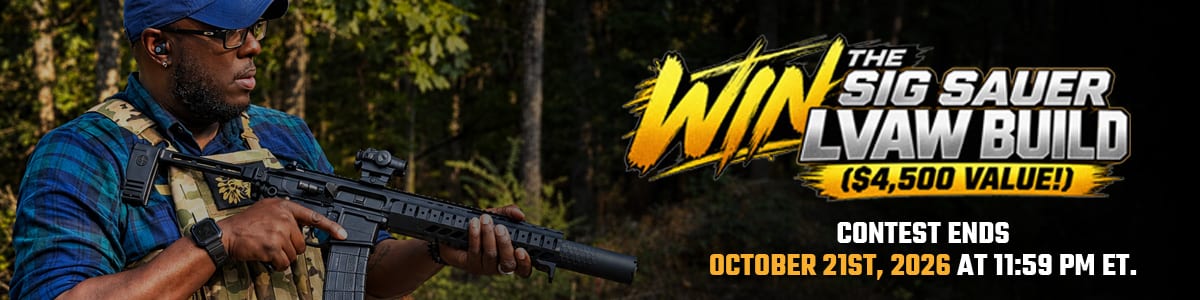
In the closing portion, the hosts pivot from test results to community and promotions. They mention additional, often less YouTube-friendly content available on Rumble, encouraging viewers who want deeper dives or spicier topics to follow them there. The discussion then highlights CFCcontest.com, where high-end rifles are being given away. A centerpiece is an HK MR27-style Marine Corps tribute rifle, limited to 1,000 units, appealing to collectors and fans of USMC-inspired builds. They hint at upcoming Q-branded, delayed-blowback style platforms as part of future giveaways, signaling that the prize pool will stay premium and interesting. The segment reinforces that the channel’s testing and educational content is supported by these contests and alternative platforms. The video wraps with thanks to viewers for watching the AR-15 accuracy comparison and an invitation to return for future experiments involving different rifles, calibers, and configurations.



















 Loading...