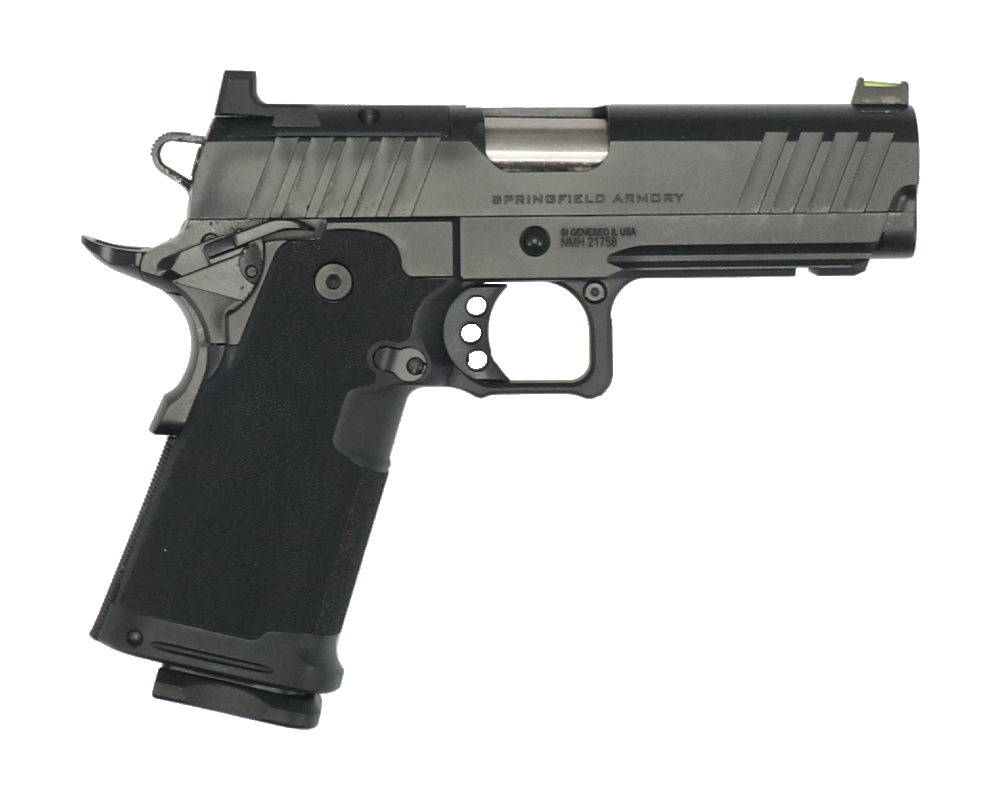
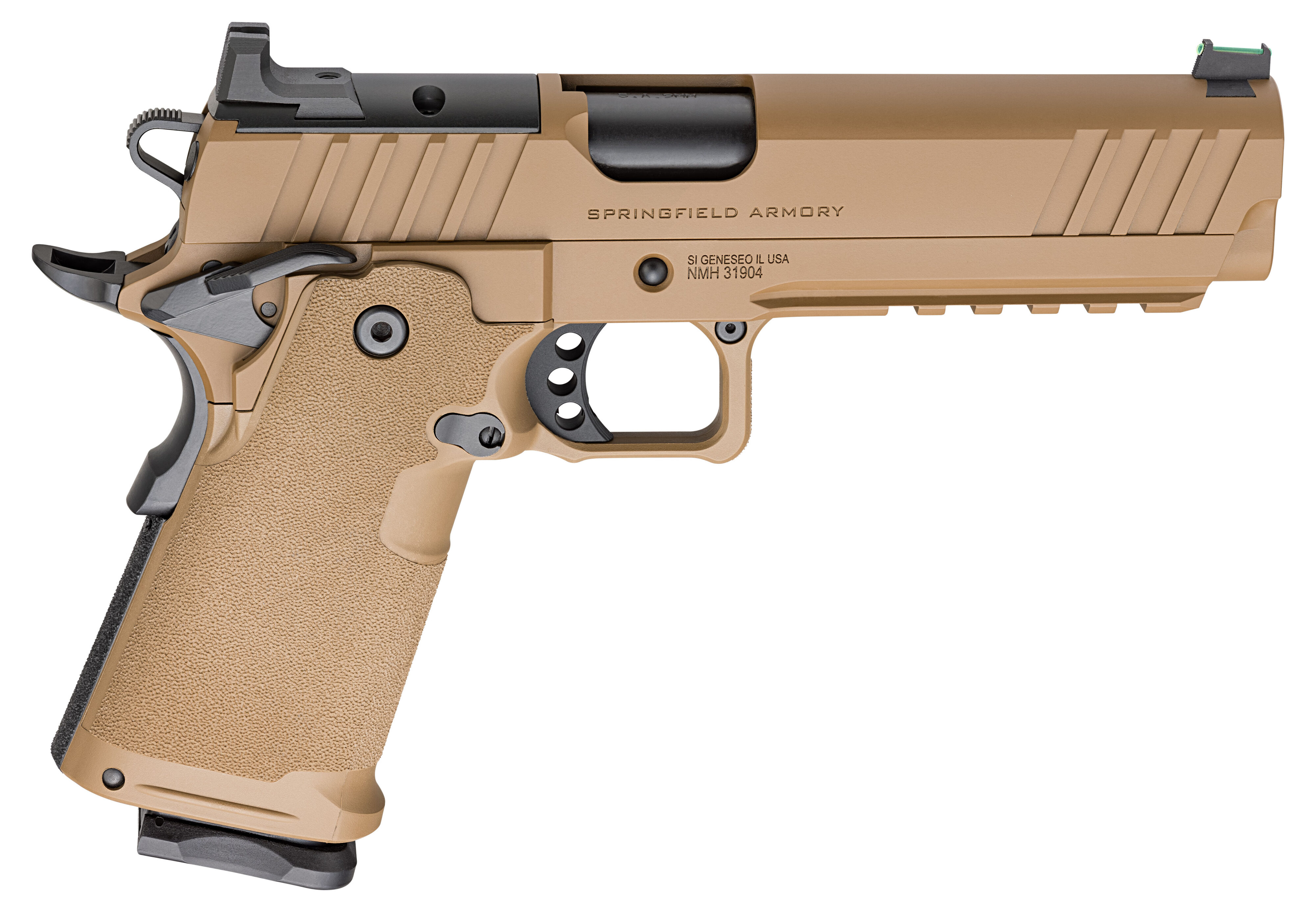
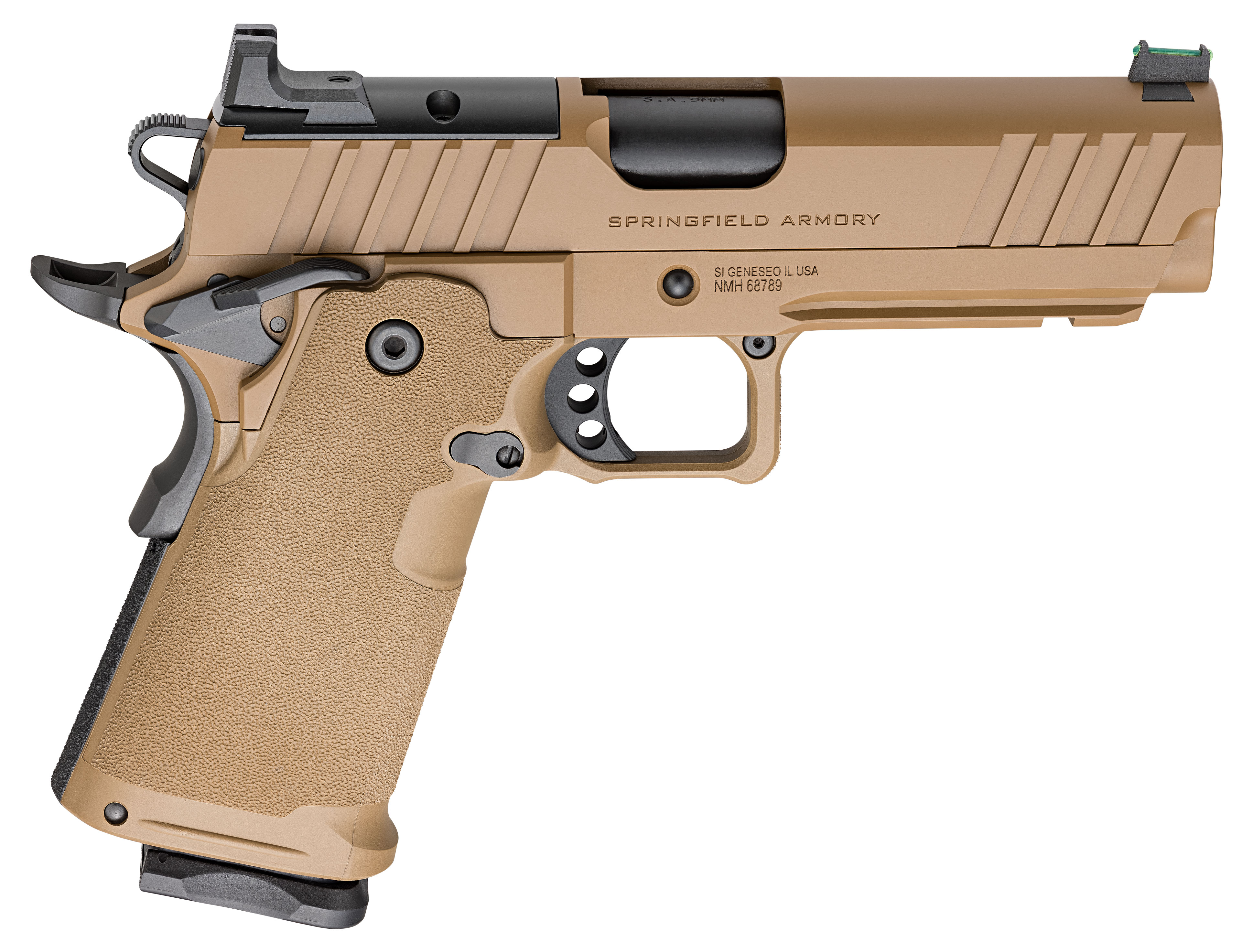
The discussion centers on the Springfield Prodigy 1911 as a competition-oriented pistol. It is presented as a solid starting point for shooters interested in getting into competitive shooting. The Prodigy is a double-stack 1911 chambered in 9mm, giving it higher capacity while retaining familiar 1911-style controls. The conversation sets up a comparison between a stock Prodigy and a personally upgraded version that will be shown later, highlighting how the platform can evolve from factory configuration into a more specialized competition gun over time.
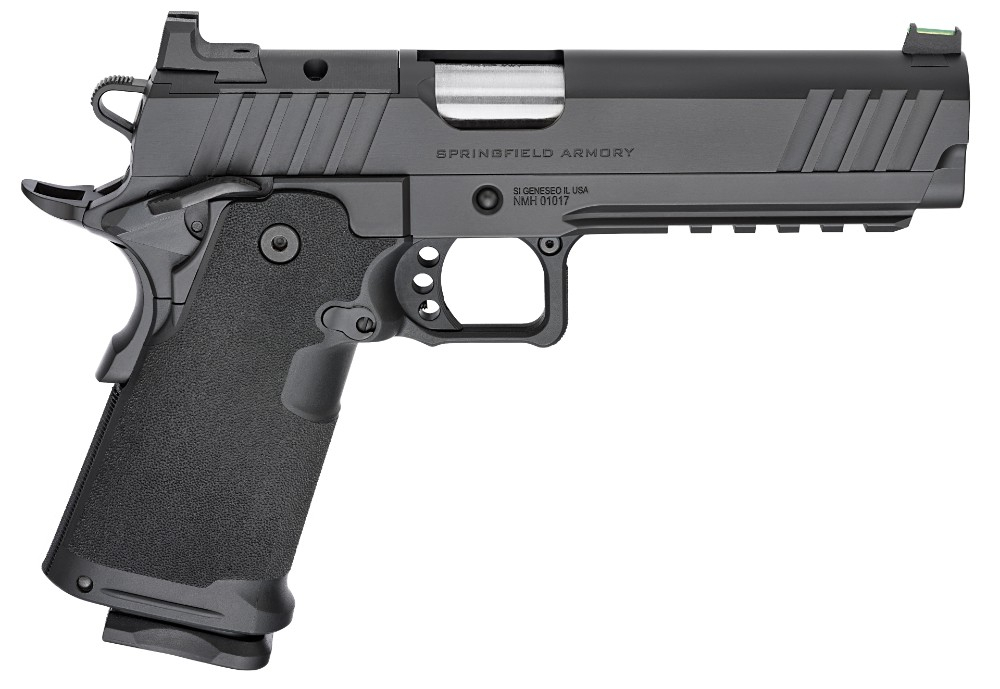
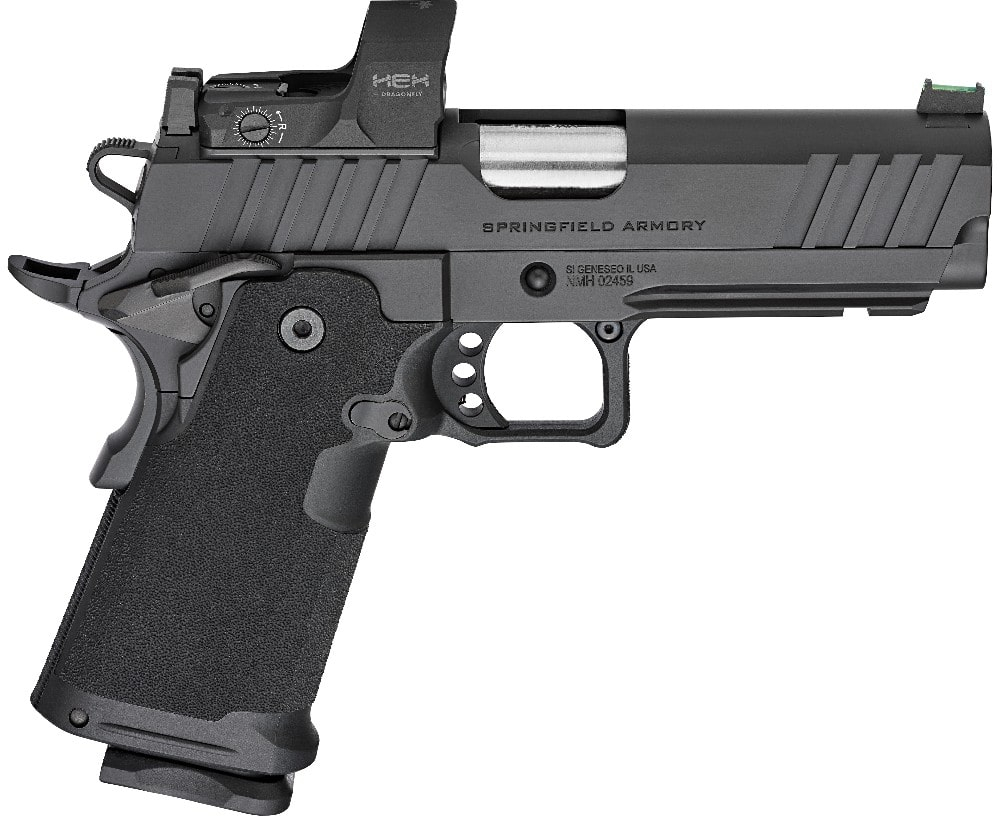
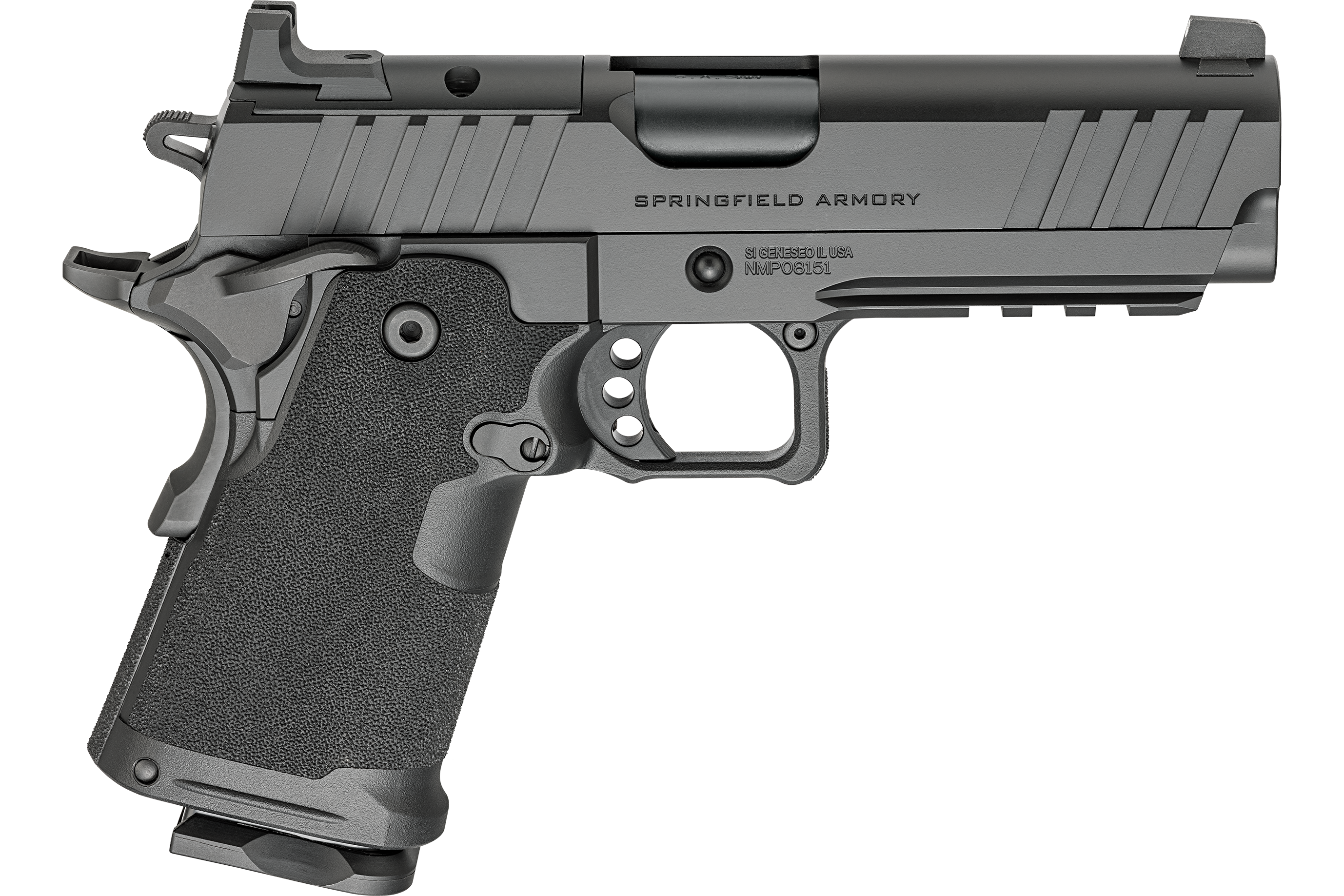
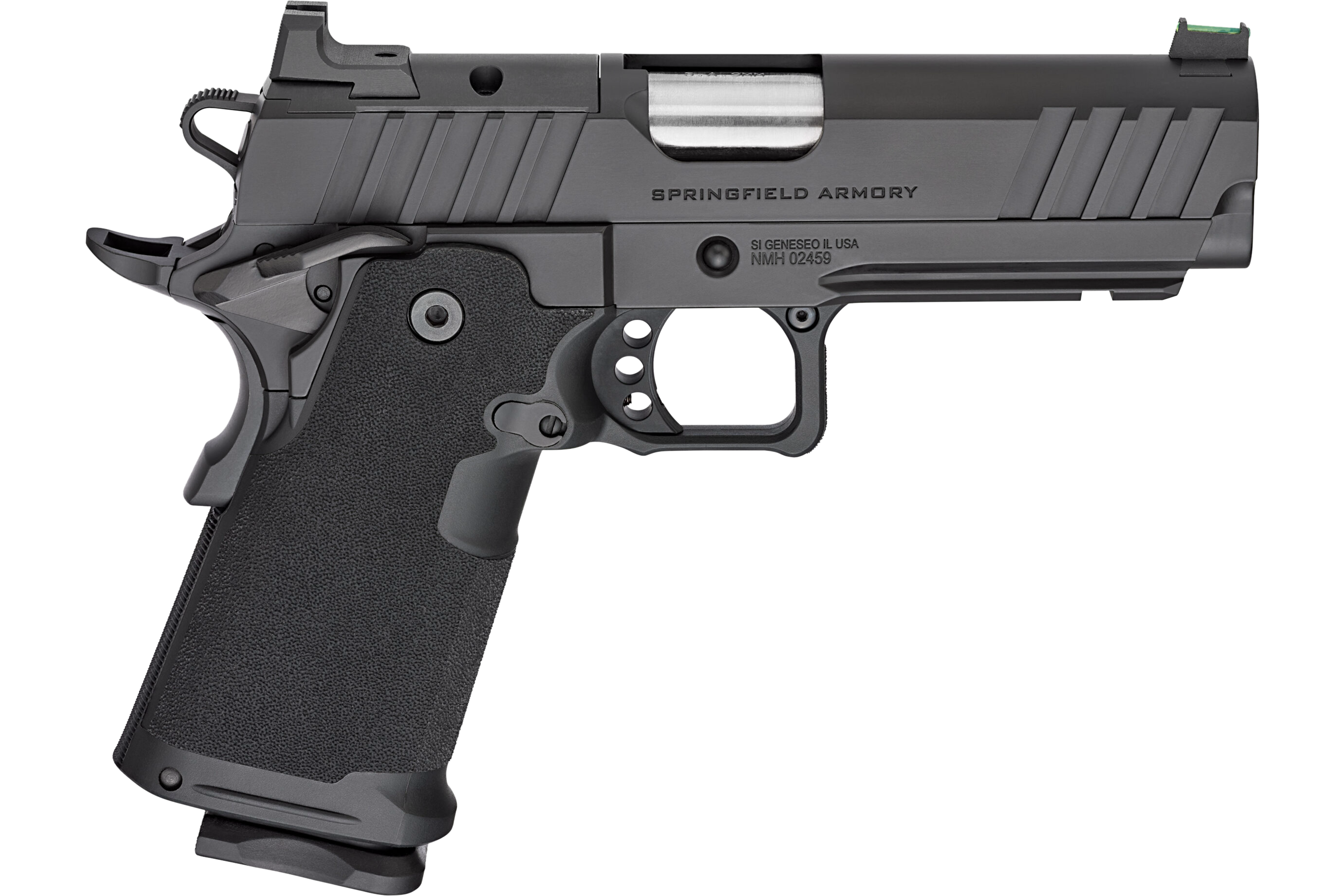
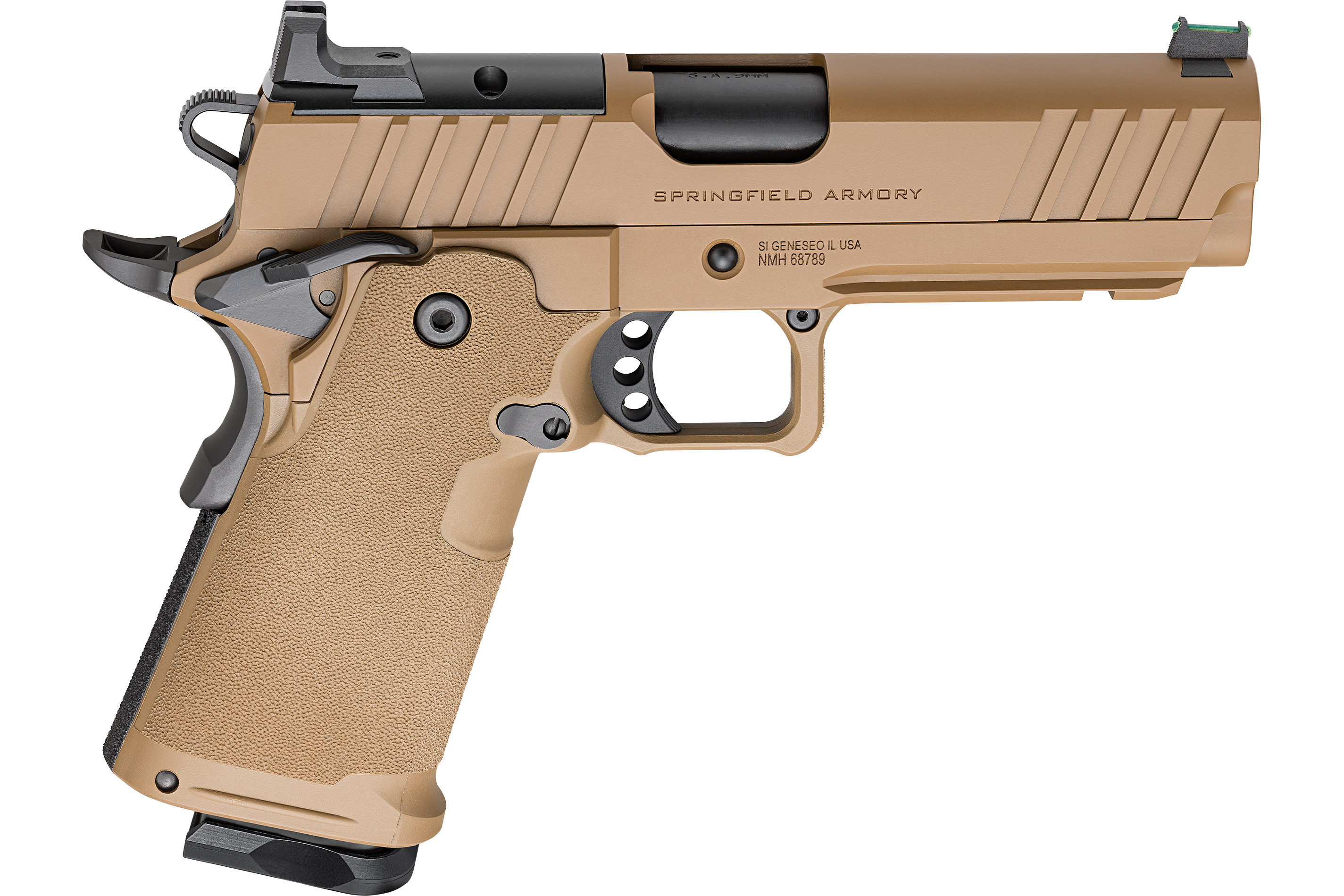
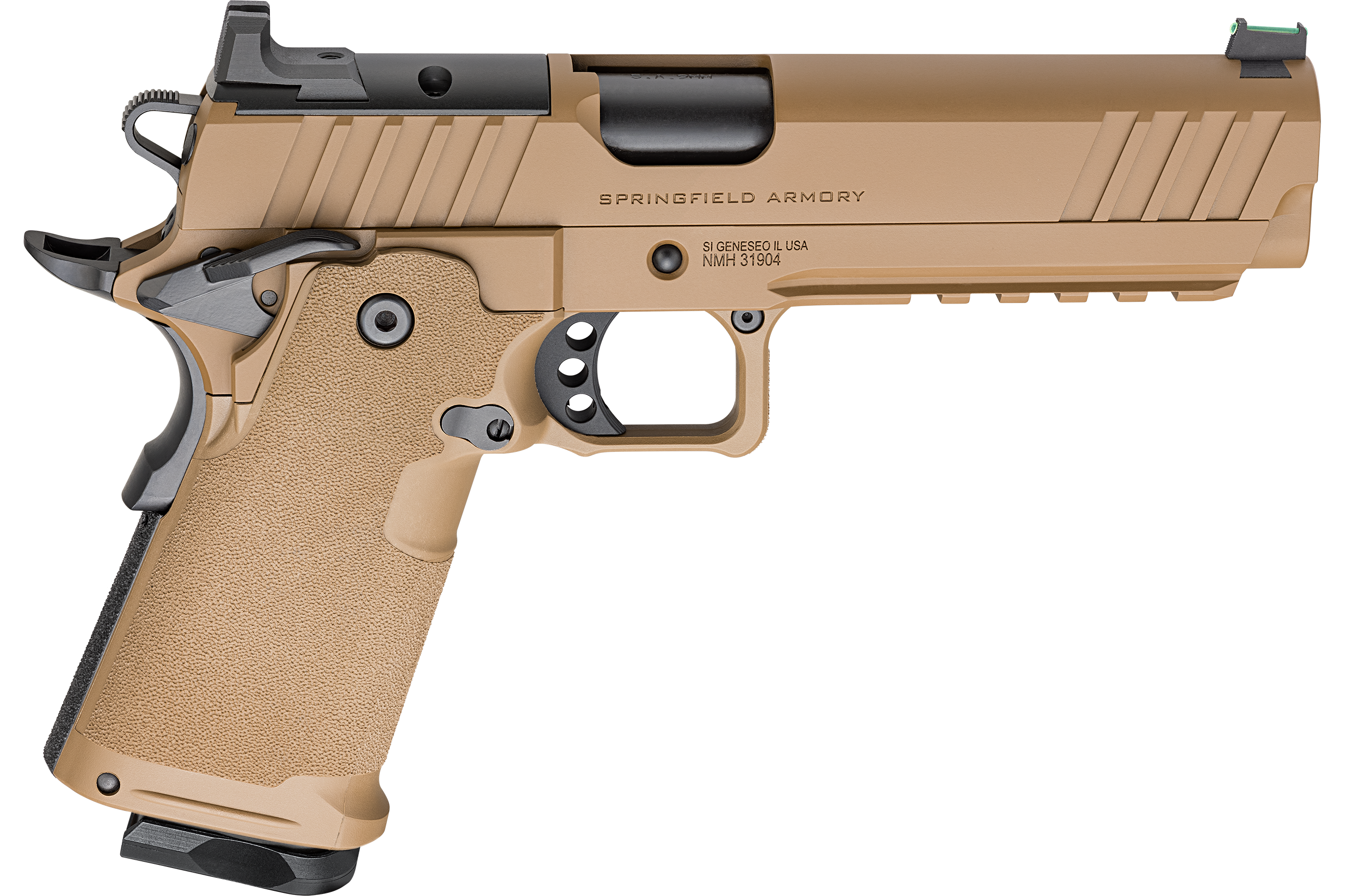
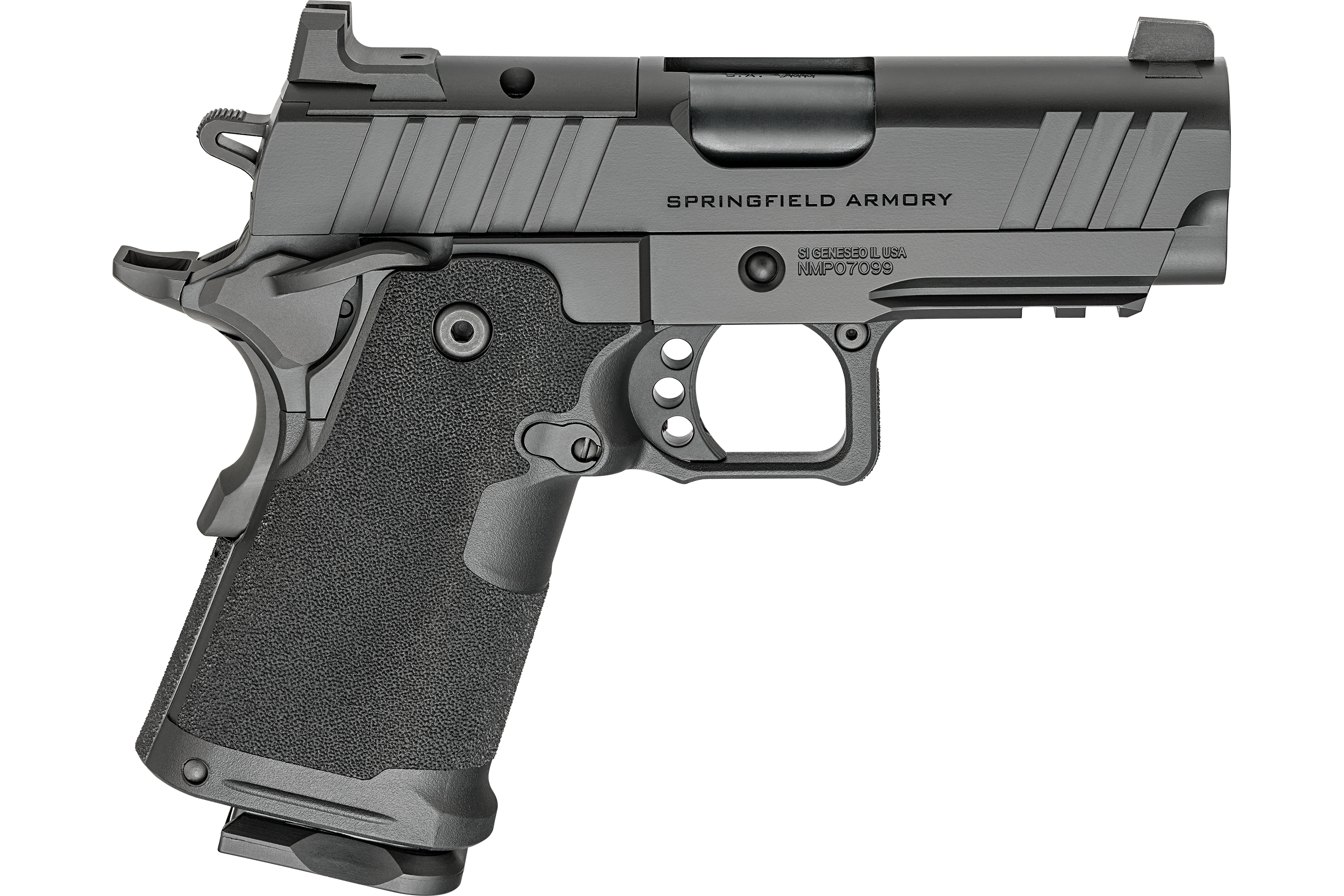
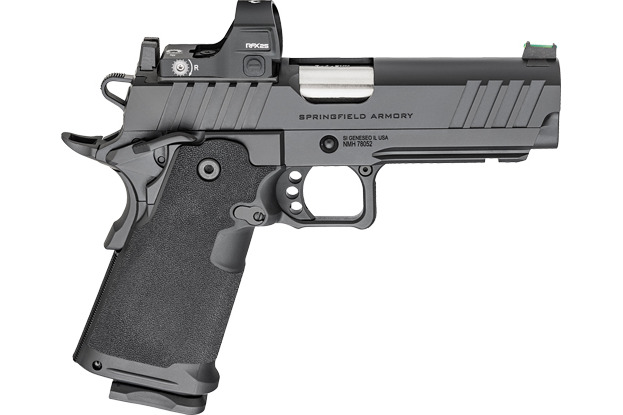
The Prodigy uses traditional 1911-style controls, including a grip safety and thumb safety, but in a double-stack 9mm format for increased capacity. Springfield ships the pistol with 17-round and 20-round magazines, and there are also 26-round magazines available for those wanting even more capacity. The pistol is optic ready and uses the Agency Optic System, allowing the shooter to swap plates and change optic footprints with aftermarket plates. From the factory it includes a front fiber optic sight and a rear sight, but the platform is clearly intended to support red dot optics for competition use.
Attention is given to how the Prodigy feels and runs out of the box. The slide serrations are described as comfortable and effective for racking the gun, with the shooter preferring to load and perform reloads by gripping the front of the slide before returning to target. The slide operation is characterized as smooth and consistent, without excessive resistance. The grip texture offers some traction, but there is a preference expressed for a more aggressive texture, especially for shooting in conditions where hands may become sweaty. The ambidextrous safety on the stock gun is relatively thin, and the curved trigger is noted as an area many shooters may eventually replace with aftermarket options.
The video then shifts to a personally customized Springfield Prodigy to illustrate how the platform can be modified. This upgraded pistol is presented as an evolution of the stock gun rather than a complete overhaul. The focus is on practical competition-oriented changes rather than cosmetic work. The upgraded Prodigy retains the same basic 1911 double-stack 9mm foundation but incorporates enhancements to grip, magwell, trigger, and optics to better suit competitive shooting needs. The comparison is framed as a clear before-and-after look at what many shooters might realistically do over time.
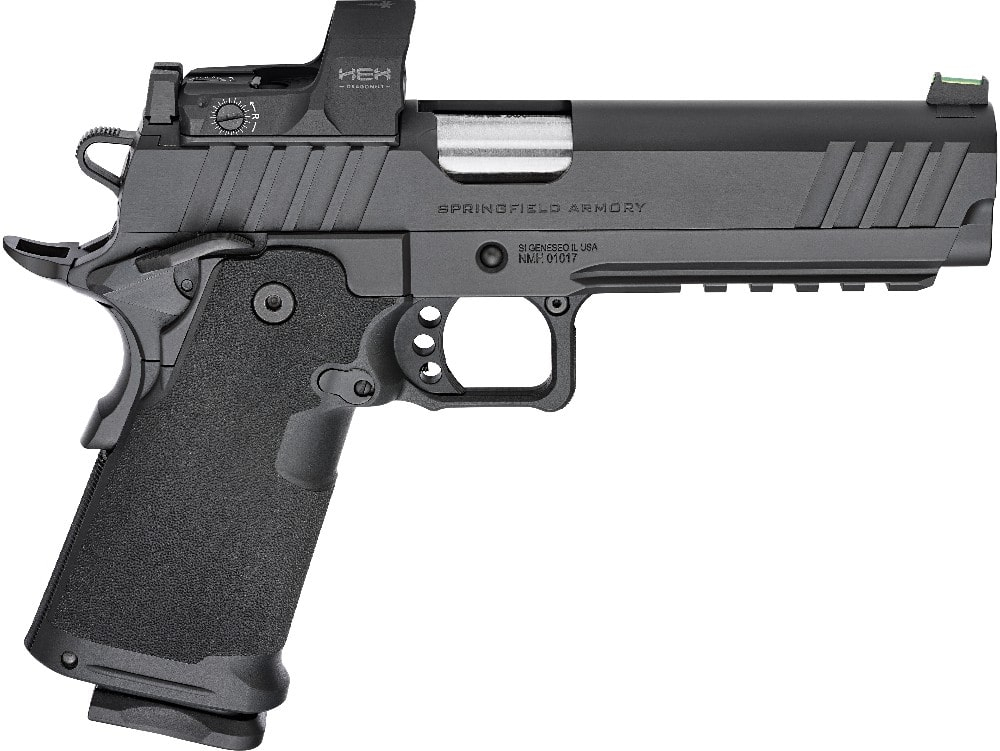
The customized Prodigy features a Phoenix Trinity Hero grip, which provides noticeably more aggressive texture and improved control. A magwell has been added, installed by simply driving out the pin and fitting the preferred aftermarket magwell, to speed and smooth reloads. The curved factory trigger has been replaced with a flat-face trigger that offers a shorter pull and a feel consistent with the shooter’s other rifles, PCCs, and pistols. The optic setup has also changed: a Holosun 507 Comp red dot is mounted, and the front sight has been removed because the specific plate used does not provide co-witness iron sights and sits higher. The front sight was removed to avoid visual distraction during competition shooting.
The upgraded pistol uses a wider ambidextrous safety compared to the thinner factory levers. The wider safety provides a better surface for the thumb and effectively acts as a thumb rest, which is useful for both right- and left-handed shooters and when shooting strong hand or weak hand only in competition. Internally, some parts such as the hammer spring and trigger components have been replaced with EGW parts to make the gun cycle and break more smoothly. The pistol retains the match-grade bull barrel, with the discussed gun being a 5-inch model. The emphasis remains on refining feel and control rather than changing the core barrel and slide configuration.
The stock Prodigy is described as a capable pistol that can be run effectively straight from the factory. The upgraded version demonstrates how incremental changes can tailor the gun to a specific competition role. Even with the added Phoenix Trinity Hero grip, magwell, flat-face trigger, Holosun 507 Comp, wider safety, and EGW internal parts, the total investment is still characterized as coming in under the cost of many other double-stack 1911s commonly used for competition. The comparison underscores that shooters can start with the base Prodigy and gradually add parts as needs and budget allow, rather than having to purchase a fully custom gun from the outset.
The closing remarks reinforce the Springfield Prodigy 1911 as a practical entry point for those wanting to shoot competition or simply own a reliable 9mm double-stack 1911. The pistol is considered a strong performer in stock form, with clear upgrade paths for grips, safeties, triggers, optics, and internal components as a shooter’s skills and preferences develop. Viewers are encouraged to share their own experiences with both stock and modified Prodigy pistols. The overall takeaway is that the platform supports starting simple, shooting it as-is, and then making thoughtful modifications over time to better match individual competition or range needs.





















 Loading...