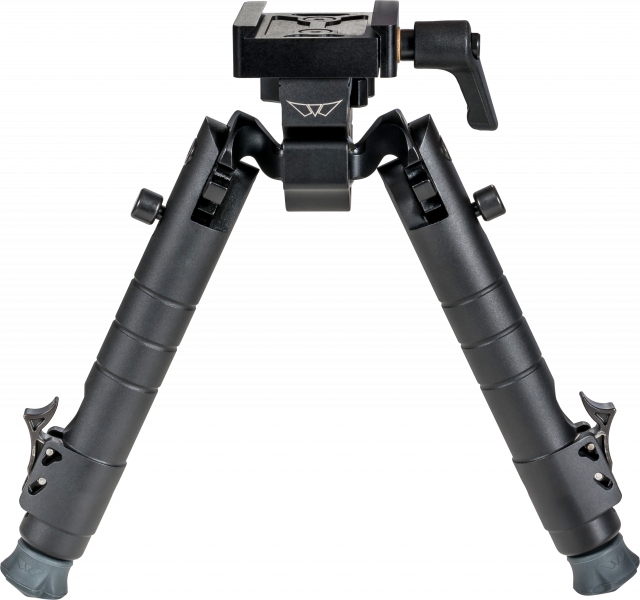
The video opens with a lighthearted introduction before shifting into a detailed explanation of the ARCA rail system using a Tikka bolt-action rifle in 6.5 Creedmoor with an MDT XRS chassis. The host explains that the ARCA rail was originally developed by the German company Arca-Swiss in the 1990s for professional photography and videography. It is a flat, continuous rail that allows accessories to slide and lock anywhere along its length. A bipod mounted on the ARCA rail is used to demonstrate how quickly it can be loosened, slid forward or backward to adjust balance and recoil control, tightened, or removed entirely. The video highlights the availability of quick-detach adapter plates that let shooters move bipods or rifles between ARCA-equipped tripods and rails in seconds. The segment also notes that while ARCA offers excellent adjustability and stability, quality rails and tripods tend to be heavy and expensive, which can make them less convenient to carry for long distances in the field.
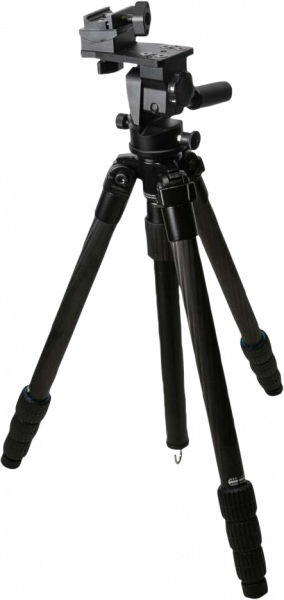
The next section focuses on how ARCA-based tripods expand shooting options beyond the prone position. The host explains that although a solid ARCA-compatible tripod is heavy and costly, it can be left staged at a shooting location to provide a very stable platform. This becomes crucial when tall grass, uneven terrain, mud, or obstacles prevent going prone, allowing accurate shots from standing or other improvised positions. Using a camera and tripod as a stand-in for a rifle, the video demonstrates the clamp-on, clamp-off, slide-in nature of ARCA plates. The plate quickly locks into the tripod head, then loosens to slide for fine balance adjustments before being tightened again. The host stresses that to safely support a rifle, shooters must invest in a high-quality, rigid tripod and avoid flimsy, bargain models that wobble or flex. This emphasis on stability leads into a broader discussion of mounting systems and transitions toward the long-standing Picatinny quad rail standard.
The video then turns to the Picatinny quad rail system, noting its development around 1995 and its enduring importance on modern rifles. The top Picatinny rail remains the primary mounting surface for optics, providing a robust, repeatable interface that holds zero under recoil and rough handling. The host explains that while side and bottom Picatinny accessory rails have declined in popularity as M-LOK has grown, quad rails still offer significant advantages. They are extremely durable and rigid, making them well suited for hard use and heavy accessories. Quad rails also tend to conceal and manage heat better during rapid fire or mag dumps, keeping the shooter’s hands more insulated. Many clamp-style QD mounts designed for Picatinny are less prone to shifting than some M-LOK-mounted accessories. This segment sets up a direct comparison between the traditional quad rail approach and the newer, slimmer M-LOK handguards that dominate many current AR builds.
The comparison between quad rail Picatinny and M-LOK handguards highlights clear trade-offs. Quad rails are praised for extreme durability, rigidity, and better heat shielding during sustained fire, but they are bulkier and less comfortable to grip without a vertical foregrip. M-LOK handguards are slimmer and more ergonomic, especially for shooters who like to wrap a bare or gloved hand directly around the rail. They offer more flexible mounting positions for lights, bipods, and other accessories. However, M-LOK can get very hot under rapid fire, is generally considered less durable than full quad rails, and some mounts are more prone to shifting. The host concludes that the choice is mission-dependent, with a personal leaning toward M-LOK when using gloves. The video then explains how to add ARCA capability to M-LOK ARs using Area 419 ARCA plates that bolt to existing M-LOK slots, and by using CMT handguards that combine M-LOK on the sides with integrated ARCA on the bottom, mirroring the Tikka precision setup shown earlier.
In the closing segment, the host directly asks viewers whether they consider an ARCA rail necessary for their style of shooting. The advantages of ARCA are summarized around flexibility and positional shooting. With ARCA, shooters can quickly adapt to multiple platforms and positions, such as tripods, barricades, and benches, instead of being limited to prone. This is especially valuable in muddy, uneven, or obstructed terrain where lying down is impractical or impossible. The host expresses strong approval of ARCA systems for precision and practical shooting, while acknowledging that not everyone may need the added weight and cost. Viewers are invited to comment on whether they like ARCA rails, what mounting system they currently use, and whether they prefer M-LOK, quad rail, Picatinny, or a dedicated ARCA setup. The video ends with a brief thank-you to the audience and an open request for feedback and discussion.





















 Loading...