The video opens with a focus on shooting suppressed and introduces Sylvan Arms, a company known for M4 folding adapters, QD sling points, and other small rifle components that has expanded into suppressor manufacturing. The hosts explain that Sylvan has been building cans for over seven years and already holds law enforcement contracts, positioning the brand as more than a newcomer. With recent changes leading to a $0 tax stamp window, they frame this as an ideal time to consider getting into suppressors. Attention then shifts to the current lineup, including options for 9mm, 5.56, and .30-caliber applications. A 9mm can is shown mounted on a B&T PMX-S 9mm sub gun with an A3 brace, which will also appear in a future PCC showdown. The 9mm suppressor uses a QD ratchet attachment system and is notably lightweight thanks to a titanium tube combined with a stainless steel end cap and blast baffle. The hosts note it can handle calibers within the 9mm bore size, such as 300 Blackout and potentially 5.56 with typical 10.5-inch barrel restrictions, and they explain how harder materials at high-pressure points improve durability and reduce sparking.
The discussion moves into the details of Sylvan Arms’ very light suppressors that ship with their own muzzle devices. These devices feature an intricate ratcheting QD system that does not require timing, simplifying installation. Open ports and tines on the muzzle device act as a compensator while offering some flash mitigation, which is especially useful on pistol-caliber carbines. A compact 5.56 can is then shown on a Mk18-style carbine, emphasizing how short and maneuverable the setup remains while still delivering suppression. Priced around $500, this 5.56 option is positioned as particularly attractive during the $0 tax stamp period. The hosts contrast a 300 Blackout can that can technically run 5.56 but is not magnum rated with a longer magnum-rated .30-cal can designed for hotter rounds like .308, .300 Win Mag, and 6.5 Creedmoor. They stress the importance of choosing caliber-specific cans and matching each suppressor to its intended role. Modularity is highlighted through replaceable end caps and the ability to neck a 30-cal can down to 5.56, while noting the ratchet system as the primary moving, wearable component supported by Sylvan’s warranty.
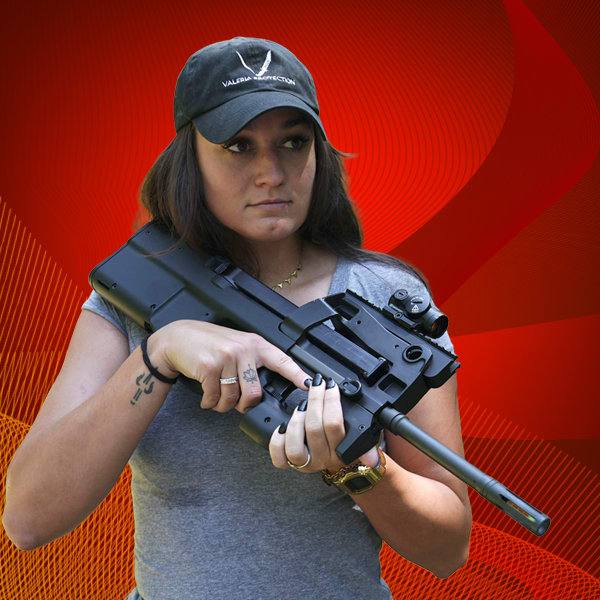
The hosts explain the internal workings of the ratchet system, focusing on a single roll pin housed in stainless steel that serves as the key wearable part. This design allows Sylvan Arms to replace the roll pin easily at the factory without additional welding, keeping RMA turnaround times low and maintenance straightforward. They then compare these suppressors to high-end cans that can cost up to around $2,000, emphasizing that Sylvan’s offerings are intentionally budget-friendly while still backed by real-world law enforcement use. At the range, a full lineup is presented: a .308 IWI Tavor 7, a Radical 300 Blackout rifle, a 9mm Betta PMXS, a 5.56 Mark 18-style rifle, and an FN 502 .22 LR, each paired with an appropriate Sylvan suppressor. Focusing on the 5.56 can, they note a barrel restriction of no shorter than 10.5 inches. On the Mark 18-style rifle, the suppressor’s sound is described as not harsh, with some visible muzzle flash from unburned powder despite titanium core baffles and a stainless steel end cap. Recoil impulse remains largely unchanged, underscoring that the primary benefit is sound and flash reduction rather than recoil mitigation.
Attention turns to a comparison between a shorter K-model 5.56 can and a longer 5.56 suppressor. Both deliver similar recoil impulse, but there is a noticeable difference in sound, with the longer can offering more suppression. The stainless steel and titanium construction builds heat quickly under sustained fire, yet the flash remains manageable thanks to the steel end cap. The hosts then move to the SA30 8-inch suppressor on a .308 platform, noting a barrel length restriction of no shorter than 12.5 inches for .308 use. On the .308 rifle, the SA30 delivers surprisingly soft recoil, reduced flash, and carries a full-auto rating, making it suitable for harder use. Next, they test the SA300 in both 6-inch and 8-inch configurations on 300 Blackout subsonic ammunition. These setups are reported as very quiet with minimal gas to the shooter’s face, and the 30-cal SA300 options are ranked among their top choices for overall performance. The segment underscores how barrel length, can length, and caliber interact to shape sound, heat, and shooting comfort.
The video then highlights pistol-caliber and rimfire applications. The SA9 6-inch can is run on a PMX-style 9mm blowback platform, where it delivers soft shooting characteristics without dramatically increasing blowback or gas to the shooter. This makes it appealing for PCC users who want suppression without sacrificing reliability or comfort. The hosts also showcase the SA22 on a .22 LR setup, paired with subsonic ammunition. They emphasize that the .22 suppressor adds very little weight and heat, remaining cool even after multiple strings of fire. Sound levels with subsonic .22 LR are described as near ear-safe and extremely quiet, making the combination ideal for training, plinking, or small-game scenarios. Final shots with the .22 LR configuration reinforce how little noise escapes beyond the action cycling and bullet impact. Across both the SA9 and SA22, the segment illustrates how Sylvan Arms extends its budget-friendly suppressor philosophy into pistol-caliber carbines and rimfire platforms while maintaining practical performance.
Returning to the table, the hosts recap their experience with several Sylvan Arms suppressors after the range session. They single out the 8-inch .30-cal can on a 300 Blackout rifle as a favorite configuration, citing its balance of length, weight, and impressive sound reduction with subsonic ammunition. Construction details are revisited: titanium internals paired with a steel end cap are standard across much of the line, a combination that keeps weight down while reinforcing high-pressure, high-flash areas. These cans heat up quickly under fire but also cool rapidly once shooting pauses, which is important for practical handling. Sound performance is praised on 300 Blackout, 5.56, and especially .22 LR, where the suppressor was nearly inaudible even when shot dry. The recap reinforces that while these are budget-oriented cans, they deliver credible suppression, manageable flash, and acceptable gas levels, making them viable for both recreational shooters and agencies looking for cost-effective solutions.
In the closing discussion, the hosts address pricing and value. They note that the most expensive Sylvan Arms suppressor in the lineup is around $800, placing the brand well below many premium competitors that can approach $2,000. This pricing, combined with solid performance and practical features like QD ratchet mounts and modular end caps, positions Sylvan as a strong option for shooters entering the suppressor market. The video references Sylvan’s existing contracts with police departments and government agencies, using those relationships to underscore durability and reliability beyond casual range use. Finally, viewers are encouraged to take advantage of the upcoming $0 tax stamp period, which temporarily removes a significant cost barrier to ownership. The hosts frame this timing as an economical way to experience quieter shooting across multiple calibers, from 5.56 and .308 to 300 Blackout, 9mm, and .22 LR, using suppressors that balance budget pricing with real-world performance and supportable maintenance.




















 Loading...