The video opens by introducing the Anderson Stallion, an AR-15 rifle chambered in 5.56 NATO, and poses the question of whether it can punch above its pay grade. The host immediately frames it as a potential choice for shooters seeking strong performance at a budget-friendly price. The rifle is presented as a lightweight, well-built option that aims to deliver impressive value, especially for those looking for a dependable AR-15 without spending a premium. Throughout the introduction, the focus stays on the Stallion’s role as a cost-effective yet capable platform, setting up the detailed walkthrough of its components, ergonomics, and shooting-related features that follows in the rest of the review.
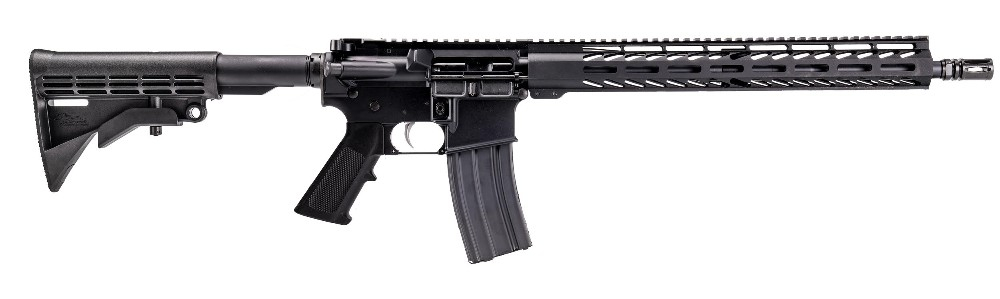
The review moves into the visual and functional highlights, starting with the 15-inch M-LOK rail. There is Picatinny rail along the top, while the left, right, and bottom surfaces feature M-LOK slots, allowing mounting of lights, lasers, and other accessories. Between these sections are diagonal cutouts that reduce weight and add an aggressive, modern look. These cutouts are slightly indented into the handguard, which improves grip and control. At the muzzle, the rifle uses an A2 birdcage-style muzzle device. The upper and lower receivers are made from 7075-T6 aluminum with a Type III hard anodized finish, emphasizing durability and a quality build. This section underscores how the Stallion combines practical mounting options, weight savings, and robust materials in its front-end design.
Attention then shifts to the rifle’s controls and fire control group. The Stallion uses a fairly standard magazine release and an aluminum trigger guard. The trigger itself stands out visually as the only gray or silver-toned component on the rifle. Functionally, it is described as having virtually no take-up, bringing the shooter directly to the wall as soon as the trigger is touched. A slight pull results in a clean break, and the reset is equally crisp, allowing quick follow-up shots. The rifle ships with a standard-capacity aluminum magazine. The magazine well has a subtle flare, making it easier to insert magazines quickly, especially under pressure or when shooting in front of friends at the range. This chapter emphasizes the trigger quality and user-friendly magwell design.
The final portion of the video focuses on ergonomics and overall value. The rifle uses an A2-style polymer grip with molded texture on both sides and the backstrap, providing a secure hold. There is a defined area for the middle finger, helping lock the hand in place and improving control. At the rear, the Stallion features a six-position adjustable M4-style buttstock. It includes a QD sling mount as well as a traditional sling slot, giving flexibility in sling setup. The buttpad has a textured surface to help keep the stock planted on the shoulder and make it easier to find a consistent cheek weld. The reviewer concludes that this is a well-built, lightweight AR-15 that feels excellent in the hands, and with a price under $500, it offers outstanding bang for the buck. Viewers are encouraged to leave reviews if they have experience with Anderson ARs, and the video closes with a brief sign-off.





















 Loading...