The video opens on the bustling atmosphere of SHOT Show 2025 in Las Vegas, with the hosts setting the tone for their Day 1 coverage. They introduce themselves, explain that this is Part 1 of their first full day at the show, and frame the episode as a walk-through of standout firearms and accessories on the showroom floor. The energy is upbeat and focused on giving viewers a booth-level perspective rather than a studio-style overview. The hosts outline that they will be visiting major manufacturers, looking closely at new pistols, safety systems, and optics-ready designs. This introduction positions the video as an on-the-ground look at what is new and noteworthy at SHOT Show 2025, preparing viewers for detailed product segments and brand highlights to follow.
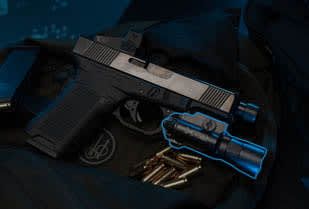
Early in the coverage, the hosts arrive at the Staccato booth and introduce viewers to the new HT family of pistols. Paul from Staccato explains that this line is built around Glock-pattern magazines, immediately signaling a shift toward broader magazine compatibility and easier support for users. The discussion frames the HT family as a modern defensive and duty-focused evolution of Staccato’s lineup. Paul outlines that the family includes models like the P45 and P4, each designed with specific roles in mind. The hosts emphasize that this is not just a cosmetic refresh but a ground-up rethink of how Staccato approaches capacity, reliability, and modularity. This segment sets the stage for a deeper dive into the individual models and their technical features.
The focus narrows to the Staccato P45, described as a sight-block pistol within the HT family. Paul explains that the P45 uses a 4.5-inch sight-block configuration, where the front sight is fixed to a block that remains stationary relative to the slide’s movement. This design aims to improve sight tracking and reduce muzzle flip during rapid fire. The hosts highlight how this configuration benefits defensive and competition shooters who want faster follow-up shots and more consistent sight pictures. Details such as the overall balance, slide profile, and how the sight-block integrates with the barrel system are discussed. The segment underscores that the P45 is engineered for serious use, blending Staccato’s 2011 heritage with modern performance expectations.
Attention then shifts to the Staccato P4, another member of the HT family. The P4 is explained as a 4-inch or 4.5-inch configuration (depending on variant) that still leverages the same design philosophy as the P45 but in a slightly more compact package. Paul notes that the pistols use 1:10 twist barrels, a detail that matters for stabilizing a wide range of common defensive bullet weights. The hosts discuss how this twist rate supports accuracy with modern 9mm loads and helps maintain consistency at typical defensive distances. The P4 is positioned as a versatile option that can serve concealed carry, duty, or range roles. Viewers are given a sense of how the P4 complements the P45, offering similar technology in a different size profile.
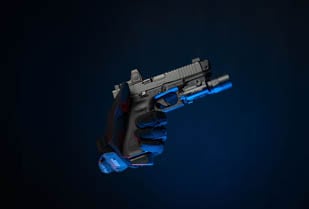
The conversation moves into controls and optics. Paul highlights that the HT family pistols feature fully ambidextrous controls, including mirrored slide stops and safeties, making them equally usable for right- and left-handed shooters. This is presented as a serious-duty feature rather than an afterthought. The hosts then focus on the new direct-mount optic system, which allows popular pistol red dots to mount directly to the slide. Importantly, Staccato has designed the system so that the rear sight is independent of the optic, preserving a dedicated iron sight even if the optic is removed or fails. This independence supports co-witnessing and redundancy, which the hosts emphasize as critical for defensive use. The segment underscores how Staccato is modernizing its pistols for the red-dot era.
Staccato’s internal changes take center stage as Paul explains the move to a Series 80-style system. Rather than relying on legacy parts, Staccato is producing its own components in-house using EDM (electrical discharge machining). This allows tighter control over tolerances and consistency across production. The Series 80-style mechanism introduces an internal firing pin safety, enhancing drop safety without abandoning the crisp trigger feel that Staccato users expect. The hosts note that this is a deliberate engineering choice aimed at meeting modern safety expectations for duty pistols. By machining the parts in-house, Staccato can tune the interaction between sear, safety levers, and firing pin block to maintain performance while adding mechanical safeguards.
The discussion turns to trigger characteristics and safety validation. Paul states that the HT family is tuned for a 4 to 4.5 pound defensive trigger pull, striking a balance between precision and safety for carry or duty use. The hosts emphasize that this is not a competition-light trigger but a carefully set weight appropriate for real-world defensive contexts. Staccato has conducted extensive drop-safety testing on these pistols, including multiple orientations and impact scenarios, to ensure the Series 80-style system and internal safeties perform as intended. The segment reassures viewers that the new design is not just theoretically safer but has been validated through rigorous testing. This positions the HT family as suitable for agencies and individuals who must meet strict safety standards.
One of the most notable changes discussed is the ergonomic redesign that removes the traditional 1911-style grip safety. Paul explains that Staccato has rethought the frame and backstrap geometry so that a separate grip safety is no longer necessary to achieve safe operation. The hosts describe how this redesign allows a more consistent and higher grip without worrying about failing to depress a grip safety under stress. The frame contours, beavertail shape, and undercut trigger guard are all optimized to lock the shooter’s hand in place. This change marks a departure from classic 1911 ergonomics, signaling Staccato’s willingness to break with tradition in favor of modern handling and reliability. The segment frames this as a major evolution in the company’s pistol design.
Building on the ergonomic changes, the hosts and Paul talk about how the redesigned frame allows shooters to get their hand higher on the pistol. This effectively lowers the bore axis relative to the shooter’s grip, which can reduce perceived recoil and muzzle rise. The segment emphasizes how this translates into faster follow-up shots and better control during rapid strings of fire. The beavertail and tang are shaped to let the web of the hand sit closer to the slide without discomfort. Combined with the sight-block configuration and 1:10 twist barrel, the overall handling package is presented as a significant performance upgrade. The hosts summarize their impressions by noting that the HT family feels purpose-built for modern defensive and duty shooting, not just a cosmetic refresh of older designs.
After an in-depth look at the Staccato HT family, the video transitions to other parts of SHOT Show 2025. The hosts step away from the Staccato booth and mention that the show floor is packed with additional manufacturers and platforms they plan to cover. They reference that this Day 1 Part 1 episode will also touch on other brands and set up later visits to companies like PTR, Franklin Armory, Zastava, and CheyTac. The tone shifts from technical deep dive back to exploratory, reminding viewers that SHOT Show is a massive event with a wide variety of firearms, optics, and accessories. This segment acts as a bridge, moving the narrative from one detailed booth visit to a broader survey of what else is new and interesting on the floor.
The hosts next highlight a Canik pistol package centered on the MC9 or an MC9-style model. They present it as a compact, carry-oriented handgun that comes as part of a well-thought-out bundle. The pistol is shown with features aimed at concealed carriers and everyday users, including a slim profile and modern ergonomics. The hosts explain that Canik has built a reputation for delivering strong value, and this MC9 package continues that trend. The segment positions the MC9 as a serious competitor in the crowded micro-compact and compact carry market, especially when paired with the included optics and sighting options. Viewers are invited to consider how this package stacks up against other popular carry pistols on the market.
A key part of the Canik package is the MeCanik MO4 close-emitter red dot optic. The hosts explain that this is a closed-emitter design, which helps protect the emitter from debris, moisture, and environmental contamination, making it more reliable for carry use. They note how the optic integrates cleanly with the pistol’s slide, offering a clear sight picture and fast target acquisition. In addition to the red dot, the pistol is equipped with tritium night sights, giving users a robust backup aiming system in low light. The combination of a closed-emitter optic and tritium irons is presented as a premium feature set typically found on more expensive setups. This segment underscores how the MC9 package is configured for real-world defensive scenarios right out of the box.
The hosts then break down the pricing of the Canik MC9 package. They state that the pistol’s MSRP is around $649 without the optic and roughly $849 when bundled with the MeCanik MO4 red dot. This pricing is framed as aggressive given the included features, especially the closed-emitter optic and tritium sights. The hosts discuss how this positions the MC9 as a strong value proposition for shooters who want a ready-to-carry setup without having to source and mount an aftermarket optic. They touch on expected availability, noting that the package is aimed at both new gun owners and experienced shooters looking for a turnkey carry solution. The segment reinforces the idea that Canik is targeting the value-conscious segment of the market without sacrificing performance-oriented features.
With pricing and features laid out, the hosts compare the Canik MC9 package conceptually to other popular carry pistols and optics-ready bundles. They highlight that many competitors require purchasing a separate optic and sometimes additional mounting plates, which can drive up total cost. In contrast, the MC9 bundle’s inclusion of a close-emitter red dot and tritium sights makes it more of a complete system from day one. The hosts suggest that this could appeal to shooters who want to avoid the complexity of piecing together a carry setup. They also note that the MC9’s ergonomics and size put it in direct competition with other micro-compact and compact 9mm pistols that dominate the concealed carry market. This segment helps viewers contextualize where the Canik package fits in the broader landscape.
As the first part of Day 1 coverage winds down, the hosts recap the major highlights. They revisit the key points from the Staccato HT family segment, including the P45 and P4, the Series 80-style system, and the ergonomic redesign. They also summarize the Canik MC9 package, emphasizing the MeCanik MO4 optic, tritium sights, and value-focused pricing. The hosts then mention several other brands that will feature more prominently in later coverage, including PTR, Franklin Armory, Zastava, and CheyTac. CheyTac’s M200 rifle is specifically referenced, along with a system called Scope 360 that will be explored further. This recap reinforces the breadth of content covered in Part 1 while building anticipation for additional booths and products in upcoming segments.
The hosts briefly spotlight CheyTac and its M200 rifle, a platform known for extreme long-range capabilities. They mention that the M200 is being shown with something referred to as Scope 360, hinting at an advanced or unique optic or viewing system associated with the rifle. While details are not fully unpacked in this segment, the reference is meant to pique viewer interest in both the rifle and the Scope 360 technology. The hosts indicate that more in-depth coverage of CheyTac and this system will come later, either in subsequent parts of Day 1 or in future SHOT Show episodes. This mention serves as a teaser, signaling that the show’s coverage extends beyond handguns into precision rifles and specialized optics solutions.
Near the end of the video, the speaker repeatedly brings up Scope 360, encouraging viewers to check it out if they are interested in advanced optics or viewing systems. Alongside Scope 360, there is a mention of “CF contact,” suggesting an additional resource, partner, or point of contact related to the showcased technology or channel. The emphasis is on directing viewers to explore these offerings further outside the video, possibly through links or partner information. This segment functions as a callout to specific technologies and contacts that complement the SHOT Show coverage. It reinforces that the show is not only about seeing products on the floor but also about connecting viewers with tools and partners that can deepen their engagement with the shooting and optics community.
The host repeatedly encourages viewers to stay tuned for continued SHOT Show coverage, making it clear that Day 1 Part 1 is only the beginning. They stress that there is much more to see on the showroom floor, including additional firearms, optics, and accessories that have not yet been featured. The tone is enthusiastic and forward-looking, inviting viewers to watch the next installments to catch all the booths and products the team plans to visit. This segment underscores that the video is part of a larger series documenting SHOT Show 2025, and that upcoming parts will build on the groundwork laid here. The repeated reminders to stay tuned help maintain viewer engagement beyond this single episode.
The speaker explains that the team is about to take a short break to get something to eat before continuing their SHOT Show coverage. This is framed as a brief pause rather than an end to filming, with assurances that they will be right back on the showroom floor afterward. The host’s comments highlight the long, demanding nature of covering a large trade show and the need to recharge between booth visits. Despite the mundane subject of grabbing food, the tone remains energetic, with repeated mentions that the break is temporary and that more content is coming. This segment functions as a natural transition point, signaling a pause in active booth coverage while keeping viewers oriented within the ongoing Day 1 narrative.
Immediately after mentioning the food break, the speaker pivots to emphasize that the team is heading back to the SHOT Show showroom floor. The language repeatedly stresses “getting back out there” and “returning to the floor,” reinforcing that the coverage will resume in the same energetic, on-the-ground style. The host makes it clear that the next scenes will once again feature walking among exhibits, visiting booths, and showcasing more products. This brief segment serves as a bridge from the off-floor interlude back into the heart of the trade show environment. It reassures viewers that the focus will quickly return to firearms, optics, and accessories as soon as the team is back among the displays.














 Loading...