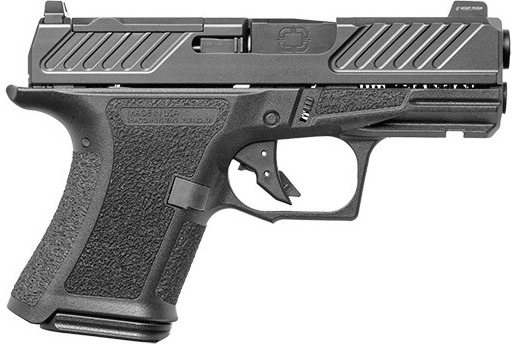
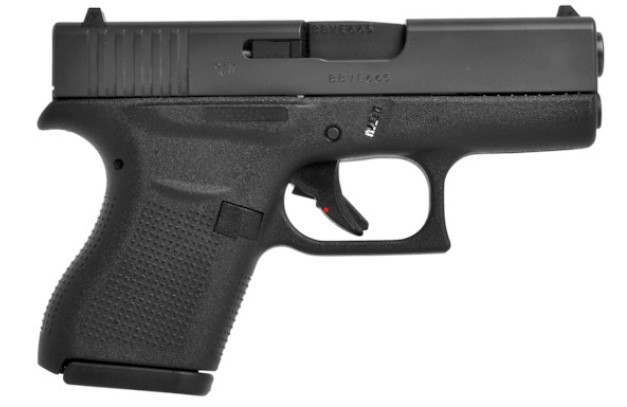
The video opens by introducing the Shadow Systems CR920 subcompact double stack pistols, focusing on the Combat and Elite variants. The Elite model is shown with slide window cuts, top serrations, an optics cut, and a fluted barrel, while the Combat version keeps a more streamlined slide without those features. Both CR920s incorporate undercut trigger guards, improved grip texture, and upgraded triggers aimed at concealed carry performance. The hosts position these pistols directly against popular Glock options in the same role, the Glock 43 and Glock 26. The Glock 43 is presented with two 6-round magazines, one flat and one with a pinky extension that does not add capacity but improves comfort. The Glock 26 is shown with three 10-round magazines, though its short grip leaves the pinky hanging. Shadow Systems is described as delivering “custom Glock”-style enhancements from the factory, and the CR920 is highlighted for offering a slim double stack 10-round magazine in a package with overall width similar to the single-stack Glock 43, yet noticeably slimmer than the double-stack Glock 26.
Attention shifts to how the Shadow Systems CR920 compares dimensionally to the Glock 26 and Glock 43. The CR920 is emphasized as significantly slimmer than the Glock 26 while maintaining a double stack configuration, with a grip profile that feels closer to the Glock 43. This gives it a concealed carry advantage by combining a compact footprint with higher capacity. The video details magazine setups: the CR920 ships with one 10-round flush-fit magazine and one 13-round magazine featuring an extended base plate that improves pinky support and control. The hosts briefly reference the SIG P365 as another 10-round micro-compact benchmark. The Glock 43’s two 6-round magazines are contrasted with the CR920’s capacity, underscoring the tradeoff between slim single-stack design and available rounds. The Glock 26’s three 10-round magazines are mentioned, but its thicker grip and bulkier profile are noted as drawbacks compared to the CR920’s more streamlined, carry-friendly dimensions and ergonomics.
The discussion moves into trigger characteristics and live-fire impressions. The Shadow Systems CR920 trigger is described as a hybrid between a curved and flat-face design, offering light takeup, a clearly defined wall, and a break in the 4.5 to 5.5 pound range. Its reset is slightly longer than some shooters might prefer but is still considered acceptable and controllable. This is compared to the smoother, modern Glock trigger found on current production models like the Glock 26. On the range, the hosts begin shooting the Glock 43 to evaluate real-world comfort. One shooter notes that the Glock 43 trigger feels somewhat “pokey” on the finger during extended strings of fire. It does not pinch or cause actual pain, but it is described as not particularly pleasant over multiple shots. These impressions reinforce the idea that the Glock 43 is a small, defensive-oriented pistol rather than a gun designed for long, comfortable range sessions.
The video continues by clarifying the Glock 43’s role as a compact defensive carry pistol with a limited 6+1 capacity, not a high-volume plinking or range gun. The focus then shifts to the Glock 26 on the firing line. The hosts highlight its AmeriGlo-style sights, praising the bright orange front sight that draws the eye and the crisp, sparkling rear dots that aid in quick alignment. Despite these sight advantages, the overall ergonomics of the Glock 26 are still described as less than ideal, particularly in terms of grip length and bulk for concealed carry. The Shadow Systems CR920 is then brought back into the spotlight. The Combat model is shown without optics cut, top serrations, or window cuts, while the Elite version includes all of these enhancements. Both CR920 variants feature forward slide serrations, a fluted barrel, and higher capacity than the Glock 43, with a slimmer feel than the Glock 26. The presenters conclude that the CR920 offers improved shootability and ergonomics over both Glocks for many concealed carry users.
In the closing section, the presenters clearly differentiate the CR920 Combat and Elite configurations. The Combat model is the more basic slide, lacking top serrations, window cuts, and an optics cut, appealing to those who prefer a simpler profile. The Elite model adds aggressive top slide serrations, cosmetic and weight-reducing window cuts, and an optics cut for mounting red dots. Both versions share a prominent, glowing front sight paired with a more traditional rear sight, designed to make front sight acquisition faster in low-light conditions. The dovetail-mounted sights allow users to swap in aftermarket options if desired. Magazine capacity comparisons are summarized: each CR920 ships with one 10-round and one 13-round magazine, the Glock 43 includes two 6-round magazines, and the Glock 26 comes with three 10-round magazines. The hosts note strong aftermarket support for all three platforms and reiterate that while Glock 43 and Glock 26 remain viable, the CR920 stands out as a refined, high-capacity concealed carry choice.






















 Loading...