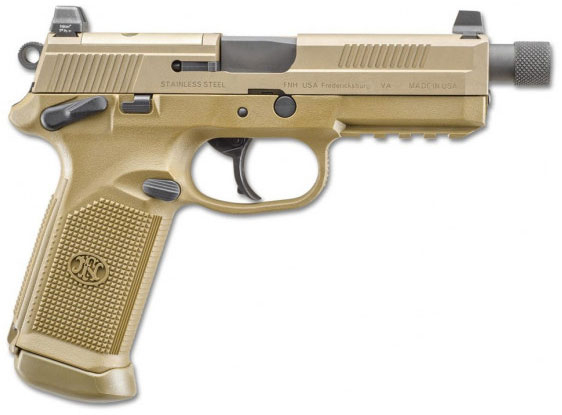
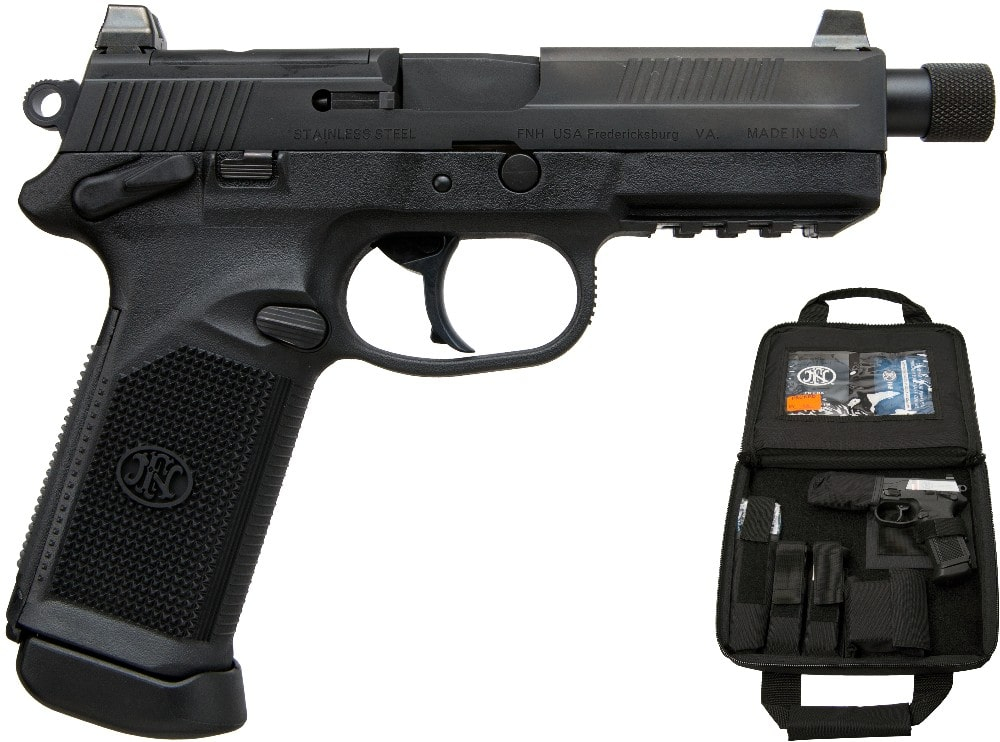
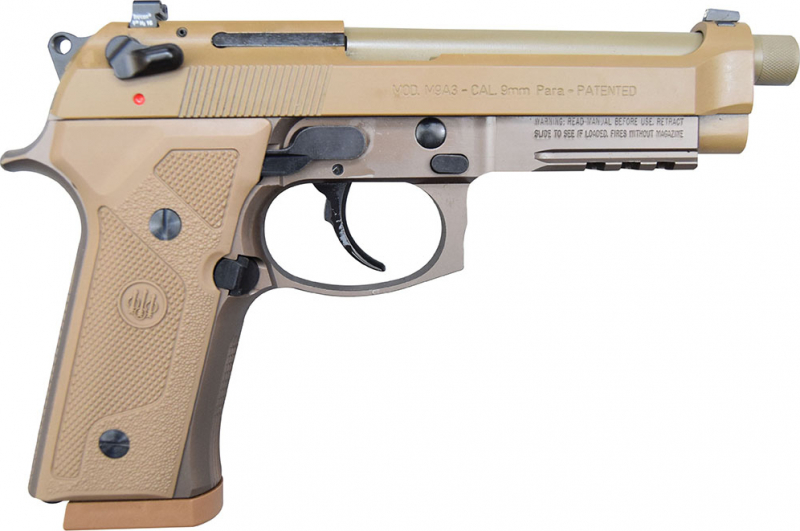
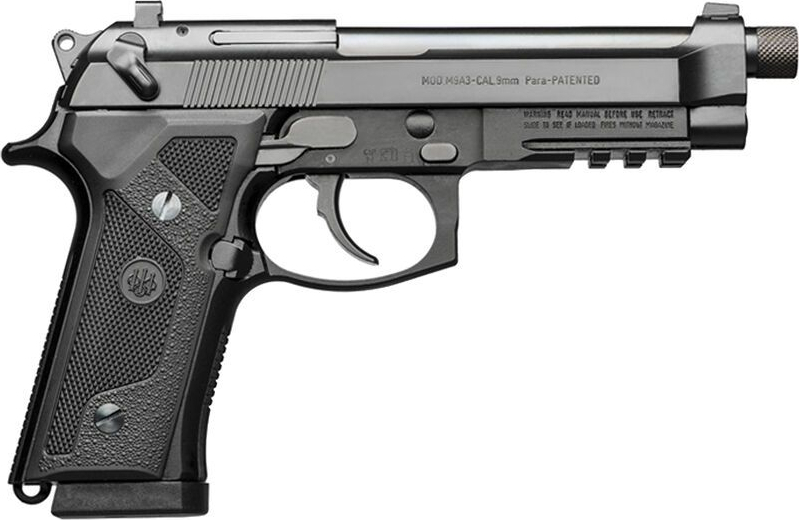
The video opens by framing full-size pistols as a primary option for home defense, highlighting proven duty-style handguns. The Beretta M9A3 in 9mm is showcased with its 17-round magazines, threaded 5.2-inch barrel, and factory night sights, emphasizing capacity and controllability. The FN 66966 FNX-45 Tactical in .45 ACP is also featured, with a 5.30-inch threaded barrel, 15+1 capacity, matte black finish, and manual safety. Both pistols are optics-ready, allowing mounting of popular red dots. The discussion stresses that these are not just range toys but serious defensive tools designed for reliability. Threaded barrels are noted as giving users the option to run suppressors or compensators, even if not everyone chooses to do so. The segment underlines that caliber choice between 9mm and .45 ACP is less important than selecting a quality handgun that the user can shoot accurately and manage under stress inside the home.
Attention shifts to low-light realities of home defense, where most defensive encounters are likely to occur. The speaker emphasizes the value of Trijicon night sights on pistols like the Beretta M9A3, explaining how tritium inserts remain visible in darkness and help quickly align the sights when lighting is poor. Pistol-mounted weapon lights are strongly recommended so the user can identify potential threats without juggling a handheld flashlight. The video mentions popular red dot options such as the Trijicon RMR and Vortex Viper, noting that optics-ready slides on guns like the FNX-45 Tactical make mounting them straightforward. Red dots are described as speeding up target acquisition and allowing shooters to focus on the target rather than the front sight. However, the segment repeatedly stresses that adding lights and optics requires practice, since extra controls and sighting systems can be confusing without consistent training and dry-fire work.
The discussion moves beyond hardware to the skills needed to run a home defense pistol effectively. The speaker stresses that even the best-equipped handgun is only as useful as the shooter’s ability to manipulate it under pressure. Viewers are encouraged to practice drawing from wherever the pistol is staged, working the safety on models like the FNX-45 Tactical, and performing reloads with 17-round Beretta M9A3 magazines. Emphasis is placed on building muscle memory for operating slide stops, magazine releases, and safeties in low light, possibly while using a weapon light or red dot. The segment suggests structured range sessions that simulate realistic home distances and angles, rather than only slow fire at long ranges. Dry-fire practice is recommended to become comfortable with triggers, sight pictures, and transitions between targets. Overall, the message is that training and familiarity matter more than chasing the latest accessory or caliber trend.
The video introduces pistol caliber carbines as an alternative or complement to handguns for home defense. The CZ Scorpion is used as a key example of this style of firearm, chambered in pistol calibers but offering a carbine-length platform. The speaker notes that pistol cartridges in a carbine can reduce over-penetration compared to some rifle rounds, an important consideration in homes with thin interior walls or nearby neighbors. The longer sight radius, additional contact points, and typically lower recoil make pistol caliber carbines easier for some shooters to control, especially under stress. The segment explains that these platforms can share ammunition with defensive pistols, simplifying logistics. While not dismissing shotguns or rifles, the speaker highlights that a compact pistol caliber carbine can be maneuverable indoors yet more forgiving for less experienced shooters. The CZ Scorpion is presented as a practical example of how this category can fit into a layered home defense plan.
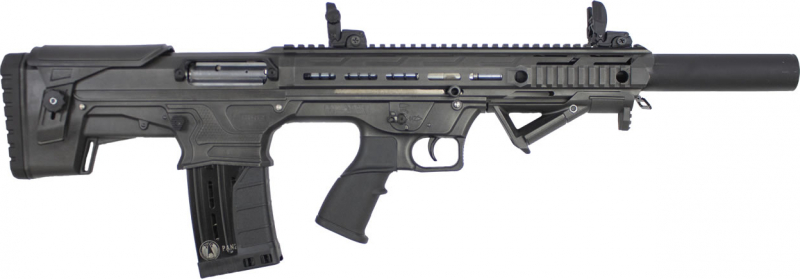
Attention turns to comparing different home defense platforms, including pistols, pistol caliber carbines, and shotguns. Pistols like the Beretta M9A3 and FNX-45 Tactical are praised for being easy to keep close at hand, store securely, and move with through tight hallways. Pistol caliber carbines such as the CZ Scorpion are described as offering better stability and easier accuracy, especially for shooters who struggle with handgun recoil or sight alignment. Shotguns are acknowledged for their stopping power, but the video cautions that they require serious training to manage recoil, reloads, and patterning at indoor distances. The speaker emphasizes that there is no single perfect answer; the best choice depends on the user’s skill level, home layout, and willingness to train. Rather than arguing over which platform is superior, the segment encourages viewers to honestly assess their abilities and pick the system they can run most confidently and safely.
This section focuses on balancing gear choices with realistic home defense needs. The speaker revisits threaded barrels on guns like the FNX-45 Tactical and Beretta M9A3, explaining that while they allow suppressor use, not everyone should or will run a suppressor for home defense. A personal preference is expressed against suppressors in this role, arguing that loud gunshots can alert neighbors and speed law enforcement response, even though there is a risk of hearing damage indoors. The video underscores that debates over 9mm versus .45 ACP or specific brand loyalty matter less than reliability, shot placement, and responsible ammunition selection. Over-penetration concerns are discussed again, with pistol calibers and appropriate defensive loads recommended to reduce risk beyond intended targets. The segment encourages viewers to prioritize function, training, and safe storage over chasing every new accessory, reminding them that a simple, well-practiced setup often outperforms a complicated, unfamiliar one.
As the technical discussion winds down, the video shifts toward attitude within the firearms community. The speaker acknowledges that people will disagree about the best home defense gun, whether it is a Beretta M9A3, FNX-45 Tactical, CZ Scorpion, shotgun, or another platform entirely. Instead of mocking others for their choices, viewers are urged to recognize that different homes, budgets, and experience levels lead to different solutions. The segment stresses that constructive advice and shared experience help more than dismissive comments about calibers, brands, or configurations. The idea is to support responsible gun ownership and encourage training, regardless of which specific firearm someone chooses. By focusing on safety, proficiency, and thoughtful setup, the community can help new shooters make better decisions without feeling intimidated or belittled. This sets the stage for the closing emphasis on kindness and respectful interaction in comment sections and discussions.
The closing portion of the video is devoted almost entirely to community behavior. The speaker repeatedly asks viewers not to call others stupid or use similar insults in the comments, stressing that negative or hostile remarks add nothing to the firearms conversation. Instead, the audience is encouraged to build people up, offer helpful suggestions, and respect differing opinions on home defense guns and setups. The phrase “play nice kids” is used in a light-hearted, almost parental tone to reinforce the expectation of civility. Multiple reminders emphasize that the firearms community should be known for kindness, support, and constructive feedback rather than tearing others down over gear choices or experience levels. The segment ends by urging everyone to be nice out there, keep discussions positive, and remember that encouraging safe, responsible ownership is more important than winning arguments about which gun or accessory is best.






















 Loading...