The video opens with a running joke where one host keeps insisting the pistol is a high-end XC-style handgun, while the other repeatedly corrects him, explaining that it is actually the MAC 1911 DS Comp. They emphasize that it is a double-stack 1911-style pistol from Military Armament Corp, brought in by a well-known U.S. partner and manufactured by Tisas. The hosts note that premium XC-style pistols have long been praised but were historically very expensive, often around four thousand dollars, which kept many shooters out of the 2011-style market. By contrast, the MAC 1911 DS Comp comes in under one thousand dollars, making it a notable and exciting option in the current landscape of double-stack 1911s. They mention that they have shot many 2011s and 1911s, both good and bad, and are genuinely interested to see how this more affordable MAC offering compares to higher-end brands like Staccato and Bull Armory.
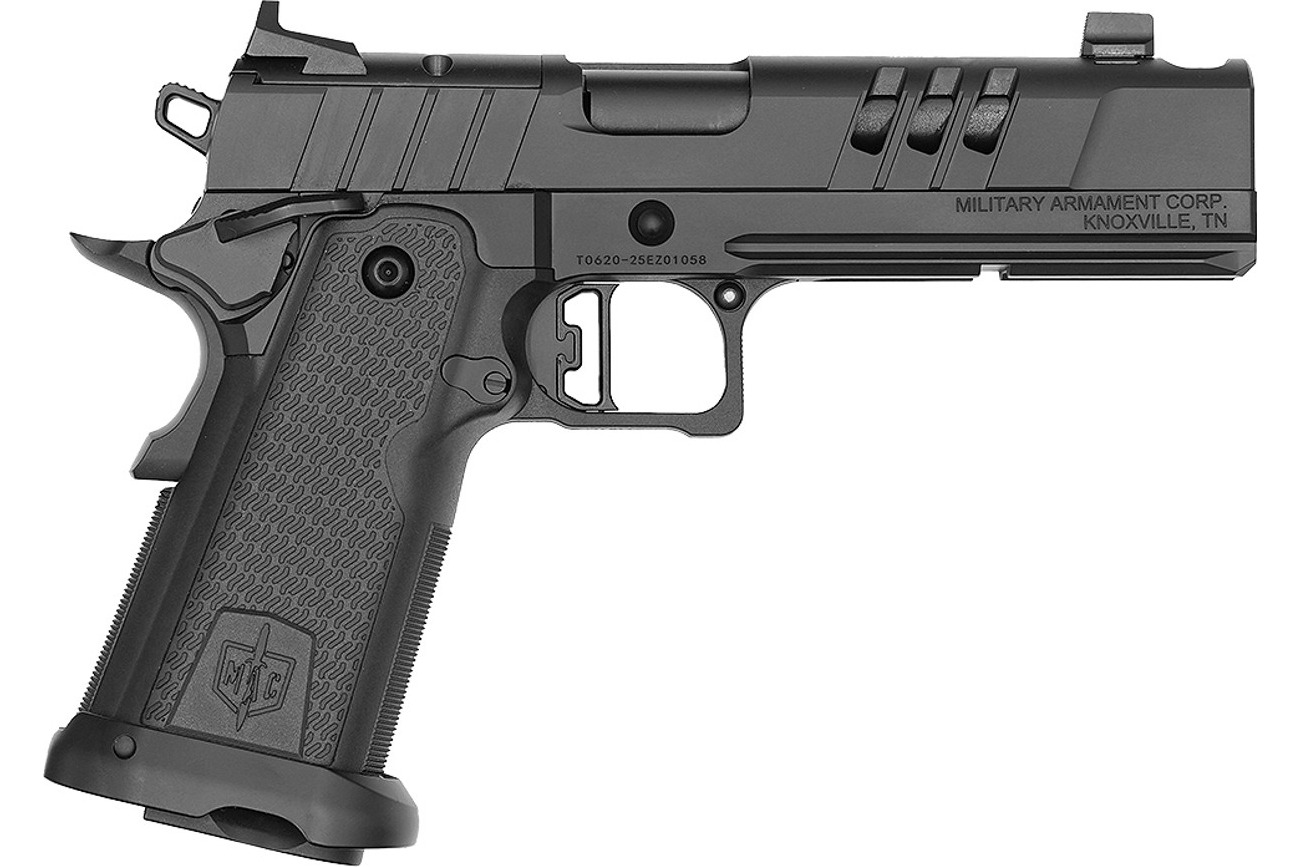
The hosts unbox the MAC 1911 DS Comp and immediately point out its resemblance to a Staccato-style 2011, especially in the slide profile and overall layout. They highlight the five-inch slide as a popular size and focus on the large top port, which is integrated directly into the slide rather than being a separate island section like on some XC-style designs. Out of the box, the pistol includes an Agency Arms AOS optic mounting system, which they describe as compatible with many common pistol optics. They reference optics such as a Swampfox on a four-and-a-quarter-inch model and a Trijicon SRO on another setup, noting that the AOS plates allow flexibility without locking the user into a single optic footprint. The pistol is clearly positioned as a feature-rich, optics-ready 2011-style platform at a lower price point.
At the range, the hosts start with the five-inch MAC 1911 DS Comp, shooting at a target about 35 yards away. They pay attention to ejection pattern, slide tracking, and overall feel under recoil. A stovepipe malfunction occurs, which they attribute to limp-wristing rather than a mechanical issue. One host explains limp-wristing as failing to provide a firm, supportive grip, allowing the wrist to float and absorb energy that should cycle the slide. This can prevent the slide from moving fully and reliably, leading to malfunctions. They emphasize that proper grip and stance are necessary so the slide can move as designed and physics can do its job. The malfunction is treated as a shooter-induced issue rather than a fault of the pistol, and they continue testing with a more solid grip.
The hosts move to the shorter four-and-a-quarter-inch MAC 1911 DS Comp, describing it as a compact or commander-style double-stack 1911/2011. After shooting it, they comment that the compensator port on top does an effective job of keeping the muzzle flat, even though there is slightly more muzzle flip than the heavier five-inch version. Both pistols are described as staying relatively flat in recoil, with the full-size model feeling a bit softer due to its additional weight. They address the common belief that adding a weapon light reduces muzzle flip by increasing front-end weight. While acknowledging that extra weight can help, they point out a tradeoff: as the slide returns forward, the added weight at the front can cause the muzzle to dip more than usual. They stress that overall balance is more important than simply adding weight, and that a well-tuned compensator and slide setup can matter as much as accessories.
Back at the bench, the hosts focus on the triggers of the MAC 1911 DS Comp pistols. They describe the trigger as very good for a sub–$1,000 double-stack 1911, noting a clear wall and a clean break once the grip safety is properly depressed. They demonstrate the reset, emphasizing the short, tactile return before the next shot. Using a trigger pull gauge, they measure the trigger on one pistol at approximately 4 pounds 10.4 ounces, then again at about 4 pounds 7.6 ounces, concluding it averages around four and a half pounds. On the other pistol, readings come in near 4 pounds 0.4 ounces and 4 pounds 4.8 ounces, again right around the four-pound mark. They consider these weights consistent and appropriate for safety while still feeling crisp and responsive, especially given the price range of the MAC 1911 DS Comp.
The discussion turns to ergonomics and external features. The pistols use a typical 2011-style grip with a flared magwell and relief cuts near the magazine base to help strip a stuck mag if needed. The hosts note that the grip texture and frame shape avoid the overly bulky feel common on some double-stack 1911s, even for shooters with large hands. They can obtain a full, comfortable purchase without crowding the magwell, which they consider noteworthy compared to many other 2011s they have handled. They also examine the slide cuts and large side ports, mentioning that the nostril-style cutouts on the five-inch model are fairly large. After firing several rounds, performing a forward press check near those cuts can expose fingers to heat from the barrel, potentially causing minor burns, so they advise being conscious of hand placement. The pistols are cut for a dot and include an RMR-pattern optics plate with an integrated rear sight, allowing co-witness with the optic. Because the system uses Agency’s AOS plates, users can swap to other footprints, and one host mentions preferring enclosed optics like the Aimpoint Acro or Steiner MPS, while still appreciating the wide window of the Trijicon SRO.




















 Loading...