The hosts introduce the Live Free Armory Apollo 11 as a double stack 1911, often called a 2011-style platform, and explain that this video is based on an internal thousand-round review. The pistol is chambered in 9mm and positioned as an entry-level option that has gained attention for its performance relative to cost. It is made in the United States, in Florida. One host describes initially being skeptical of a new manufacturer but being impressed after handling the pistol, noting that the metalwork, coating, and overall feel seemed solid, especially considering the price being under a thousand dollars. The goal of the video is to show how the gun held up through extended use and what stood out during that testing.
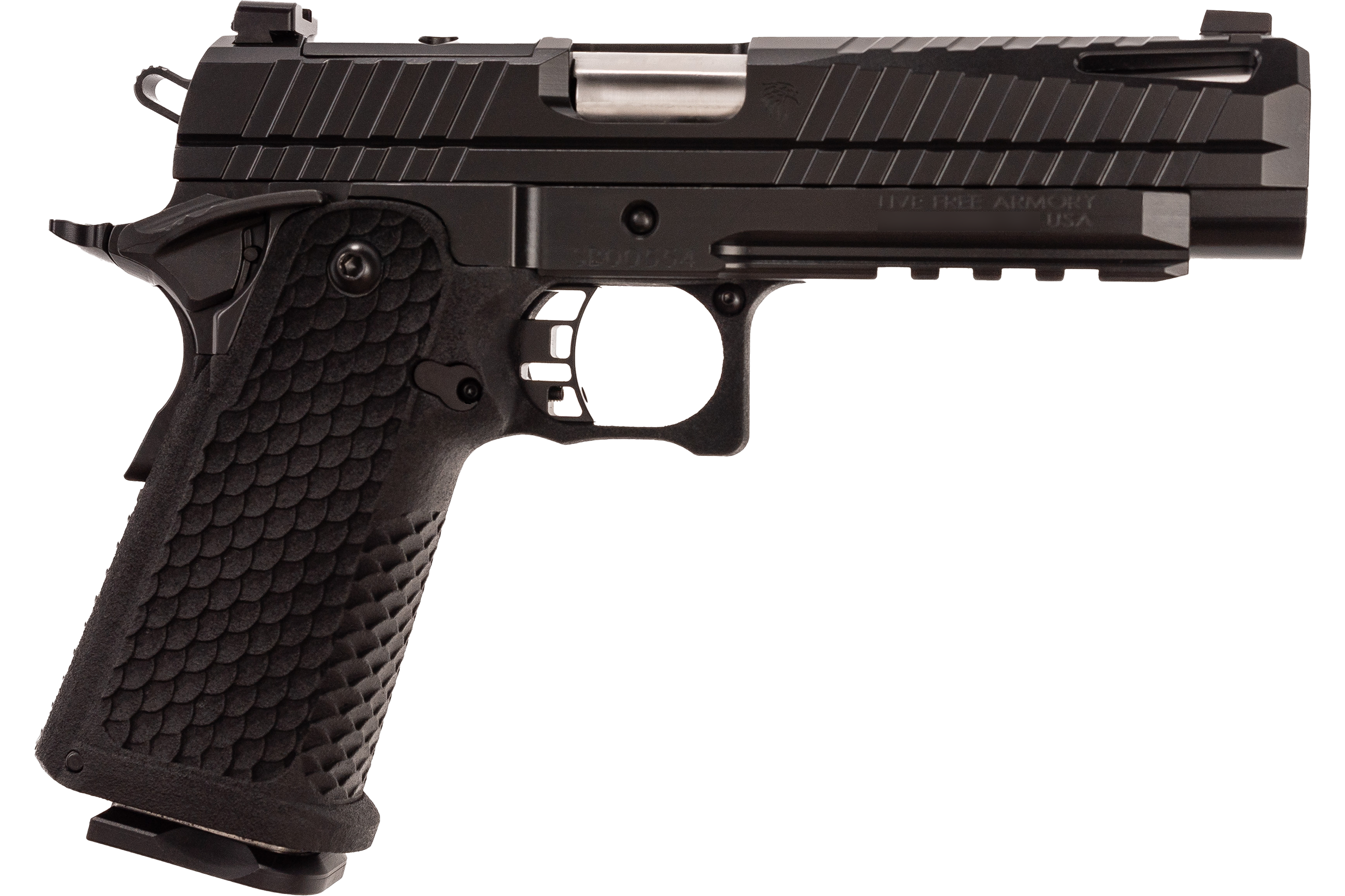
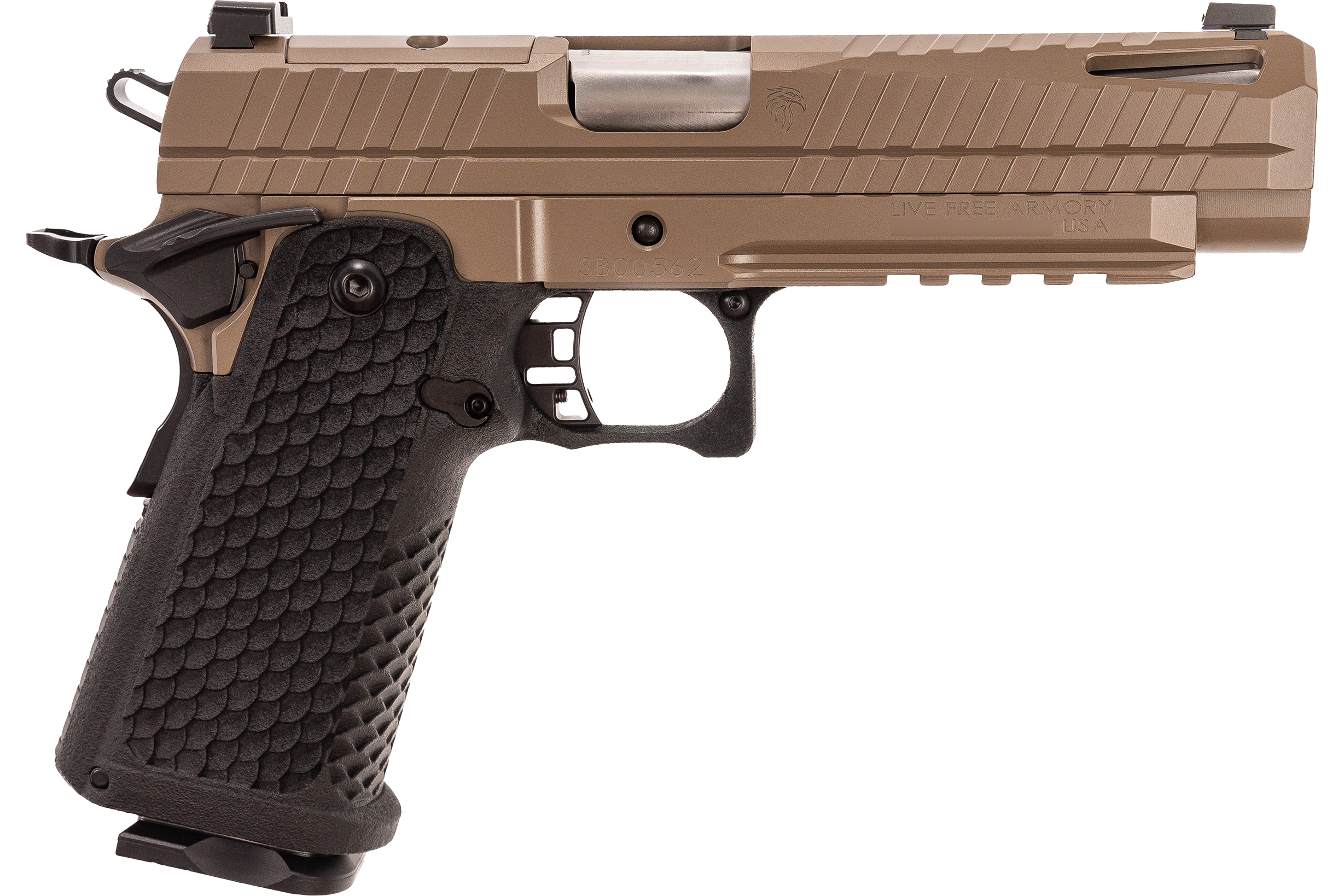
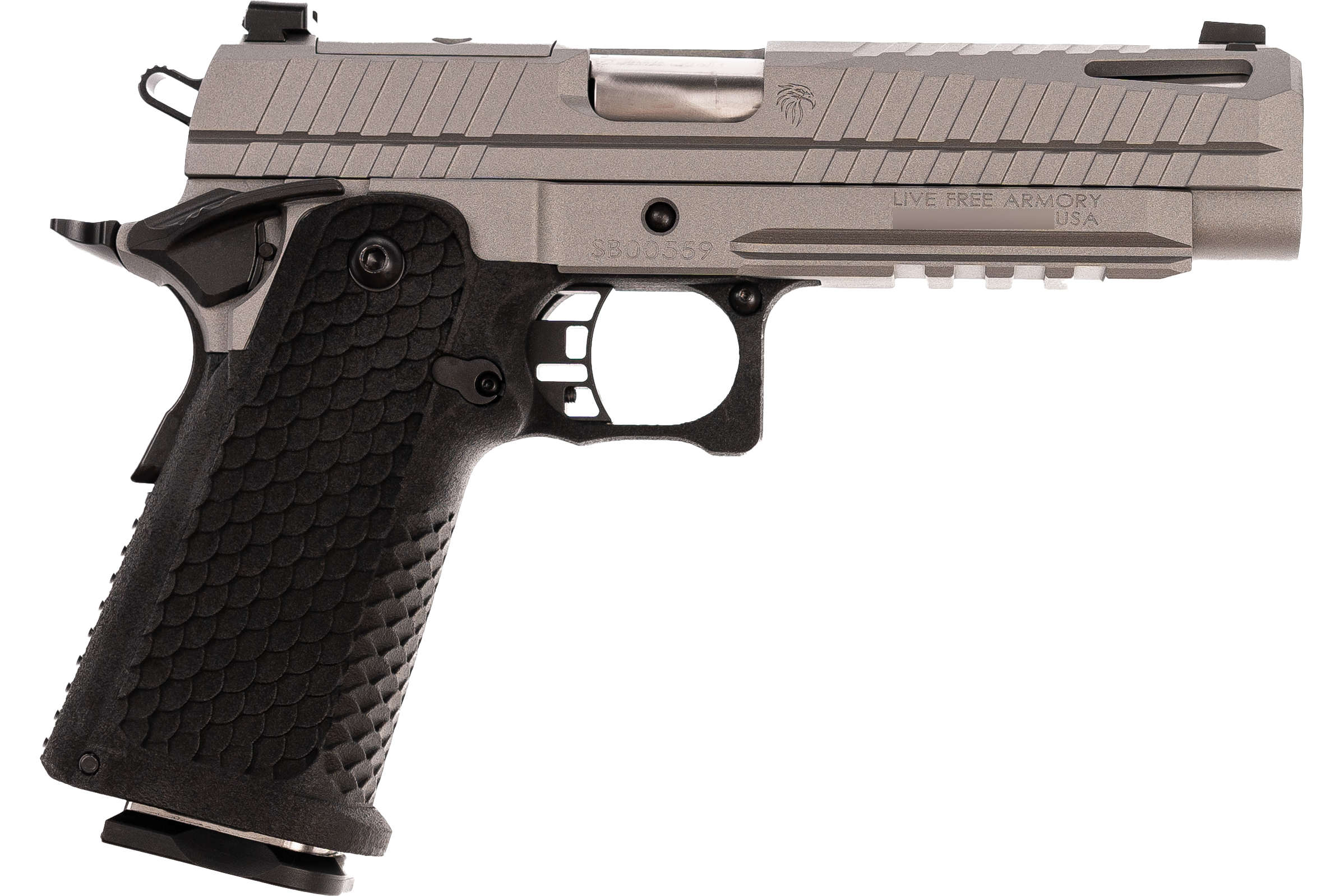
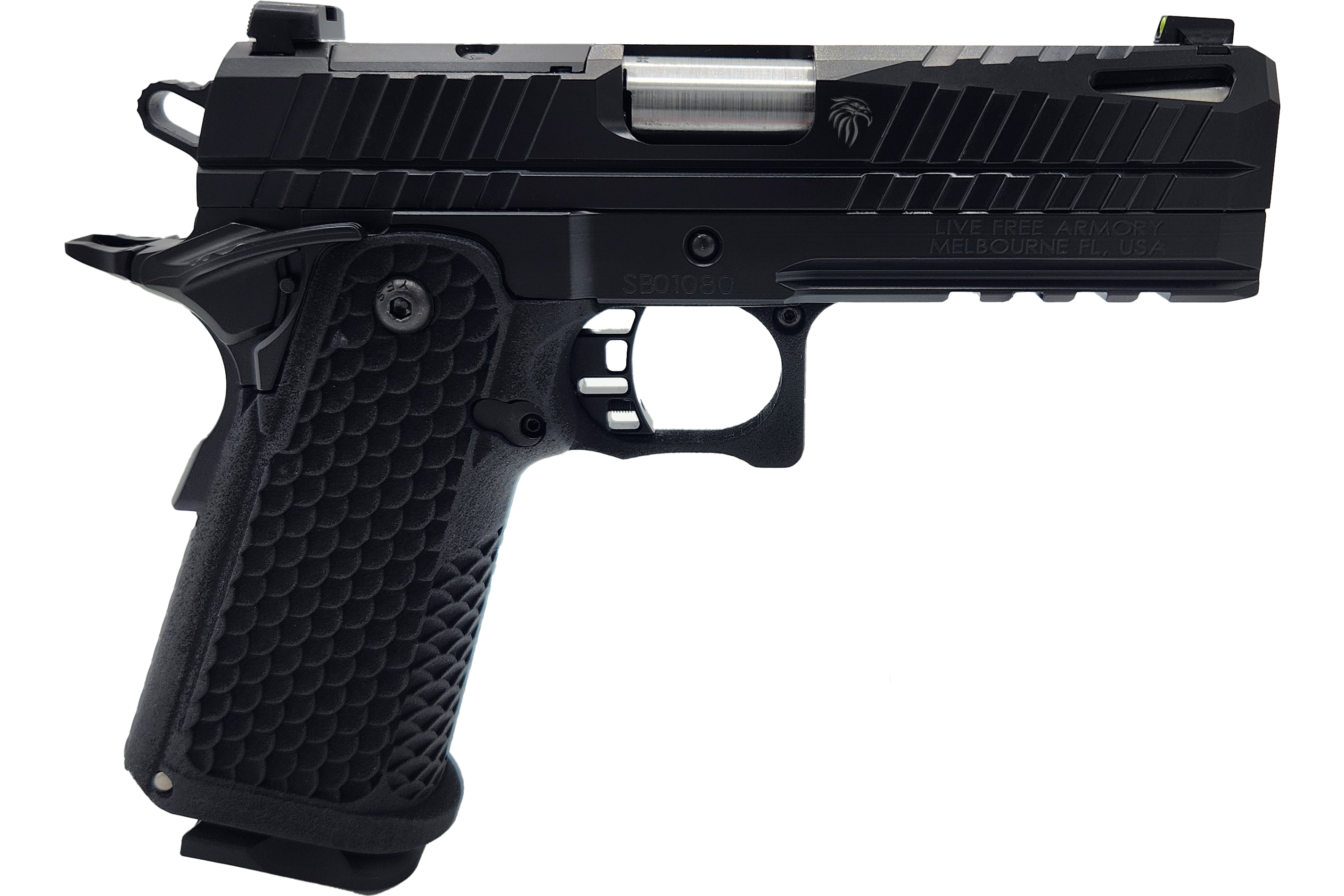
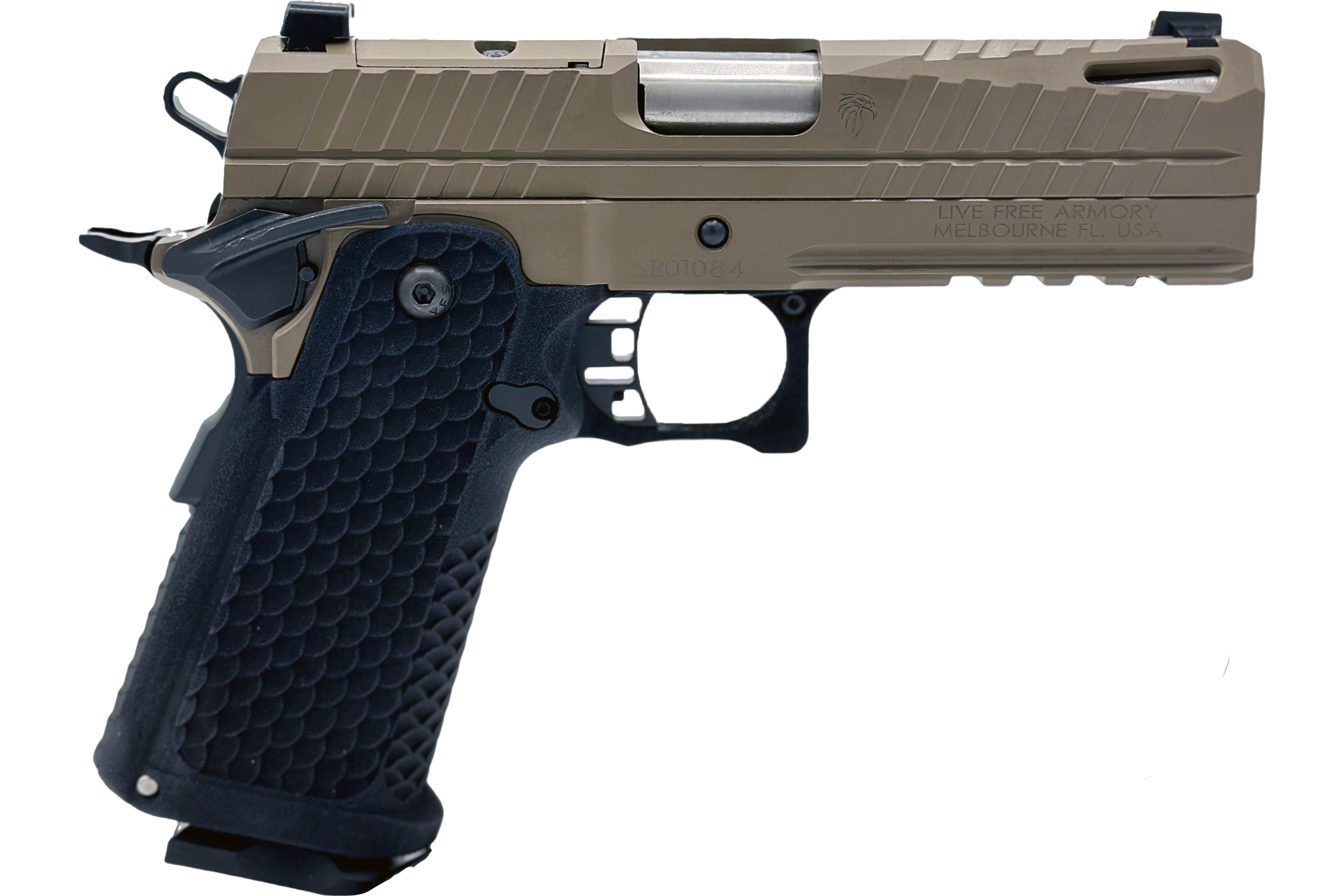
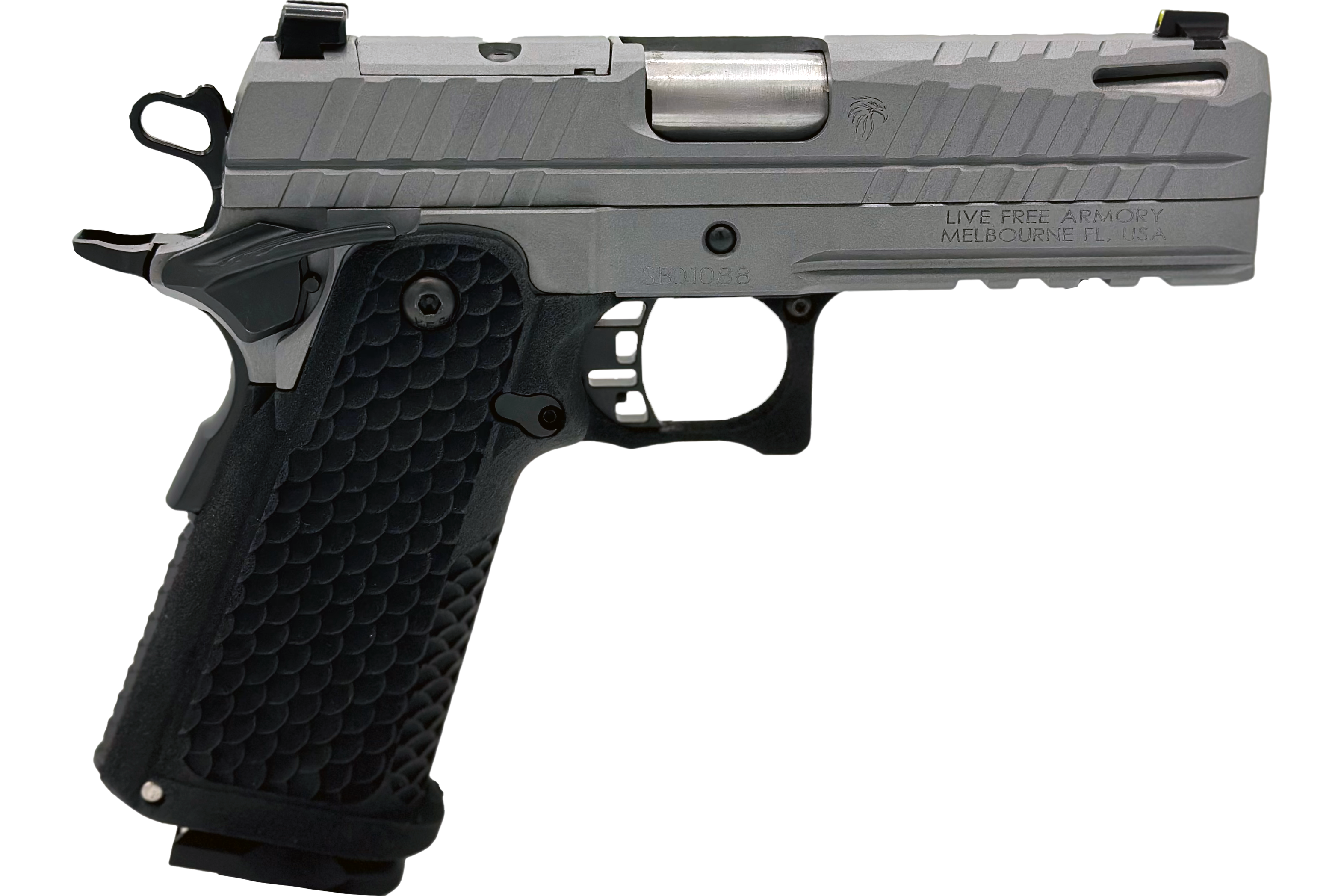
The discussion moves into specific features of the Apollo 11. The pistol uses a bull barrel and is described as having very good fit and finish for its price range. It is optics ready with an RMSc footprint, allowing direct mounting of popular compact red dots such as many Holosun and Swampfox models that share that pattern. Plates are available to raise the optic and run larger options like an Aimpoint Acro or Trijicon RMR. The gun ships with Night Fision tritium sights, featuring a high-visibility front and a blacked-out rear to emphasize front sight focus. The hosts note that both full-size and compact versions are available and that the pistols include a Picatinny rail for mounting lights or other accessories. They emphasize that the trigger is surprisingly good given the sub-$1,000 price.
On the range, the hosts explain that the test gun has seen well over 1,000 rounds. The Apollo 11 uses double stack 1911 magazines, and they experiment with different options. A Springfield Prodigy magazine functions in the pistol, though they observe that the 20-round Prodigy mags sometimes fail to lock the slide back, while 17-round versions work properly. They also run Live Free Armory’s own Check-Mate magazines, which lock back and run reliably. One host shoots the compact model with a 4.25-inch barrel and notes slightly more felt recoil due to the shorter slide and lighter front end, suggesting that adding a weapon light or other accessories can help control muzzle rise. The other host runs the 5-inch full-size version and comments positively on its recoil impulse and overall shooting characteristics.
While shooting, the hosts demonstrate one-handed fire and discuss the controls. They point out that the grip safety can be sensitive to hand placement; if the shooter does not achieve a solid, high grip, the safety may not fully depress and the gun will not fire. One host mentions occasionally taping or using a Ranger band around the grip safety to keep it depressed, though they acknowledge that some shooters will prefer the additional safety feature as designed. They note that spring kits and other parts are available to tune the feel of the safeties and trigger, as is common with double stack 1911 and 2011-style pistols. Recoil is described as manageable and consistent, with the full-size model offering a smoother impulse, while the compact requires a bit more effort to keep the muzzle flat during rapid strings.
The Apollo 11 uses a 3D-printed grip module with a distinctive scale-like texture that the hosts liken to dragon or fish scales. They appreciate the design but wish the texture were slightly more aggressive for better traction. They mention that the grip can be stippled to increase grip or potentially swapped for other double stack 1911-compatible grip modules, including options similar to those used on Staccato pistols, though they frame this as an assumption based on the platform. The hosts compare the Apollo 11 conceptually to more expensive 2011-style pistols on the market, some of which cost well over $1,000. One host jokingly refers to the Apollo 11 as a “diet Staccato,” suggesting that it offers a similar style and feature set at a significantly lower price point, while still performing well in their testing.
In closing, the hosts return to the theme of value. They stress that if the Apollo 11 were priced around $2,000, their reaction would be more reserved, but at under $1,000 they view its performance and feature set as noteworthy. They highlight that the pistol is available in multiple sizes and finishes, including black, gray, and FDE options, and that all share the same core attributes: 9mm chambering, double stack 1911-style magazines, optics-ready slide, tritium sights, and a Picatinny rail. After more than a thousand rounds, they report that the gun has run well and feels good in hand. They invite viewers to share experiences with Live Free Armory and specifically the Apollo 11, ending with a lighthearted comment about Apollo 11 making it to the moon while Apollo 13 did not, and then sign off.





















 Loading...