The video opens by framing the Kel-Tec Sub2000 Gen 3 and Smith & Wesson M&P FPC as compact, folding 9mm pistol-caliber carbines aimed at backpack carry, survival use, and home defense. Both carbines feature 16-inch barrels and are designed to stow small, then deploy quickly when needed. The hosts explain why folding PCCs appeal to shooters who want rifle-like control and ballistics in a package that fits discreetly in a bag or vehicle. They highlight that both guns are chambered in 9mm, making them compatible with common defensive ammunition and easier to control than rifle calibers. Early on, the discussion sets expectations: this is not just a tabletop comparison, but a practical evaluation that will include timed drills, manipulation from a bag, and a look at how each design’s folding system affects real-world deployment speed and usability.
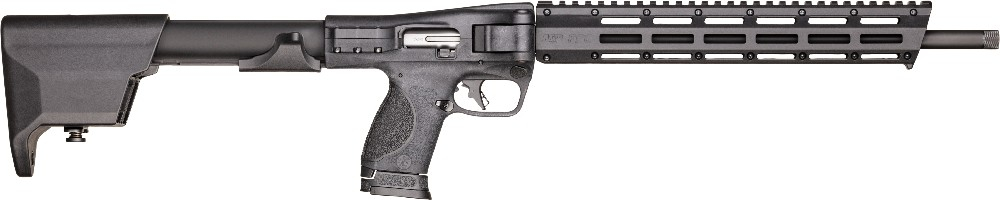
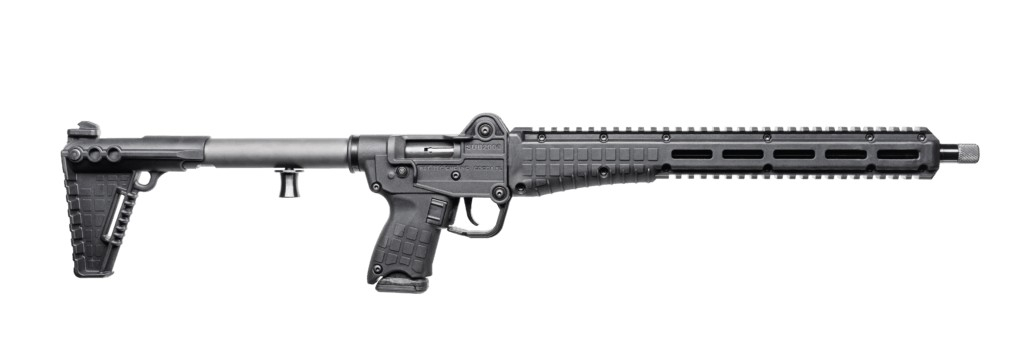
The hosts move into a direct feature and price comparison between the Kel-Tec Sub2000 Gen 3 and the Smith & Wesson M&P FPC. Both are 16-inch 9mm PCCs, but they diverge in magazine compatibility and included accessories. The Sub2000 Gen 3 uses Glock-pattern magazines, a major advantage for shooters already invested in Glock pistols and mags. The M&P FPC, by contrast, takes Smith & Wesson M&P magazines, aligning with that ecosystem. Pricing is a key point: the Kel-Tec’s street price is around $411, making it the budget-friendly option, while the M&P FPC comes in closer to $600. The higher price of the FPC is partially justified by its included dedicated carry bag and integrated spare magazine storage in the stock. Both carbines feature threaded muzzles for attaching muzzle devices or suppressors, but the overall build feel, accessory package, and value proposition are contrasted in detail.
Attention turns to how each carbine folds and handles optics. Earlier generations of the Sub2000 forced shooters to choose between mounting an optic and retaining the ability to fold the gun. The Gen 3 addresses this with a twist-out folding mechanism that allows the barrel assembly to rotate and clear a mounted optic, preserving both compactness and sighting options. The hosts demonstrate how the Sub2000’s rear charging handle can be locked and then slapped to send the bolt forward, giving it a distinctive manual of arms. The Smith & Wesson M&P FPC uses a side-folding design that keeps the optic in place at all times, so there is no need to move or clear the sight when stowing or deploying the gun. This side-folding approach is praised for maintaining zero and simplifying deployment. The segment emphasizes how each folding system affects speed, ergonomics, and the practicality of running red dots or other optics on a folding PCC.
The hosts head to the range to test how these folding PCCs perform when drawn from a bag and deployed under time pressure. They start with the Kel-Tec Sub2000 Gen 3, setting up a drill that simulates a realistic emergency scenario. The carbine is stowed folded and empty in a bag. On the timer, the shooter must retrieve the bag, open it, remove the Sub2000, unfold and lock it into firing position, insert a magazine, chamber a round, and fire 10 shots on target. This sequence is designed to stress the folding mechanism, controls, and overall ergonomics. The hosts explain that they are looking not just at raw speed, but also at how intuitive the manipulations feel and whether any steps are awkward or prone to fumbling. The Sub2000’s twist-out folding system and rear charging handle are put to the test as they refine their technique and prepare to compare times with the M&P FPC later.
With the drill parameters established, the hosts run multiple timed strings using both the Kel-Tec Sub2000 Gen 3 and the Smith & Wesson M&P FPC. For the Sub2000, recorded times generally fall in the 13–18 second range from bag to 10 rounds on target, depending on the shooter and how smoothly the unfolding and charging steps go. When they switch to the M&P FPC, times tend to be slightly slower, roughly 16–22 seconds, again varying by shooter and configuration. They note how the FPC’s side-folding design and integrated stock magazine storage influence the sequence of actions. The included dedicated bag for the FPC also shapes how it is staged and drawn. Throughout this segment, the hosts comment on how each carbine feels under pressure, how easy it is to find and run the controls, and whether the folding mechanisms introduce delays or confusion. The data from these drills forms the backbone of their practical comparison.
After collecting range data, the discussion shifts to interpreting what the times and handling impressions mean for real-world use. Both the Kel-Tec Sub2000 Gen 3 and the Smith & Wesson M&P FPC are deemed viable folding PCC options, but they cater to slightly different priorities. The Sub2000 stands out for its lower street price and Glock magazine compatibility, making it attractive to budget-conscious shooters and those already running Glock pistols. Its improved Gen 3 folding system finally allows a practical optic setup. The M&P FPC, while more expensive, offers a more feature-rich package with its dedicated carry bag and integrated spare magazine storage in the stock, which streamlines carrying extra ammo. The side-folding design that keeps the optic in place is highlighted as a major ergonomic advantage. The hosts weigh these factors against build feel, perceived durability, and personal preference, encouraging viewers to think about which platform best fits their own backpack, survival, or home defense needs.
In the closing portion of the video, the hosts focus on shortcomings they have noticed, repeatedly describing a particular aspect of the firearm setup as a feature that “fumbles.” While the exact control or component is not clearly identified in the available audio, they emphasize that both reviewers agree it is a weak point in the design or usability. They stress that, despite the strengths of these folding PCCs, this flaw stands out enough to warrant special mention. The conversation becomes somewhat repetitive, reinforcing their shared view that this element does not work as well as it should. From there, they pivot to audience engagement, inviting viewers to share their own experiences and opinions in the comment section. They encourage comments about how the guns handle, any similar fumbles viewers have encountered, and even reference “what’s that place” as a prompt, though that phrase is partially unclear in the recording.



















 Loading...