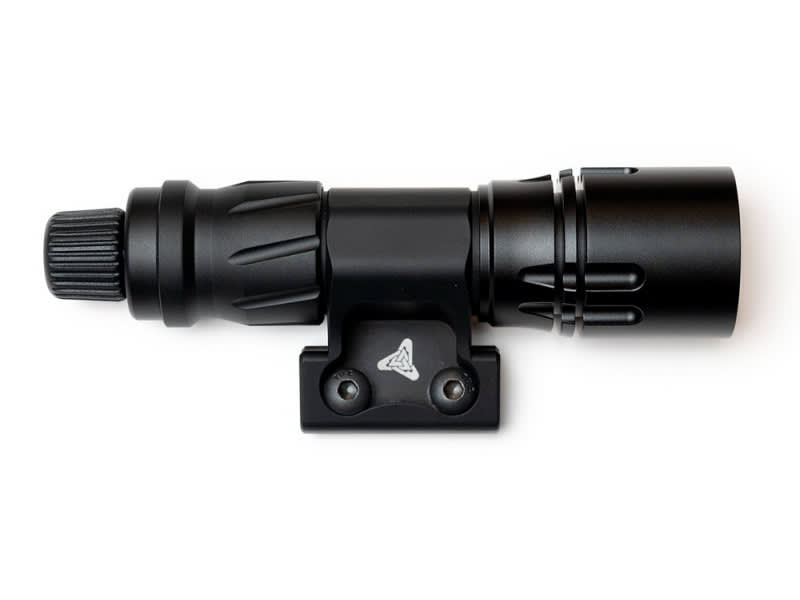
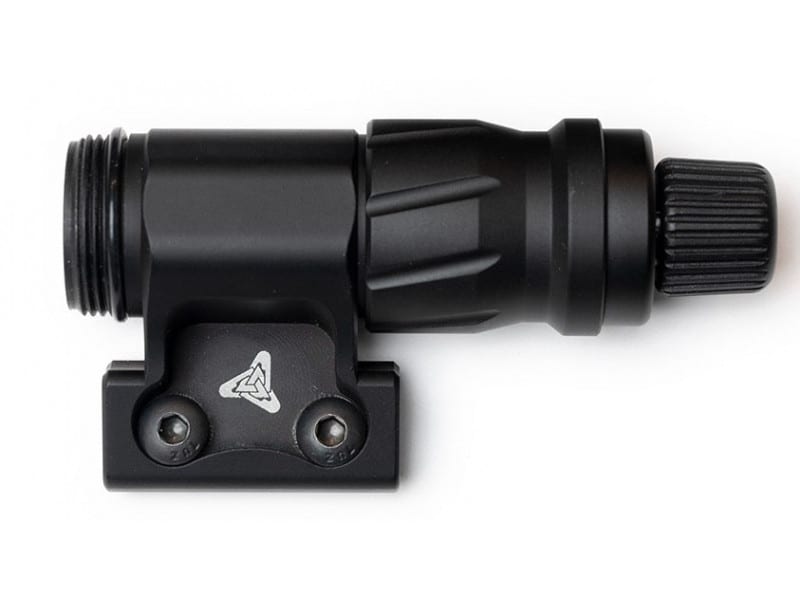
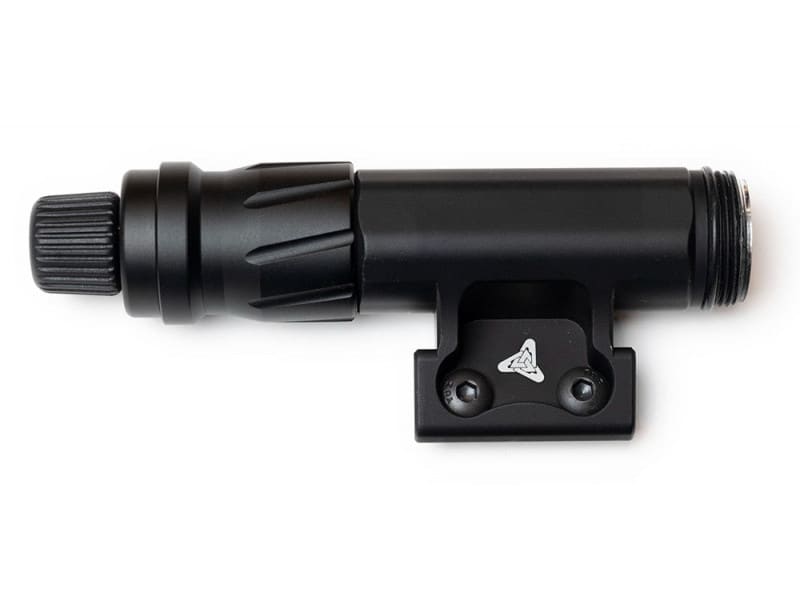
The video opens with a quick demonstration of transitioning between magnified and non‑magnified optics, immediately setting the stage for a discussion about speed and ergonomics. Clint from Classic Firearms introduces John from Valhalla Tactical, noting that viewers may recognize the brand from SHOT Show and NRA coverage. They explain that Valhalla Tactical products are now appearing on the Classic Firearms website, including the Baldr Micro SOL and Baldr Standard SOL weapon light mount/switch combos. The focus turns to Valhalla’s ODA system, which Recoil Magazine named Best Accessory of SHOT Show. ODA stands for Omnidirectional Activation, and John compares it to an Xbox joystick: the user can tap or press from virtually any direction to activate the light. The design emphasizes wire‑free operation for long guns, replacing traditional pressure pads and cables. This rear module integrates with common 600 DF thread pitch light heads and tailcaps, making it compatible with a wide range of popular weapon lights while offering a more intuitive, compact control interface.
The conversation clarifies that the ODA is not just a switch but an entire light body that accepts different manufacturers’ heads, provided the 600 DF thread pitch matches. This is the foundation for the Baldr Micro SOL and Baldr Standard SOL weapon light mount/switch combos, which can be purchased with Valhalla’s dual‑fuel LED head or as bodies only. John explains how the integrated mechanical button works: as the user adjusts tension and rotates the base, an internal contact engages to provide reliable activation. This design eliminates external wires that can snag or fail, a major benefit for duty rifles and motorcycle units where departments often mandate wire‑free setups. The ODA’s exposed, omnidirectional control is engineered for cold‑weather or gloved use, giving users a large, easy‑to‑find surface instead of a small tailcap. They emphasize precise momentary‑on control and the ability to tune tension so the light will not negligently activate if brushed against gear, yet remains intuitive enough for less‑trained shooters or family members in a home‑defense role.
Continuing with the ODA, the hosts highlight how its omnidirectional activation lets the shooter press from any angle, making it forgiving under stress or unconventional shooting positions. Adjustable tension allows users to set the force required for activation, reducing negligent white‑light discharges while preserving fast, deliberate momentary use. The discussion then transitions to Valhalla Tactical’s Scotty 193 mount, a streamlined 1.93‑inch optic mount designed to minimize snag points. Its low‑profile geometry works especially well on side‑charging platforms like the Galil and Tavor, where bulky mounts can interfere with charging handles. The Scotty 193 features a clever quick‑detach mechanism that can be actuated with the tip of a bullet, avoiding oversized levers. Importantly, it shares a common footprint with Valhalla’s Rook and Hanger plates, allowing users to mix and match offset red dot and primary optic solutions at a very approachable price point. This modularity underpins Valhalla’s ecosystem approach to rifle setup.
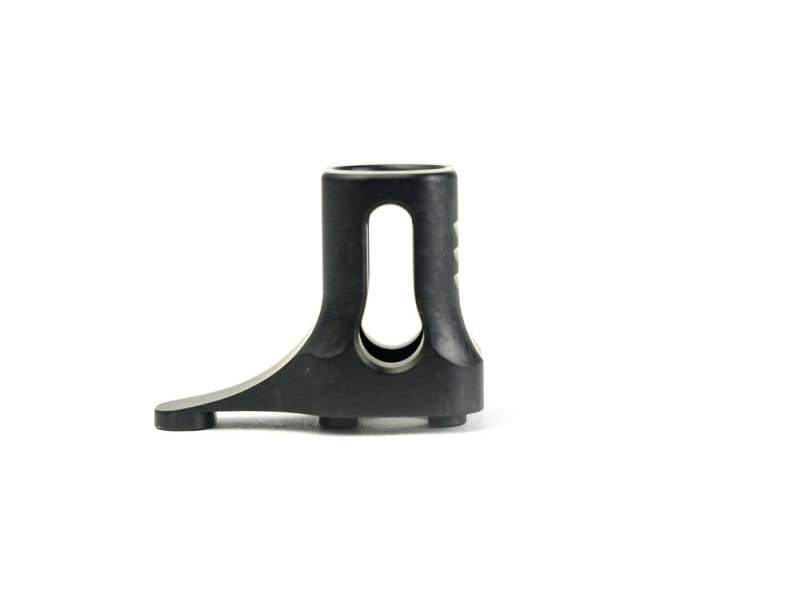
The focus shifts to Valhalla Tactical’s indexable hand stop, which is offered in both skeletonized and solid variants. Machined from aluminum, it is designed as an ultralight barricade stop that can also serve as a consistent grip index point. The contours are intentionally smooth and rounded so the shooter can drive the rifle into barricades or obstacles without sharp edges catching on gear or clothing. The hand stop can be rotated to different positions, letting users tailor how their support hand interfaces with the rail and how they load into cover. The hosts note that these barricade stops and other Valhalla accessories have been run hard on multiple rifles without breaking, underscoring their durability beyond simple range use. Staff rifles are shown or referenced as long‑term testbeds, reinforcing that the same components being reviewed—such as the Ultralite Indexable Barricade Stop—are trusted on personal setups, not just demo guns. This segment establishes real‑world validation before moving into more specialized mounts.
Attention turns to the Valhalla Hanger mount, a unique offset solution that replaces the clamshell arm on Aero Precision Ultralight and American Defense Manufacturing scope mounts. Instead of a traditional 45‑degree rail section, the Hanger tucks an offset red dot very close to the primary optic, creating a compact, integrated package. A Holosun red dot, in this case a green dot, is shown mounted on the Hanger. The design allows the user to rotate the red dot body while keeping the reticle vertically oriented, so the sight picture remains natural even at an angle. This configuration is praised for extremely fast transitions between magnified and unmagnified aiming, ideal for dynamic shooting or hunting. The host mentions using this setup for aerial hog hunting with Last Shadow in Belton, Texas, where rapid target acquisition is critical. Although the scope’s side turret slightly intrudes into the red dot’s window, it does not block the reticle or prevent accurate engagement, illustrating a practical tradeoff that still works effectively in the field.
The discussion moves to the Valhalla Tactical Rook, an adjustable offset red dot mount that shares the same ecosystem footprint as the Scotty 193 and Hanger. The Rook allows the shooter to position an offset optic closer to or farther from the primary scope and to choose angles such as 45 degrees, tailoring ergonomics and clearance. Viewers often worry that an adjustable mount might shift under impact, so John explains that the Rook uses titanium hardware to achieve very high clamping torque. This design has survived drop tests and impacts, including striking railroad ties, without losing zero. The claim is that the rifle itself would likely fail before the Rook does. A key design goal is matching height over bore between the primary optic and the offset red dot. By using different towers—such as a standard co‑witness tower or a 1.93 tower—the shooter can create a smooth, natural arc when rolling the rifle, making transitions feel like a simple wrist flick rather than a disruptive movement.
Building on the Rook system, the hosts explain Valhalla Tactical’s tower options: a co‑witness tower and a 1.93 tower. These let users match the offset red dot’s height over bore to that of their primary magnified optic, so the eye travels in a consistent plane during transitions. When properly dialed in, shooters often overshoot the offset optic at first because the transition becomes so fast and intuitive. They also highlight an RMR plate designed for this ecosystem, which includes a battery access port and internal storage for one or two spare batteries. This eliminates the need to remove the RMR and rezero it just to change batteries, a common frustration with many pistol‑style optics. The mount can be reversed or flipped to accommodate left‑handed shooters and different rifle setups, reinforcing the ambidextrous, position‑flexible nature of the system. The segment closes with a brief mention of Valhalla Tactical’s upcoming deep cover jacket, currently in the demo phase and expected to launch within a few months as part of a broader concealed carry focus.
The conversation broadens to concealed carry clothing. Older concealed carry hoodies are criticized for snagging on red dots and weapon lights during the draw, especially as more shooters adopt optics‑equipped pistols. Valhalla Tactical is developing a new lightweight jacket aimed at cooler months, designed to clear more cleanly around modern carry guns and accessories. The host then returns to the rifle setup to evaluate the Rook mount in live use. Positioned near the primary optic, the Rook still leaves enough room to manipulate the magnification turret, preserving full functionality of the scope. On the range, the host demonstrates how quickly the shooter can transition from distant targets through the magnified optic to close targets using the offset red dot. The adjustable positioning allows fine‑tuning for eye relief, cheek weld, and hand placement, showing that the Rook is not just durable on paper but also highly practical in dynamic shooting drills and real‑world scenarios.
In the final portion, the small hand stop is revisited as a critical indexing tool rather than just a barricade accessory. Placed on the forend, it gives the shooter a repeatable reference point for the support hand, whether shooting with the non‑dominant or dominant hand. This consistent grip naturally positions the thumb over a pressure pad or activation surface for an IR laser or white light, streamlining controls under stress. The hosts emphasize how this complements the wire‑free Baldr Micro SOL and Baldr Standard SOL ODA weapon light mount/switch combos, as well as traditional laser setups. The Hanger mount is reintroduced as part of Valhalla’s integrative ecosystem, interfacing directly with Aero Precision Ultralight and American Defense Manufacturing scope mounts to keep offset optics tight to the rifle’s centerline. They note that the Rook offset system and related plates can be configured on either side of the rifle to suit shooter preference, underscoring Valhalla Tactical’s focus on modular, user‑driven configurations across lights, optics, and controls.






















 Loading...