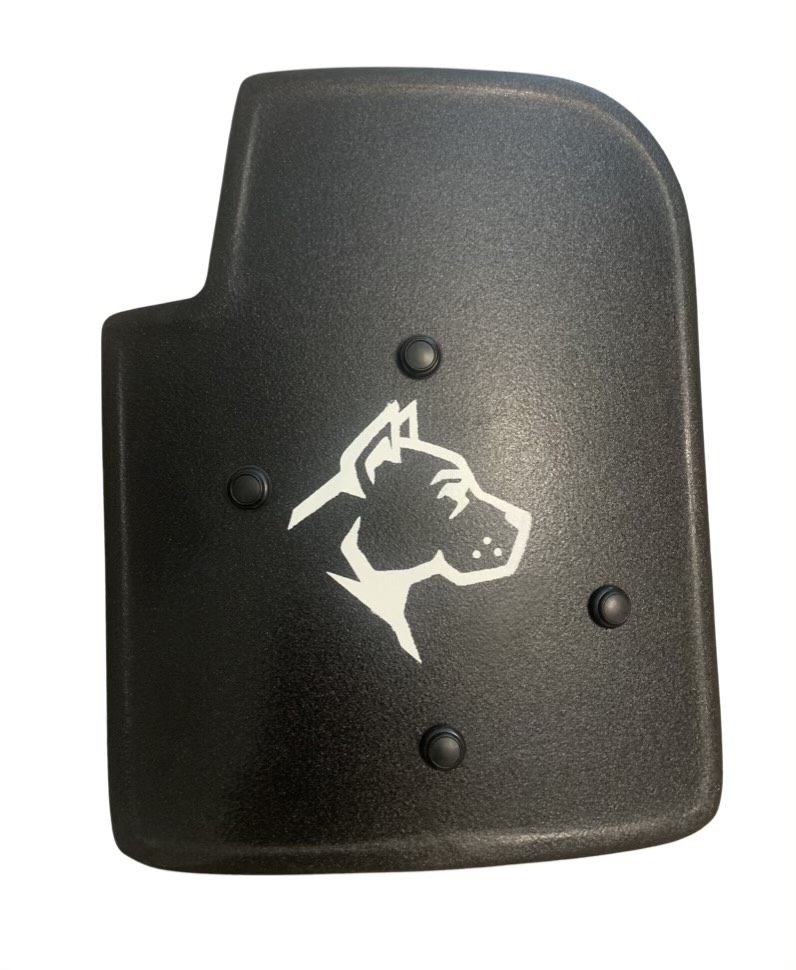
The video introduces Guard Dog Body Armor's Level 3+ Personal Ballistic Shield, model SHIELD-IIIPLUS. The host explains that the goal is to walk through the technical specifications, verify them on camera, and show how the shield is configured and used. The shield is presented as a compact, handheld option intended to provide additional protection, with the rest of the video focused on construction, rating, dimensions, weight, and practical handling.
The shield’s construction is described as a combination of alumina, an aluminum oxide ceramic, and UHMWP, identified as ultra high molecular weight polyurethane. Together, these materials form a hard armor panel rated to Level 3+. The host references the NIJ JRF2 designation and notes that this level is intended for intermediate rifle threats. The shield is described as capable of stopping M855 green tip with a steel core, along with previous NIJ levels such as III and IIIA, including mild steel core 5.56x45, 7.62x39, 7.62x51, and common pistol calibers.
The listed dimensions for the Guard Dog Level 3+ shield are 19.7 inches tall, 15.7 inches wide, and 0.7 inches thick. It is described as waterproof and finished with a polyurea coating. That coating is said to improve durability and help the shield withstand repeated impacts. The host also mentions that the shield provides some mitigation of spall, explaining that when a bullet strikes, fragments can break off and spread. The shield’s design and coating help reduce the amount of those fragments reaching the user.
On the rear of the shield, there is foam padding, a forearm strap, and a grab handle. The host demonstrates how the shield is held, with the arm through the strap and the hand on the handle, leaving the other hand free to run a handgun such as a Glock. The shield is described as useful during filming at the range, especially when shooting powerful calibers like .50 BMG. In that context, it serves as an extra layer of protection while operating a camera close to the firing line, allowing the user to hold the shield and still see the camera screen to frame shots.
Using a measuring tape, the host checks the manufacturer’s listed dimensions. The height measures essentially 19.7 inches, matching the specification. The width comes in at about 15.7 inches and is noted as being very close to 16 inches, which aligns with the published numbers. The thickness is measured next and appears to be very close to 1 inch, though the listing states 0.7 inches. The host comments that the measurement is close enough that the listed thickness is reasonable, and overall the manufacturer’s dimensional specifications are considered accurate.
The manufacturer lists the shield at 19.8 pounds, but the host questions that figure based on how it feels in hand. Using a scale on the table, the shield is weighed and comes in at approximately 13.5 pounds, significantly lighter than the published weight. The host suggests that the product listing should be updated to reflect the lower weight and notes that the lighter actual weight makes the shield more manageable. Past use at the range is mentioned, including catching spall from .50 caliber impacts on rocks, where the shield provided extra confidence during high-energy shooting sessions.





















 Loading...