The video opens with Ka enthusiastically introducing a comparison between two Italian-made Beretta shotguns: the A300 Ultima Patrol and the 1301 Tactical. Jason joins as a new face on the channel, and Ka mentions this is Jason’s first video with Classic Firearms. They briefly joke about Italian stereotypes before focusing on the guns. Both shotguns are 12-gauge semi-automatics intended for defensive and tactical roles. The 1301 Tactical has been on the market for several years, while the A300 Ultima Patrol is a newer model that was showcased at SHOT Show. The hosts explain that they have only fired a few test rounds before filming to get an initial feel, but most of the real evaluation will happen on camera so viewers can see their genuine impressions. They set the stage for a head-to-head comparison that will look at handling, recoil, speed, features, and value.
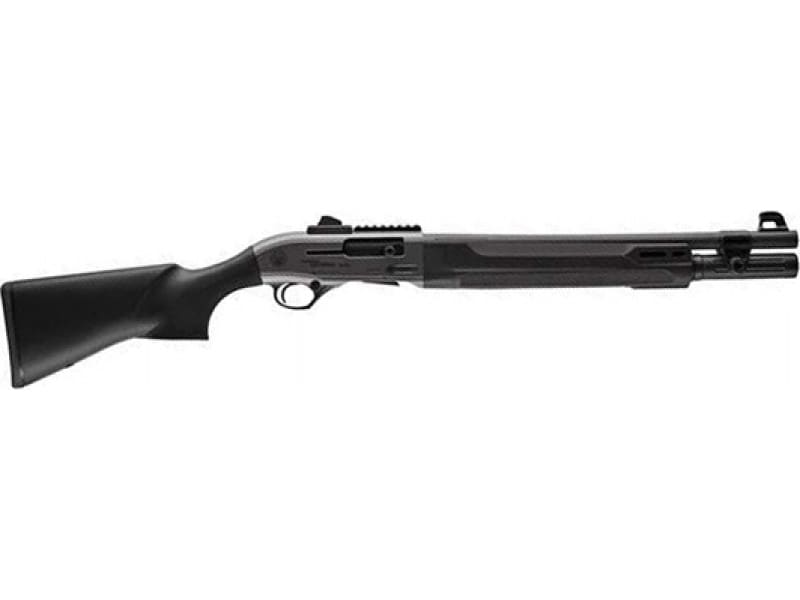
Ka and Jason start with the Beretta A300 Ultima Patrol. Jason describes it as a 12-gauge shotgun with a 3-inch chamber and a 7+1 capacity in its upgraded configuration. He highlights the tactical features: M-LOK slots at the 3, 6, and 9 o’clock positions on the forend for mounting accessories, QD sling attachment points, a fiber optic front sight, and a Picatinny rail on top for optics. The rear sight is fixed rather than fully adjustable, but they consider it adequate for the shotgun’s intended role. Jason notes that the grip texture feels excellent and gives a secure hold. Ka emphasizes that the A300 Ultima Patrol is relatively affordable for a tactical semi-auto, with an MSRP around $1,099. They explain that this model uses a more traditional gas system with the recoil spring assembly located in the stock, similar in concept to an AR-style buffer system. This influences how the gun handles recoil and also affects how easily the stock can be changed or customized in the future. Overall, they present the A300 Ultima Patrol as a feature-rich, value-oriented option straight from the factory.
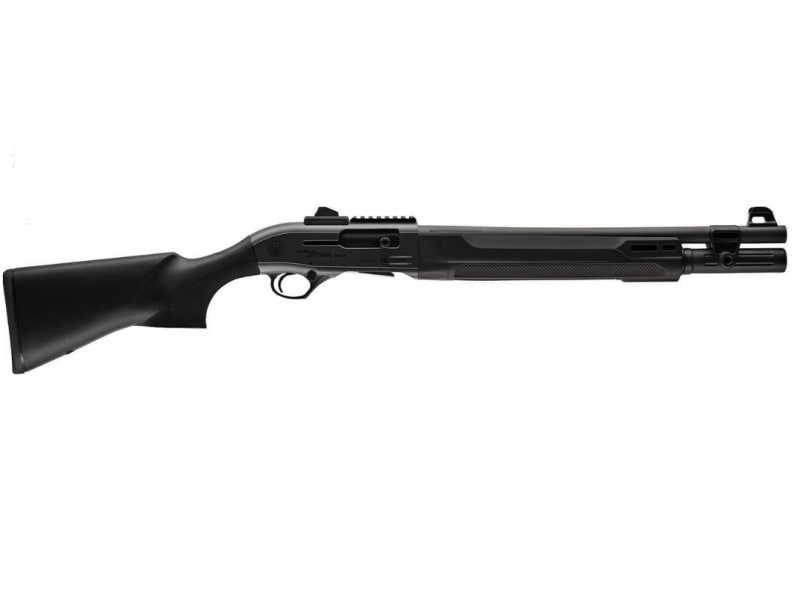
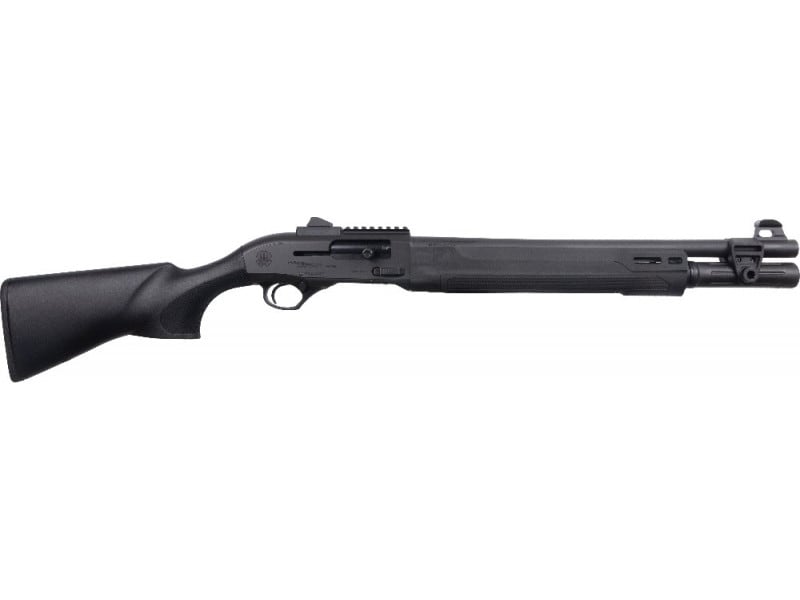
Attention shifts to the Beretta 1301 Tactical, which Ka describes as the higher-end option in this comparison. The 1301 Tactical in the video is the upgraded version with a 7+1 capacity, whereas earlier barebones models shipped with a 5+1 tube. It has a traditional white front sight, an adjustable rear sight, and a Picatinny rail on top for optics, but it does not come with the M-LOK-equipped forend that the A300 Ultima Patrol has. The MSRP for the 1301 Tactical is in the neighborhood of $1,700, making it substantially more expensive than the A300. The hosts explain that both shotguns are chambered for 2 3/4- and 3-inch shells, but not all 2 3/4-inch shells are the same actual length. They lay out four different brands of 2 3/4-inch shells and show that some are noticeably taller than others. With the taller shells, both guns only accept six rounds in the tube, while the shorter shells allow the full 7+1 capacity. They stress that buyers should be aware of this variation because it affects real-world capacity. The 1301 Tactical uses Beretta’s BLINK gas system with a rotating bolt, which Beretta claims allows the gun to cycle faster and manage recoil more efficiently than traditional gas systems. This sets up the central question of whether the 1301’s advanced operating system and higher price actually translate into a meaningful performance advantage over the A300 Ultima Patrol.
The hosts dive deeper into the technical differences between the two shotguns. On the A300 Ultima Patrol, the recoil spring assembly is housed in the stock, much like the buffer and spring arrangement on an AR-15. This design works well but limits stock-change options because the recoil mechanism depends on that specific stock configuration. In contrast, the Beretta 1301 Tactical keeps its recoil system in the receiver area, leaving the rear of the gun free to accept a wider variety of aftermarket stocks. The example in the video is fitted with a Mesa Tactical stock, illustrating the customization potential. They revisit the magazine capacity issue using the taller Zuber 2 3/4-inch shells and note a puzzling discrepancy: the 1301 Tactical only accepts six of these shells in the tube, while the A300 Ultima Patrol, with what appears to be a similar-length magazine tube, accepts seven. The hosts call on Beretta to clarify why the A300 holds more of the same shells, pointing out that small internal differences in the tube or follower design can have noticeable effects on capacity. This leads into a broader discussion about how advertised capacities can differ from what shooters experience with specific ammunition.
With the basic specs covered, the hosts move to live-fire testing. One shooter starts with the A300 Ultima Patrol, firing a controlled string and then running the gun quickly to empty the magazine. He describes the recoil as somewhat “thumpy” but notes that the gun stays relatively flat and is easy to keep on target. They then switch to the Beretta 1301 Tactical and run similar shot strings, followed by going back to the A300 so that the feel of each gun is fresh in their minds. Both shooters comment that, subjectively, the recoil between the A300 Ultima Patrol and the 1301 Tactical is very similar. One shooter feels that the 1301 might have a slight edge in smoothness and comfort, but the difference is not dramatic during casual shooting. At this stage, they conclude that any advantage the 1301 has in recoil management or cycling is subtle enough that it is hard to judge by feel alone. This leads them to plan more structured drills using a shot timer to get objective data on how quickly each shotgun can be run.
To move beyond subjective impressions, the hosts introduce a shot timer. They load full magazines and perform timed strings to measure how quickly each shotgun can be fired and controlled. Jason starts with the Beretta A300 Ultima Patrol, firing a full magazine and recording a time of 1.84 seconds from the first to the last shot. He then repeats the same drill with the Beretta 1301 Tactical and posts a faster time of 1.54 seconds. These early results support Beretta’s claim that the 1301 cycles more quickly than the A300. Jason also notes that the 1301 Tactical feels like it has less perceived recoil during these fast strings, which he attributes to the BLINK gas system and rotating bolt design. The other shooter prepares to run the same drills so they can see whether the pattern holds across different shooters and shooting styles, rather than being specific to one person’s technique.
The testing evolves into standardized seven-round drills to ensure a fair comparison between the two shotguns. At one point they accidentally load an eighth round into the A300 Ultima Patrol, which skews the data, so they correct the mistake and commit to strictly loading seven rounds in each gun for subsequent runs. Using the shot timer, they record total times and individual split times between shots for multiple strings with both the A300 and the 1301 Tactical. When they review the data, a consistent pattern emerges: the 1301 Tactical produces faster overall times and tighter splits, often around 0.15 to 0.16 seconds between shots. Even when a shooter has a slightly delayed start or a bobbled mount that makes the total run times look closer, the split-time analysis still shows the 1301 cycling and recovering more quickly. These results confirm that, in practical fast-paced drills, the 1301 Tactical holds a measurable speed advantage over the A300 Ultima Patrol, even though both guns are very capable.
In the final segment, the hosts review their shot timer data alongside their subjective impressions. They agree that the Beretta 1301 Tactical consistently delivers quicker splits than the A300 Ultima Patrol, reinforcing its reputation as the faster-running shotgun. On recoil, one shooter clearly prefers the 1301, finding its perceived recoil more manageable, while the other feels the difference is modest and not overwhelmingly in favor of the 1301. They discuss ergonomics, praising the A300’s grip texture and overall feel, and mention that a pistol-grip version of the A300 Patrol would be interesting. The buffer-style recoil system in the A300’s stock is noted as a limitation for those who want to change stocks, whereas the 1301’s receiver-based recoil system allows more flexibility with aftermarket options like the Mesa Tactical stock shown in the video. Ultimately, they conclude that while the 1301 Tactical is faster and a bit softer shooting, the A300 Ultima Patrol offers excellent value at its lower price point. One shooter says he would personally buy the A300 for its price-to-performance ratio, while the other jokes about simply owning both. They close by inviting viewers to share their own experiences with each model and to comment on which shotgun they would choose.



















 Loading...