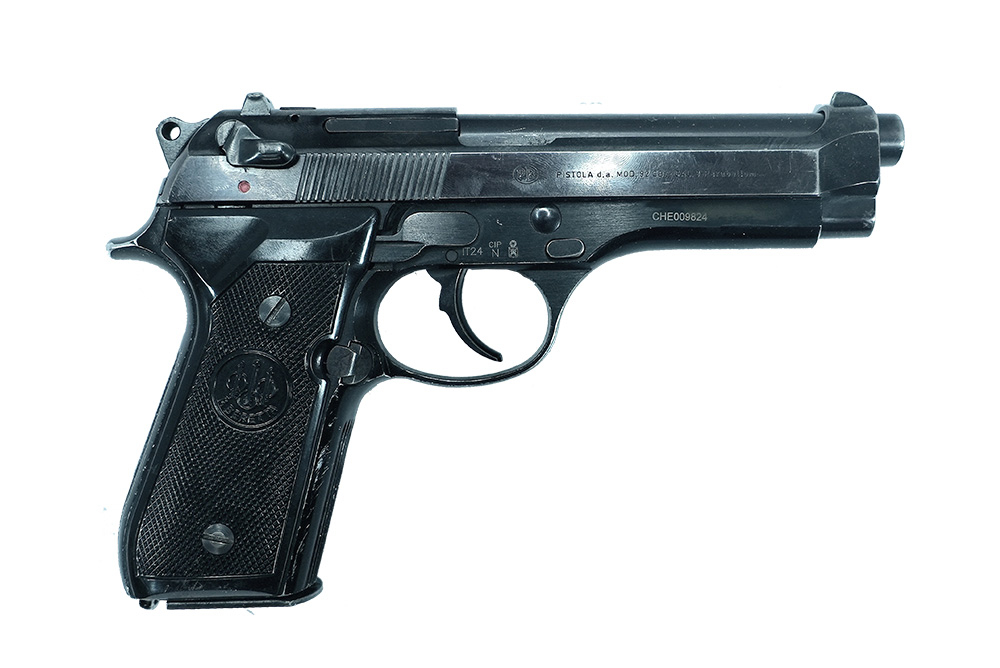
The hosts introduce a batch of Italian surplus Beretta 92SB pistols that just arrived. The 92SB is described as an earlier variant in the Beretta 92 family, chambered in 9mm, semi-automatic, and operating in double-action/single-action with a 15-round double-stack magazine. It is distinguished from the more common 92FS models on the market. The discussion notes that these specific pistols are surplus firearms and that a subject-matter expert is present to walk through their features and background. Safety checks are emphasized as part of their standard handling procedure before any on-camera or off-camera manipulation.
The conversation turns to how the Beretta 92SB evolved from earlier 92 variants. The original Beretta 92, designed around 1975 and produced starting in 1976, used a frame-mounted safety. The subsequent 92S moved the safety to the slide at the request of Italian law enforcement and added a decocking feature. For the 92SB, Beretta incorporated a firing pin block and relocated the magazine release to the more familiar position behind the trigger guard, rather than the earlier location at the bottom of the grip. This change was driven by requirements from the United States Air Force, which originally received these pistols under contract. Later F and FS models continued the evolution, including a pin to prevent the slide from coming off the frame in a catastrophic malfunction.
The hosts explain that these 92SB pistols are law enforcement trade-ins from Italy. Markings on the frame, such as “GF,” indicate service with the Guardia di Finanza, described as similar to an Italian IRS-type agency. The pistols are characterized as surplus sidearms, not new production, and the video aims to show realistic examples of wear. Several pistols are displayed side by side to highlight differences in cosmetic condition. Some show heavier finish wear and numerous small scratches, while others appear relatively clean. The emphasis is on giving viewers an honest sense of the range of conditions that can be expected from surplus Beretta 92SB trade-ins.
Attention shifts to the finish and aesthetics of the early 92 and 92SB models. The hosts note the attractive blued-type finish on these pistols, contrasting it with the more durable but less visually striking Bruniton-style finish on later Beretta variants. Several examples are examined closely: one with obvious slide and frame wear, and another that appears almost unused. The near-pristine pistol shows virtually no visible marks on the slide or frame, with only a tiny chip noted at the rear and minimal evidence of use on the barrel. Grips on this example also look new. The contrast between heavily worn and almost untouched pistols is presented as part of the unpredictability and appeal of surplus firearms.
At the range, the hosts compare how different-condition Beretta 92SB pistols feel and shoot. One pistol shows clear signs of use, with finish wear on the slide and frame, but its sights remain sharp and easy to see. Another has a darker black frame with a shinier, bluish slide, which is described as visually distinctive and indicative of quality metal and finishing. Despite cosmetic wear, the used pistols function properly, with controls operating as expected. The near-pristine surplus example is also fired, and its condition is again highlighted as unusually clean for a trade-in. The shooters comment that, regardless of external wear, the pistols feel solid in the hand and are ready for live fire.
During live fire, the hosts report that the Beretta 92SB pistols are accurate and enjoyable to shoot. One shooter remarks that performance with the 92SB feels better than with Glock pistols typically used, noting how well the full-size grip fits larger hands. The pristine surplus example is described as shooting very well, reinforcing that its like-new appearance is matched by its function. The discussion returns to the significance of the magazine release relocation, crediting the United States Air Force for pushing Beretta to move the release to the modern, thumb-accessible position behind the trigger guard. This change became standard across later Beretta 92 series models, influencing the platform’s long-term ergonomics.
In closing, the hosts summarize that the Beretta 92SB is a notable early variant in the 92 series, tied to both United States Air Force contracts and Italian law enforcement service. The pistols tested, ranging from visibly worn to nearly pristine, all functioned reliably on the range. The video underscores that cosmetic differences are expected with surplus firearms, but the core design remains consistent with the well-known Beretta 92 lineage. Viewers are encouraged to look into these surplus 92SB pistols if interested in this specific iteration of the platform. The hosts also briefly mention a Classic Firearms contest site, describing it as a place where participants can potentially win items at no cost, before thanking viewers and signing off.





















 Loading...