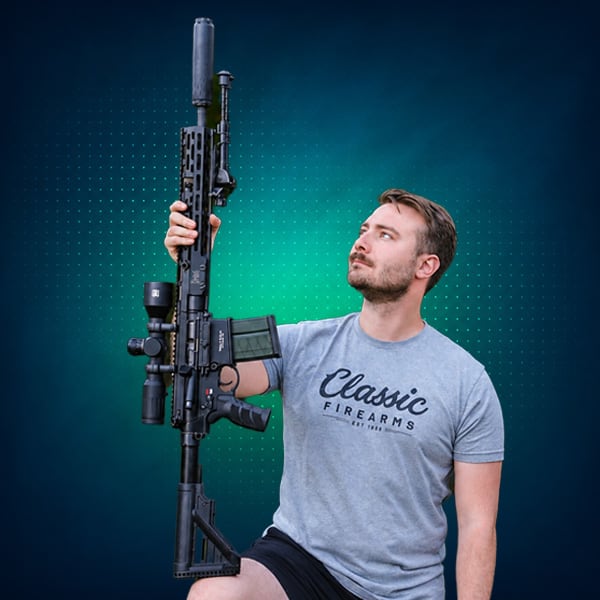
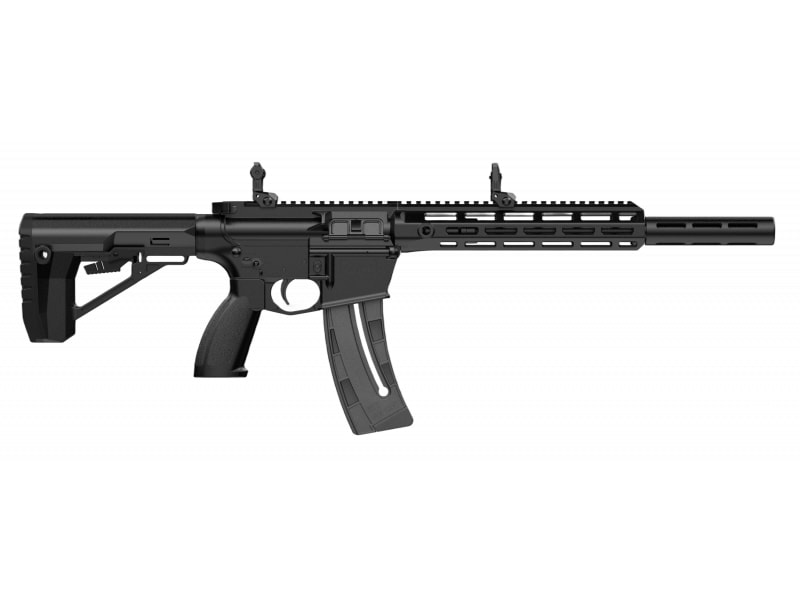
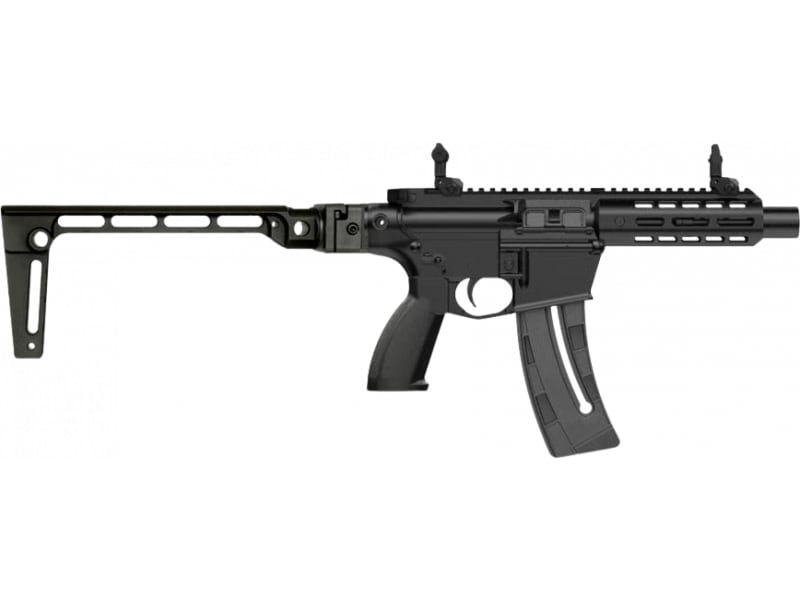
The video opens with an introduction to a budget-friendly .22LR AR-style platform offered as both an 8-inch pistol and a 16-inch rifle, each priced under $300. Both versions use Smith & Wesson M&P 15-22 pattern magazines, and the hosts immediately address common reliability concerns with higher-capacity .22LR mags, such as nose-diving rounds and inconsistent feeding. Features highlighted include a side-folding brace humorously labeled “not a stomp,” an MCX-style grip that accepts standard AR-15 grips, and a polymer charging handle styled like a Radian Raptor. Initial live-fire testing begins with Aguila .22LR Super Extra, where a failure to feed is quickly attributed to the quirks of bulk .22LR ammunition rather than the platform alone. Switching to Winchester Super X, they notice nose-diving rounds and malfunctions that increase as the rate of fire rises, particularly in the rifle. The pistol, however, continues to run more consistently, setting up a deeper reliability comparison and plans for suppressed testing with Winchester Super X and Remington Subsonic loads later in the video.
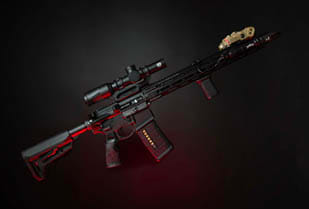
Attention shifts to contrasting the aluminum RA-15 style rifle with the similar pistol, focusing on how each handles reliability under different conditions. The rifle exhibits more frequent feeding issues, while the pistol keeps running smoothly, even though both share the same basic operating system and magazine pattern. The rifle’s polymer stock and buffer tube are described as primarily comfort and ergonomics features rather than functional necessities for cycling. The hosts emphasize why AR-style .22LR platforms are valuable as cost-effective trainers for AR-15 shooters, noting that the magazine shape and manual of arms closely mimic 5.56 or .223 rifles, making reloads and manipulations more realistic. They highlight .22LR as an excellent choice for varmint and small pest control, where low recoil and inexpensive ammo encourage high-volume practice. The platform is also recommended for introducing kids and recoil-sensitive or hesitant adults, especially women, to shooting in a less intimidating way. This segment sets the stage for exploring how subsonic ammunition and suppressors further enhance shootability and enjoyment.
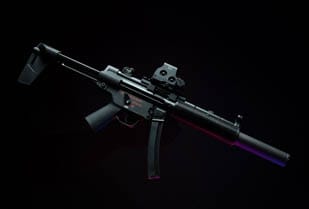
The hosts transition to suppressed shooting, loading subsonic .22LR to demonstrate just how quiet the RA-15 pistol and rifle can be. They mount dedicated rimfire suppressors, including the CAT Ben A1 and the Dead Air RXD TI 22, and note that most quality .22 cans sound very similar when paired with subsonic ammunition. On the pistol, they experience a brief failure to feed while suppressed, but the gun quickly returns to normal operation, reinforcing that minor hiccups are common with rimfire semi-autos. The sound signature with subsonic ammo is described as extremely mild, with the action noise and bullet impact often louder than the muzzle report. This quiet performance underscores the appeal of suppressed .22LR for backyard plinking where legal, discreet pest control, and low-stress training. The segment reinforces that, despite occasional feed issues, the RA-15 platform remains fun, economical, and practical when paired with the right ammo and a good suppressor.
Further reliability testing reveals that rapid firing can cause the semi-auto RA-15 to outrun the magazine spring, leading to feeding problems. When the shooters slow their cadence, the malfunctions largely disappear, suggesting that the magazine’s ability to keep up is a key factor in consistent performance. They then conduct direct comparisons between supersonic and subsonic .22LR through a suppressor on the pistol, clearly demonstrating the louder crack and sharper report of supersonic Winchester Super X versus the softer, more muted tone of subsonic loads. The suppressor uses a QD-style mount with an integrated flash hider, echoing common 5.56 suppressor systems and making the setup feel familiar to AR users. Moving to the rifle, they repeat the supersonic versus subsonic test, noting that the longer barrel produces a more pronounced supersonic crack but remains impressively quiet with subsonic ammo. Throughout, they emphasize the low cost and high fun factor of shooting large volumes of .22LR while experimenting with different loads and firing speeds.
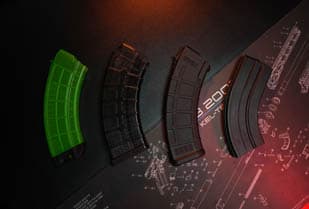
In the closing portion, the discussion turns to how the RA-15 pistol and rifle fit into real-world roles. The compact pistol with its side-folding brace is highlighted as a strong candidate for a truck gun, offering easy storage and quick deployment while still benefiting from the low recoil and cheap ammo of .22LR. The rifle, with its longer barrel and more traditional layout, is praised as a better platform for practicing rifle manipulation, positional shooting, and movement drills that translate directly to centerfire AR-15s. The hosts stress the strong value proposition, noting that a shooter could purchase both the pistol and rifle for a combined price still below many competing .22LR options. They recommend buying multiple magazines and specifically suggest trying genuine Smith & Wesson M&P 15-22 mags to potentially improve reliability and reduce nose-diving issues. The video closes by inviting viewers to share their experiences with different ammo types and reliability, and by encouraging shooters to train more with .22LR to build skills affordably.













 Loading...