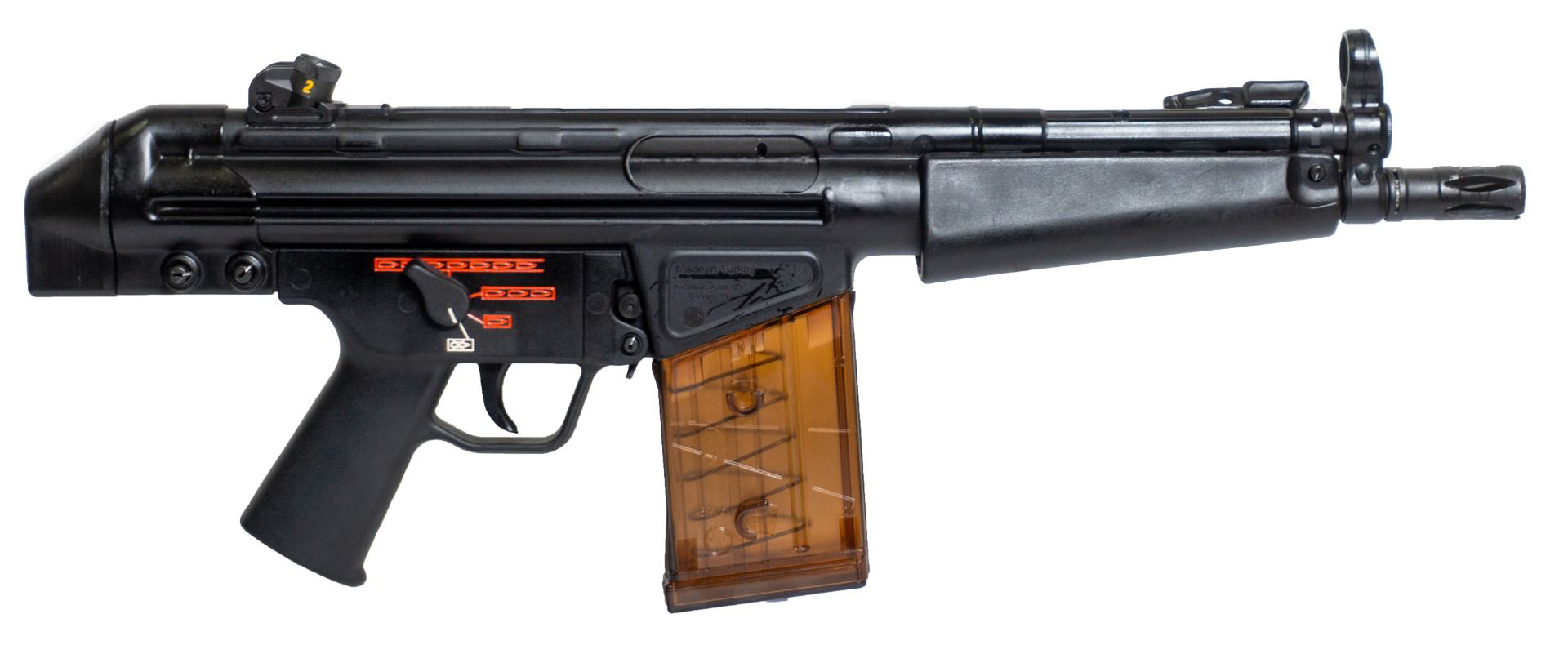
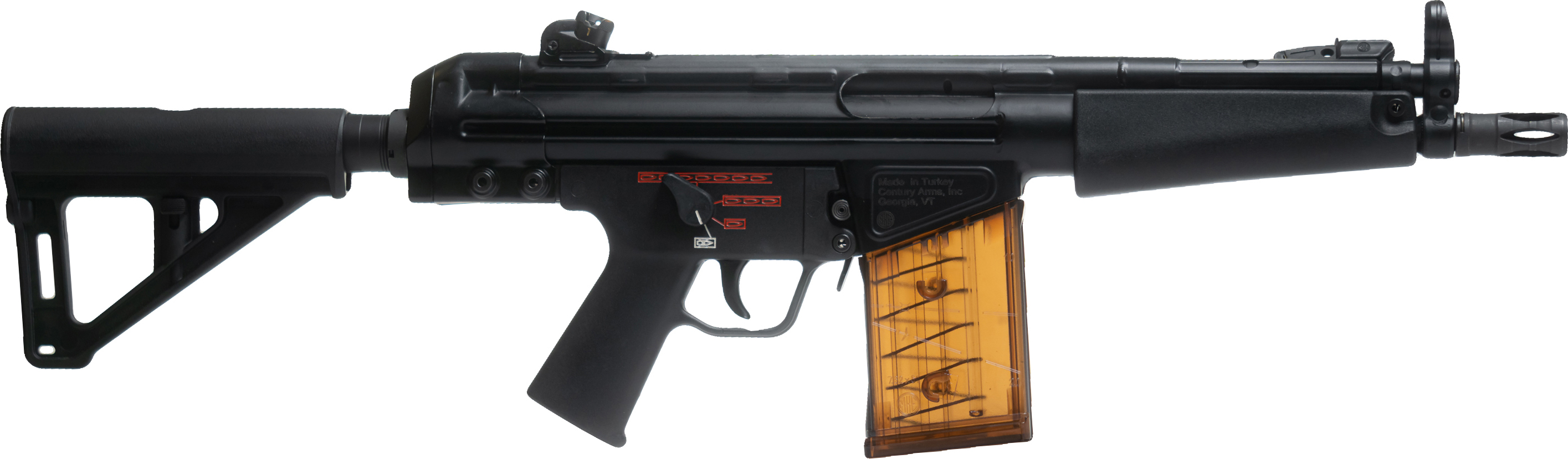
The video introduces the MK AP51 and AP53, imported by Century Arms, as HK-style roller-delayed firearms that bring MP5 ergonomics to 7.62x51 (.308) and 5.56/.223. The AP51 is described as a compact, PDW-style take on the G3 concept, while the AP53 is based on the HK33 lineage and known historically for its compact size in the 1970s and 1980s. Both guns use the familiar MP5-style roller-delayed system, where gas pressure after bullet exit delays bolt movement via rollers, reducing felt recoil and providing a smooth impulse. The host emphasizes that these are essentially MP5-format guns scaled up to rifle calibers, retaining classic HK-style controls, cocking tube, and the iconic charging handle slap while offering different ballistic performance in 5.56 and .308.
The AP53 is chambered in 5.56/.223 and uses translucent coupled magazines that can be clipped together, a style reminiscent of European designs and the SIG 550 family. The gun shown is configured with an aftermarket B&T handguard, though it does not ship that way, and the host notes that HK-tooled dimensions allow B&T components to fit. The lower is a Navy-style pattern with familiar markings, making it compatible with certain upgrade trigger packs. The barrel uses a 1/2x28 thread pitch and a proprietary muzzle device with a ratcheting, tapered interface. Because of this taper, a suitable taper adapter is recommended before mounting a suppressor. The host stresses the importance of checking concentricity with a rod before shooting suppressed to avoid baffle strikes. The AP53 includes a claw-style optic mount from the factory and is shown with a compact optic that gives an old-school appearance.
The AP51, nicknamed the “Thick P5,” is chambered in 7.62x51 NATO (.308) and uses an 8.3-inch cold hammer forged barrel, the same length as the AP53. Both barrels are cold hammer forged for durability. The AP51 also uses coupled magazines that evoke SIG 550 and HK aesthetics, and it retains the Navy-spec lower with push-pin style construction. A B&T handguard is installed on the example shown, demonstrating compatibility with B&T accessories. The muzzle is threaded 5/8x24, which simplifies suppressor mounting compared to the AP53, though the host advises using a washer or device that provides a proper 90-degree shoulder for secure alignment. Both the AP51 and AP53 ship with a claw optic mount, and the AP51 is further modernized with an added B&T Picatinny rail section. The design is presented as a shrunk-down, PDW-style evolution of the traditional G3, with unloaded weights around 7.9 pounds for the AP51 and 7.2 pounds for the AP53.
At the range, the host begins with the AP51 in .308, describing it as the harsher option in terms of recoil, especially unsuppressed. Once shooting starts, the recoil is reported as more manageable than expected, with the roller-delayed system driving the impulse straight back rather than sharply upward. The sensation is compared to a smooth, rocking motion rather than a sharp snap, making the gun controllable despite the short 8.3-inch barrel and full-power 7.62x51 cartridge. Manual of arms, including reloading and manipulating the HK-style controls, is acknowledged as something that requires practice but remains workable. Overall, the AP51 is portrayed as a compact .308 platform that delivers significant power with a surprisingly controllable recoil impulse for its size and configuration.
Switching to the AP53, the host notes that the translucent coupled magazines look interesting but can be problematic during reloads, as the coupled section may shift or walk out when changing mags. To avoid issues, a spare magazine is kept separate for reloads. Using the HK-style slap to charge the gun, the host finds the AP53 extremely smooth, with very soft recoil thanks to the roller-delayed system working with the 5.56 cartridge. The muzzle produces a noticeable ringing, described as a tuning fork effect, but recoil remains light and easy to control. The main criticism is the traditional MP5/HK-style trigger, which causes some finger fatigue during extended firing and could benefit from an upgrade. Aside from the trigger feel and preference against coupled magazines, the AP53 is characterized as a very pleasant, soft-shooting 5.56 platform.
In closing, the host compares the AP51 and AP53 without declaring a single winner, emphasizing that the choice depends on the shooter’s needs. The AP51 is described as an effective delivery system for .308 in a compact package, with notable concussive blast that can be felt by bystanders and camera equipment. The host suggests that adding the appropriate adapter and suppressor would make the AP51 even more appealing and invites interest in a future suppressed test. The AP53 is considered the more forgiving option, with recoil comparable to or even lighter than some 9mm setups due to the roller-delayed action and 5.56 chambering. Both guns are acknowledged as somewhat heavy because of their all-metal construction, but they are regarded as solid, well-built platforms. The host’s main personal preference is for non-coupled magazines, noting that while coupled mags are popular in some European designs like the G36, they are not ideal for this style of use.





















 Loading...