The hosts introduce a table of police trade-in Glock pistols and explain that the goal is to show real examples so buyers can judge condition and options. They note that these are law enforcement trade-ins, ranging from compact to full-size models and multiple calibers. The conversation briefly touches on Glock history, mentioning that Gaston Glock designed the original Glock 17 around 1982 with a team of experts, despite having no prior pistol design experience, and that it went on to win the Austrian military sidearm trials. The hosts emphasize that the video will move left to right across the table, comparing generations, calibers, and visible wear so viewers can better understand what typical surplus police handguns look like in person.
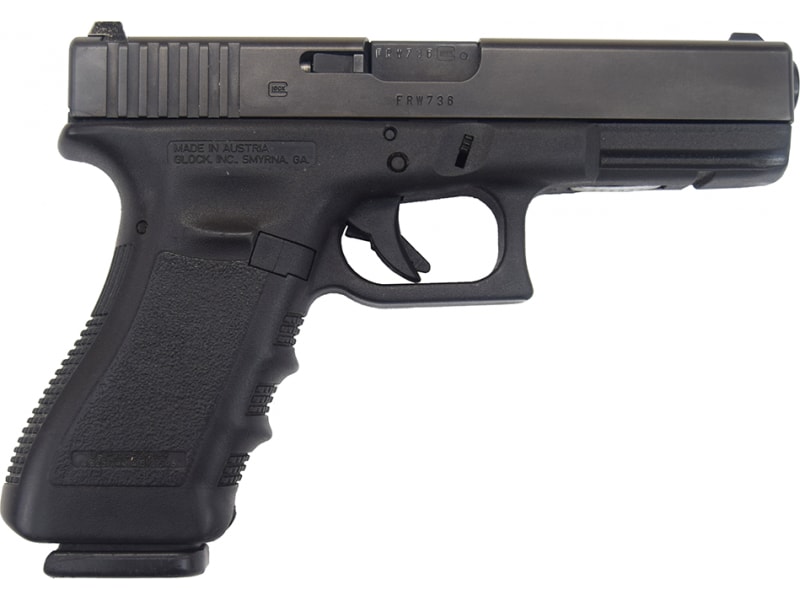
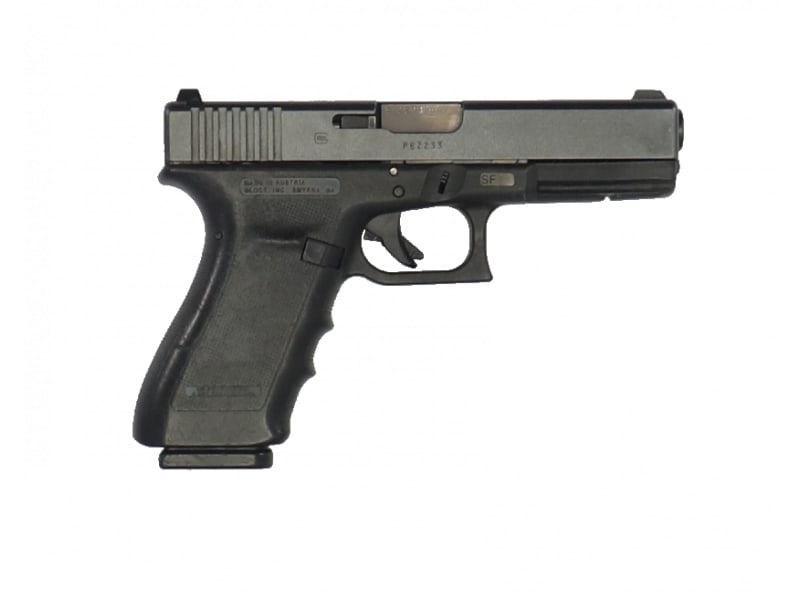
The first pistols discussed are Glock 22 Gen 3 models in .40 S&W, described as full-size duty guns widely used by law enforcement for decades. The hosts explain that many agencies have moved back to 9mm, which is why .40 S&W Glock 22 trade-ins are now available. These pistols use 15-round magazines and generally retain factory sights, often originally night sights, though remaining tritium brightness is not guaranteed. The Gen 3 frame is identified by its accessory rail, smoother grip texture, and finger grooves. Condition varies from almost new-looking to visibly holster-worn, with typical finish wear from repeated drawing, sweat, and holster contact, but the expectation is that all are mechanically functional despite cosmetic differences.
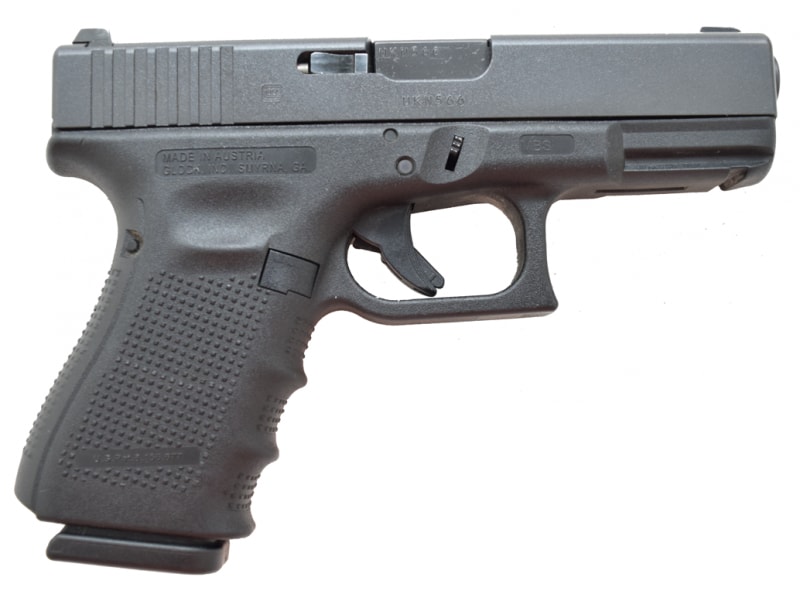
Next up are Glock 23 Gen 3 pistols, described as the compact counterparts to the Glock 22, also chambered in .40 S&W. They share the same generation features, including the accessory rail and finger grooves, but in a smaller overall package that is more suited to concealed carry. The hosts point out that police trade-in guns often show small configuration differences, such as an extended slide release on one example compared to a standard control on another. Some pistols may have aftermarket or replaced sights or added grip accessories. Barrel and slide wear vary, with some examples showing relatively little evidence of firing. The segment reinforces that buyers should expect normal cosmetic wear and occasional minor part variations across individual trade-in Glock 23s.
The discussion moves to Glock 21 Gen 4 pistols chambered in .45 ACP. The hosts note that the Glock 21 feels noticeably thicker in the hand and refer to it as a heavier, “chunky” option compared to the .40 S&W models. They describe .45 ACP as a slower, heavier cartridge that is still regarded as effective for duty use. Multiple Glock 21 Gen 4 examples are shown to illustrate the range of cosmetic condition, from moderate slide and barrel wear to relatively clean finishes. Typical wear points include the top of the slide and areas that contact holster retention devices. The focus remains on demonstrating realistic surplus condition rather than pristine, unfired appearance, while emphasizing that these are functional law enforcement trade-in sidearms.
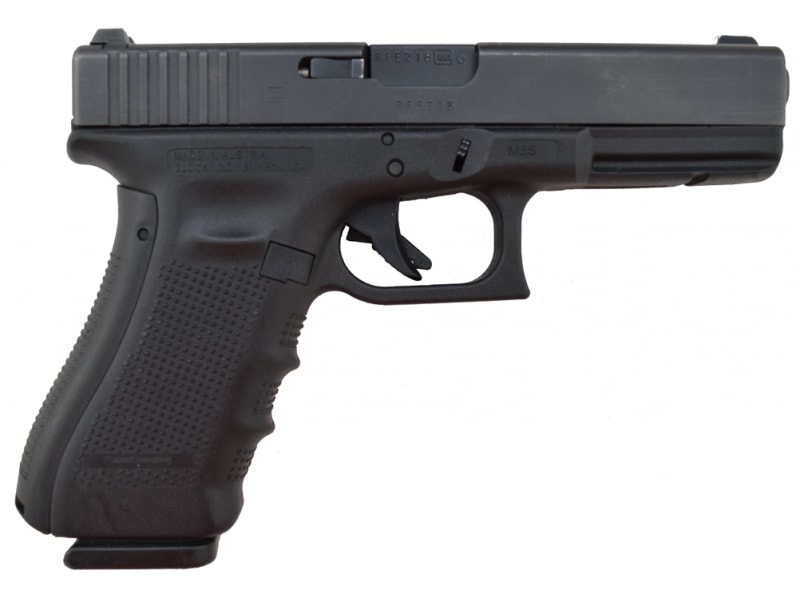
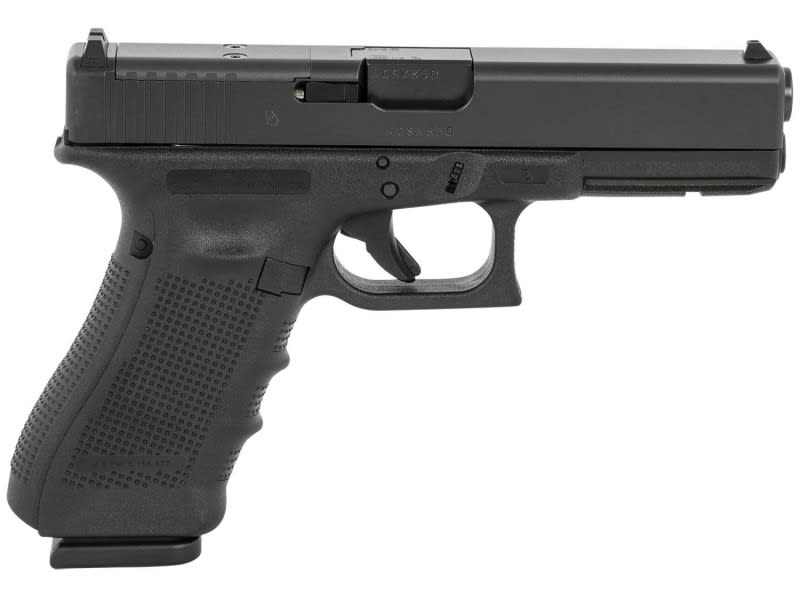
Attention then turns to a Glock 17 Gen 4, the modern version of Glock’s original full-size 9mm design. The hosts describe the Glock 17 as a classic 17-round 9mm pistol that works well as a general carry or range gun. They comment that full-size pistols are often more enjoyable and manageable to shoot than very small handguns, especially for newer or smaller-framed shooters. The conversation highlights a common mistake of handing women or younger shooters tiny .380 or subcompact 9mm pistols, which can feel snappy, loud, and unpleasant, sometimes discouraging further practice. In contrast, a full-size pistol like the Glock 17 tends to be easier to control and more comfortable, making it a better teaching tool even though smaller guns still have a role in deep concealment.
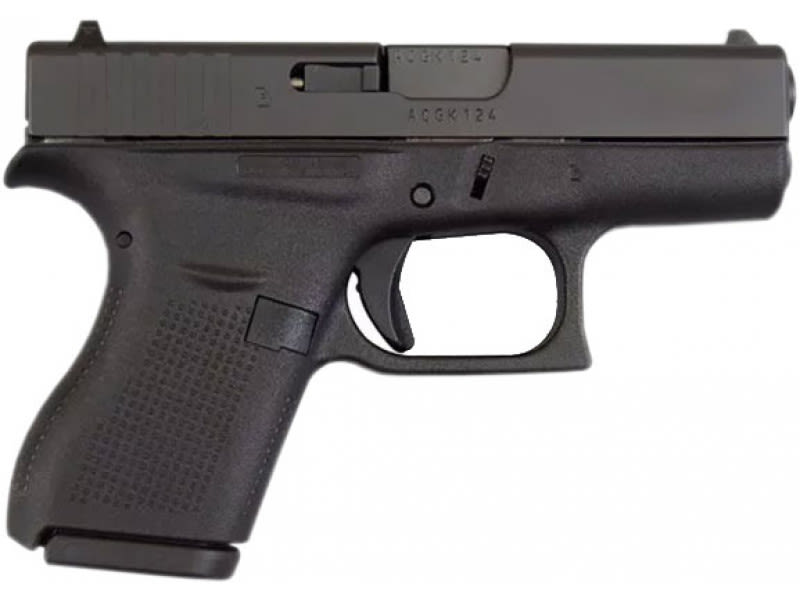
The hosts briefly cover the Glock 42, a very small .380 ACP pistol intended for deep concealment, pocket carry, or use as a backup gun. Capacity is described as approximately six rounds in the magazine plus one in the chamber. They suggest that, as police trade-ins, these Glock 42s were likely used as backup pistols rather than primary duty weapons. An interesting import detail is mentioned: the slide is marked “USA” because the Glock 42 had to be manufactured by Glock USA to be sold domestically. Due to its small size and caliber, it could not meet the required import points if produced in Austria. The segment reinforces that the Glock 42 is purpose-built for discreet carry rather than extended range sessions.
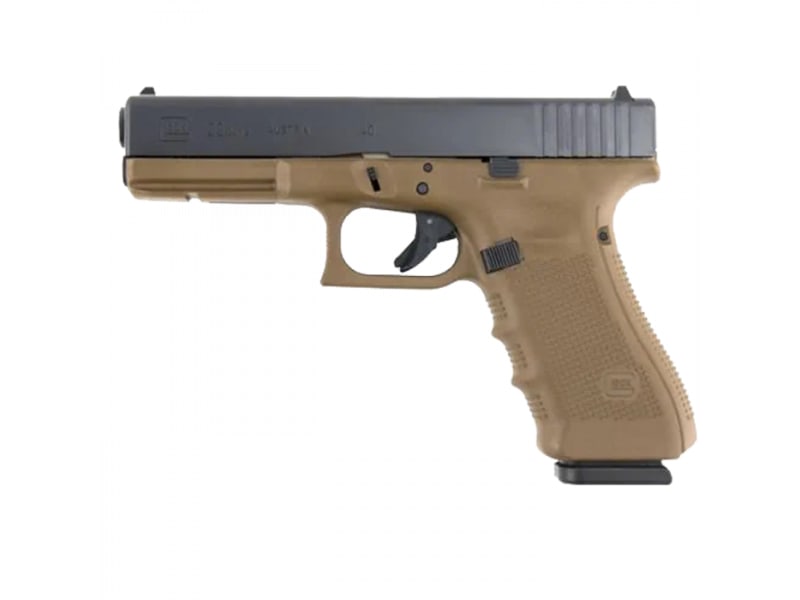
The video returns to .40 S&W with Glock 22 Gen 4 and Glock 23 Gen 4 pistols. These models retain an accessory rail and finger grooves but add a more aggressive grip texture compared to Gen 3 frames. The hosts again note that most examples have factory night sights, though tritium life varies. They explain that many pistols will ship in Glock hard cases, but some may arrive in older-style Tupperware cases or without accessories, depending on how they were turned in. A key point is that .40 S&W Glock 22 and 23 pistols can be converted to 9mm by swapping to an appropriate 9mm barrel and using 9mm magazines, while keeping the same slide and recoil spring. The .40 and 9mm magazine wells are the same size, so the conversion is straightforward aside from the barrel and magazine change.
To wrap up, the hosts summarize what buyers can expect from police trade-in Glocks across the lineup. Cosmetic wear ranges from light to heavy, typically from holster use, sweat, and repeated drawing, but the pistols are expected to function properly. Small parts may differ between individual guns, including extended slide releases, different grip add-ons, or variations in sights. Some pistols feature white-outline factory sights, while others have factory night sights that may or may not still glow strongly. Accessories included in the case are not guaranteed; some guns arrive with backstraps, cleaning brushes, and full paperwork, while others come with only the pistol and a magazine. Overall, viewers are encouraged to anticipate normal law enforcement wear and minor configuration differences rather than uniform, like-new condition.



























 Loading...