The discussion opens with an overview of the Sig MCX platform and why the presenters consider it a strong design. The MCX is described as a short-stroke, piston-driven system that has been around for years, starting with the original Gen 1 MCX. That early version is followed by the MCX Virtus, which brought changes such as a revised handguard and the introduction of a telescoping stock. As the platform developed, it expanded into multiple calibers, including 5.56 and 7.62x39, along with various larger and smaller options. The MCX is repeatedly characterized as a versatile, modular platform with many variants. The conversation then connects this lineage to the Army’s NGSW program, where the XM7 and the Spear LT represent further evolution, with the XM7 chambered in larger calibers and both platforms seeing some military use.
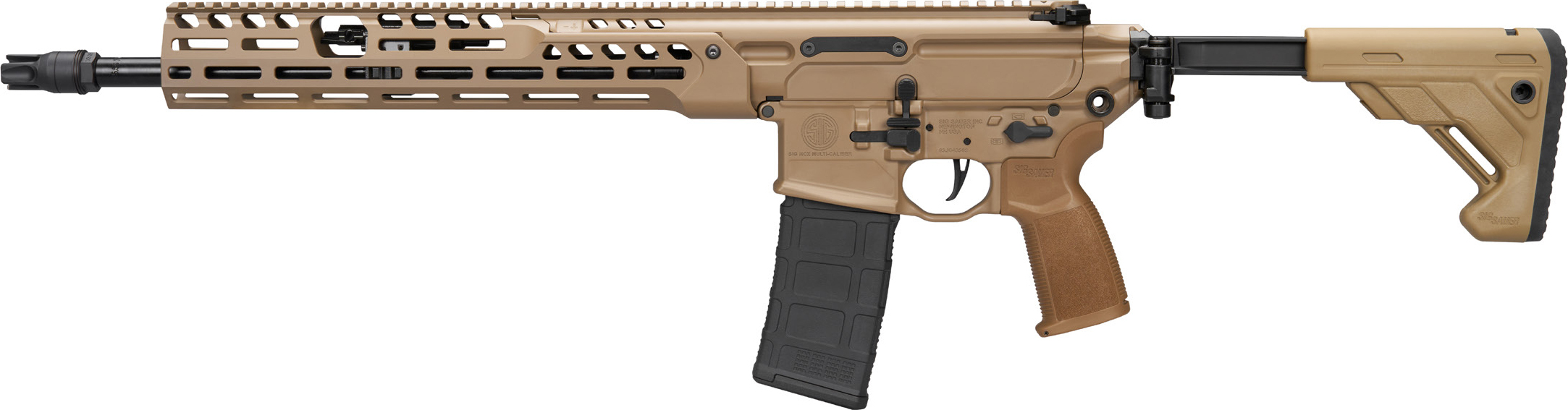
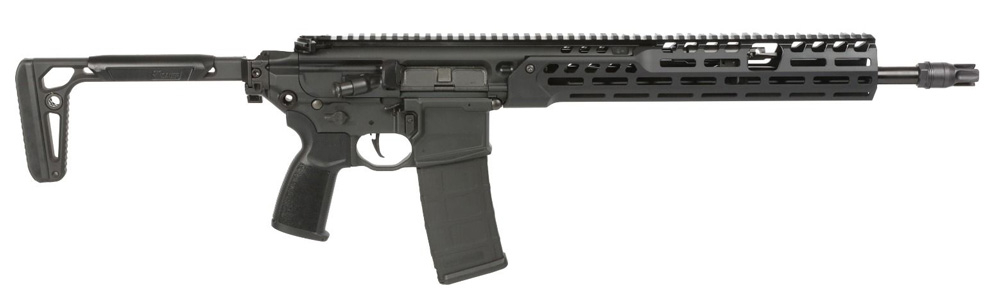
Attention shifts to the Sig MCX Spear LT in 5.56. The rifle shown is a 16-inch configuration, with the hosts noting that many other variations exist. It uses a cold hammer forged barrel with a 1:7 twist and 1/2x28 thread pitch, which they describe as a standard setup for a 5.56 carbine. The rifle retains the MCX short-stroke piston system and uses Sig’s folding stock or brace options, enabled by the absence of a traditional buffer tube. A 1913 Picatinny rail at the rear allows different stock or brace configurations. Overall length is stated at about 34.3 inches, with a folded length around 26.5 inches, a height of 7.8 inches, and a weight of roughly 7.4 pounds. They note that piston systems tend to be heavier than comparable direct-impingement AR rifles.
The presenters comment on the Spear LT’s overall profile and how the handguard affects handling and heat. While not the thinnest rifle available, it is described as relatively slim, with a sturdy handguard that includes extensive lightening and heat-relief cuts. These cuts are intended to help manage heat during extended firing strings, keeping the handguard more comfortable after multiple magazines. They acknowledge that the rifle will still get warm, but they find it more manageable than some smaller, tighter handguards. The balance between durability and weight is emphasized, with the Spear LT’s piston system adding some mass compared to a typical direct-impingement AR, but providing the benefits of the MCX piston design.
The video then focuses on the front end of the rifle. The Spear LT is equipped with Sig’s proprietary flash hider, a muzzle device the hosts say is common across MCX models. They note it can be difficult to remove and may require significant leverage or heat to break loose. An adjustable gas system sits behind the muzzle device, allowing tuning for different suppressors or ammunition to ensure reliable cycling. The handguard is described as Sig’s newer free-floating design introduced with the Spear LT, distinct from the earlier Virtus handguard. It is streamlined and thinner to reduce forward weight while still providing a window for access to the adjustable gas block. The top includes an extended Picatinny rail section for mounting items such as laser illuminators that benefit from a rigid, non-shifting mounting surface. Additional screws on each side of the handguard improve lockup compared to previous generations.
Moving rearward, the hosts describe the controls and ergonomics. The ejection port area and general layout feel familiar to AR users, which they say is intentional. The charging handle is ambidextrous, though one presenter finds it a bit difficult to grasp and prefers aftermarket options like the Geissele Super Charging Handle for the MCX. The rifle includes ambidextrous safety selectors with a 90-degree throw and ambidextrous magazine release controls. Particular praise is given to the ambidextrous bolt hold-open and release lever, which they find intuitive and easy to actuate during malfunction clearance. They contrast this with other designs that are harder to use under stress. Certain external pieces are replaceable, supporting long-term serviceability. The pistol grip is a Sig design that the presenters compare loosely to a B5 grip but slightly larger, and they highlight its ergonomics and feel. QD sling points are present on both sides, reinforcing the rifle’s ambidextrous, modular nature.
To close, the hosts verify real-world measurements for storage and transport. With the stock unfolded, they measure the rifle at approximately 34.5 inches including the muzzle device, and about 26.25 inches when folded. They note that overall length will vary slightly if the user changes the muzzle device or adds a suppressor. The folding stock is presented as a practical feature for fitting the rifle into bags or cases. They then discuss the trigger, describing it as a Sig flat-faced style unit. Visually, it reminds them of designs like the Geissele Lightning Bow or certain Radian triggers due to its partial curve, flat characteristics, and skeletonized window cut. They demonstrate that the rifle is clear before handling the trigger and characterize the pull as favorable for this type of rifle, though detailed pull weight figures are not provided in the segment.





















 Loading...