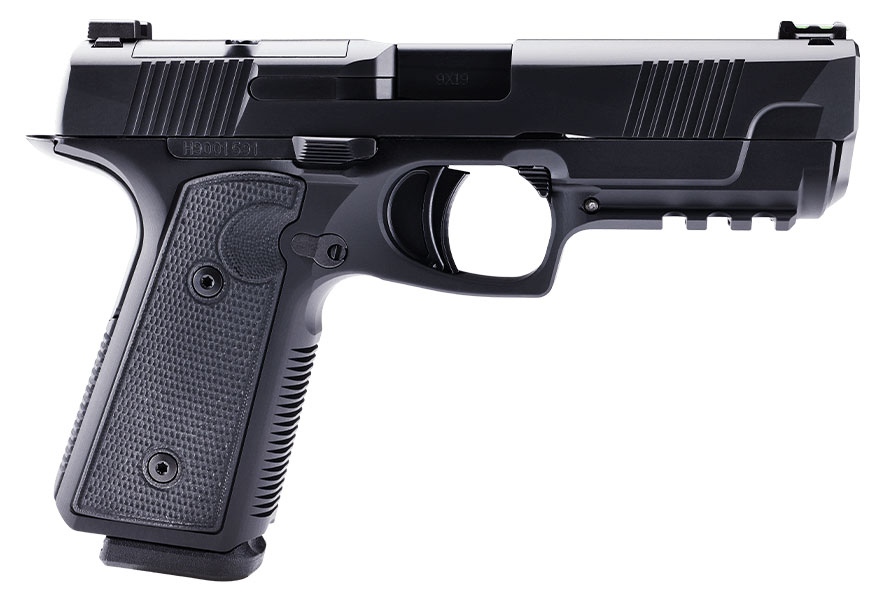
The video opens with an introduction to the new Daniel Defense H9, emphasizing that the pistol shown is a brand new, unfired production gun rather than a prototype. The host explains prior experience with pre-production H9s that suffered from chambering problems and failures to go fully into battery, issues Daniel Defense claims to have corrected in this final version. Viewers learn that while the pistol visually resembles the original Hudson H9 and uses a similar short recoil operating system, Daniel Defense purchased the patents and then substantially redesigned the platform. Most components are new, with only a few original Hudson elements retained. The production H9 adds a modern red dot optics cut and fully ambidextrous controls, positioning it as a contemporary metal-frame, striker-fired alternative to the more common polymer pistols. The discussion also touches on Daniel Defense’s broader move into the pistol and pistol caliber carbine markets and suggests that future configurations and accessories, such as braces or different variants, could better match what consumers are requesting.
The next section frames the Daniel Defense H9 as an evolution of the original concept, now featuring truly ambidextrous controls, including mirrored slide releases. The pistol ships in a black-and-yellow box with three 15-round magazines, and there is speculation that Springfield Hellcat magazines might be compatible, though this is not confirmed. The trigger is demonstrated in detail: it uses an upward-style trigger safety that pivots at the top rather than a typical blade at the bottom. Pre-travel is modest, the break is short and light, and the reset is quick but not very audible or tactile, requiring deliberate attention for rapid follow-up shots. Disassembly is compared to a Glock, using takedown tabs and a trigger pull to remove the slide. Internally, the viewer sees a low-sitting recoil spring and guide rod that tie into the gun’s unique operating system. The frame incorporates a true Picatinny accessory rail placed lower than on the original Hudson, making light mounting feel more natural and improving compatibility with common weapon lights.
Attention turns to the H9’s sighting and optics setup. The pistol comes with a green fiber optic front sight paired with a plain black rear, a combination that draws the eye naturally to the front for quick acquisition. Despite an MSRP around $1,300, the gun ships with only a coupon for a single optics plate rather than including multiple plates in the box, a decision that is highlighted as a drawback at this price point. The video then transitions into live-fire impressions. The host discloses that earlier cold-weather sessions produced failures to chamber, prompting a light brushing of the feed ramp. After several hundred rounds and shooting in warmer conditions, the production H9 now chambers reliably and appears to have completed its break-in period. The pistol is reported to shoot slightly low relative to point of aim. Recoil is described as somewhat snappy and not as exceptionally flat as marketing might suggest, though the low bore axis still directs recoil straight back into the shooter’s hand, aiding control.
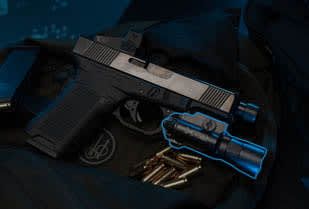
This chapter continues the on-range evaluation, focusing on how the H9 behaves under recoil and with accessories attached. The pistol’s recoil impulse is revisited as being more traditional and a bit snappy rather than dramatically flatter than other 9mm pistols, even though the low bore axis helps keep the muzzle from flipping excessively. The host confirms that the gun tends to print slightly low, something shooters may need to account for with sight picture or ammunition choice. Mounting a Surefire X300 to the low-sitting Picatinny rail is demonstrated, showing that the rail placement is functional but introduces ergonomic challenges. The X300 is already known for stiff activation paddles, and on the H9, its position makes it difficult to actuate, especially for shooters with smaller hands. Reaching the light’s controls from a normal firing grip is awkward, so the host recommends using the support-hand thumb to run the light. This setup works but is less than ideal for those wanting effortless momentary activation during defensive or duty use.
With the X300 mounted, the host demonstrates shooting the H9 and comments that the pistol feels good in the hand, with ergonomics that support a solid firing grip. However, the trigger reset remains a recurring theme: it is very subtle and hard to feel, which can slow down or disrupt fast strings of fire until the shooter becomes accustomed to it. The H9 is characterized as a roughly 28–29 ounce, 15-round, metal-frame, striker-fired pistol using a short recoil operating system and offering red dot capability. Its approximate $1,300 MSRP is scrutinized, as many competing concealed carry and duty pistols cost significantly less while offering proven performance and broader aftermarket support. The slim ambidextrous slide release and the tendency of the slide to auto-forward on reloads are praised as ergonomic positives. Still, the host questions where the H9 fits in the market, expressing more excitement about Daniel Defense’s pistol caliber carbine and the possibility of future H9 variants that might better justify the price and carve out a clearer niche.
The discussion shifts to the H9’s slide behavior and manual of arms. Inserting a fresh magazine often causes the slide to automatically go forward, a trait some shooters appreciate for faster reloads while others may find unpredictable. Forward slide serrations are highlighted as genuinely useful for press checks, allowing the shooter to easily verify that a round is chambered. The host revisits the trigger safety design, emphasizing that it breaks at the top rather than the bottom, which is unusual compared to many striker-fired pistols. The trigger’s travel is short and light, but the reset remains subtle and hard to feel, reinforcing the need for practice to avoid short-stroking during rapid fire. These characteristics shape how the H9 must be run under speed. This chapter reinforces that while the pistol’s controls and slide features are thoughtfully executed, the trigger’s unique safety geometry and muted reset may demand a learning curve for shooters transitioning from more conventional striker-fired platforms.
In the final portion, the host conducts additional drills and encounters a situation where the slide locks back with a round still in the magazine. Rather than immediately blaming the gun, the analysis points to likely user-induced interference with the slide release, suggesting that the shooter’s grip is accidentally actuating the control. This reinforces the importance of hand placement, especially with the slim ambidextrous slide releases. The video then summarizes reliability impressions. Earlier pre-production failure-to-feed and chambering issues appear resolved in the production H9 after a reasonable break-in period. The pistol is reported to run well on SAR USA 124 grain and PMC 115 grain ammunition, indicating solid performance with common 9mm loads. The host closes by asking viewers whether the H9’s combination of metal-frame construction, unique operating system, optics capability, and premium price point earns it a place in their carry or duty rotation, or if it remains more of a niche enthusiast pistol in its current form.














 Loading...