$400 vs $4000 AR-15: Setup, Goals, and Budget Build
The video opens with a skit where one host shows off a newly purchased AR-15 that cost about $400, while the other is holding a rifle that runs around $4,000. Both are chambered in 5.56, which leads into the central question: what are you really getting for ten times the money? The hosts explain that many viewers are either shopping for their first AR-15 or considering adding another rifle, and they’re often torn between very inexpensive options and well-known premium brands. Some people see a very low price and immediately distrust it, deciding instead to save for something high-end like the LMT on the table.
They outline the plan for the day: head to the range and compare a roughly $400 AR-15 against a roughly $4,000 AR-15, focusing on accuracy, ergonomics, and overall shooting experience. This is not meant to be a long-term durability or torture test, but a practical side-by-side evaluation of how each rifle performs and feels in normal use.
The budget rifle is introduced as a Radical Firearms AR-15 that is essentially stock from the factory with a few changes for the test. It features a 16-inch direct impingement gas system, an M-LOK rail, and an A2-style flash hider or compensator. The rifle uses a basic mil-spec trigger and is not ambidextrous; it has a standard right-side safety selector and conventional bolt catch and release. From the factory it comes with B5 Systems furniture, though the exact stock on the test rifle is a slightly beefier B5 model rather than the slimmer version it normally ships with. For the sake of a fair comparison, the hosts add a BCM Mod 4-style grip and mount an EOTech holographic sight with a 3x magnifier so that the sighting setup closely matches the premium rifle. This segment frames the Radical as a realistic entry-level or base-platform rifle that many shooters could actually afford, setting the stage for a fair comparison against the much more expensive LMT.
GunSkins Wraps and High-End LMT R20 Overview
Attention shifts to the magazines and rifles that are covered in decorative vinyl wraps from GunSkins. The hosts explain that these wraps are removable, protective layers that can help prevent cosmetic wear while allowing shooters to personalize their gear. Designs include American flag themes, Punisher-style skulls, “Don’t Tread on Me” imagery, Valor motifs, and other patriotic patterns. The wraps can also help shooters quickly identify or mark their magazines so they don’t get mixed up or lost at the range.
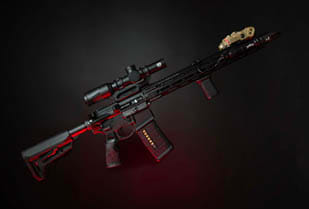
The premium rifle is then introduced: the LMT R20. This is a high-end AR-pattern rifle that uses a short-stroke piston operating system instead of direct impingement. It has a 14.3-inch barrel that is pinned and welded to meet legal overall length requirements. The rifle is outfitted with quality furniture, including a BCM Mod 4-type grip and a Magpul SLK stock, and it features fully ambidextrous controls such as the safety selector, magazine release, and bolt catch/release. To keep the optics comparison consistent, the LMT is also equipped with an EOTech optic and matching 3x magnifier. The hosts stress that by standardizing the optics, any performance differences observed on the range should come from the rifles themselves rather than from the sighting systems.
LMT R20 Design, Monolithic Upper, and Zero Shift
The hosts take a closer look at the engineering and pedigree of the LMT R20. They note that LMT has a strong reputation in professional and military circles, mentioning that Estonia’s armed forces have adopted LMT rifles, which speaks to the platform’s credibility as a duty-grade option. A major design highlight is the monolithic, one-piece upper receiver. On this rifle, the upper and handguard are machined as a single continuous unit, allowing optics, lasers, and other accessories to be mounted anywhere along the top rail without worrying about the rail flexing or shifting and altering point of impact.
They contrast this with more conventional AR-15 designs like the Radical RF-15, where the handguard is a separate component attached to the barrel nut. On those setups, pressure on the handguard or accessories can introduce slight movement that might influence zero for devices mounted out on the rail. The LMT’s short-stroke piston system is also compared to the Radical’s direct impingement system, with the piston expected to keep more fouling out of the receiver and potentially run cleaner over extended shooting. Overall, this segment positions the LMT as a purpose-built, professional-grade rifle whose advantages go beyond appearance, focusing on structural rigidity, accessory mounting stability, and a refined operating system.
100-Yard Accuracy Test: IMI vs Federal Match Ammo
The comparison moves to a structured 100-yard accuracy test at the range. Both rifles are fired from a supported position to minimize shooter-induced error. The hosts use two types of 77-grain match ammunition: IMI Razorcore 77-grain and Federal Gold Medal 77-grain. The target is arranged so that the LMT R20’s groups are on one side and the Radical RF-15’s groups are on the other, making it easy to visually compare performance.
They fire five-round groups with each ammunition type from each rifle. With IMI Razorcore, the LMT produces groups in roughly the 1 to 1.5 MOA range, showing tight, consistent clustering. The Radical’s groups with the same IMI load are larger, around 2 MOA. When they switch to Federal Gold Medal, the LMT again performs well, though a single flyer slightly opens one of the groups. The hosts mention that on a previous day the Radical had actually shot better with Federal, but in this particular session the LMT holds a noticeable edge. They emphasize that environmental conditions, shooter fatigue, and small variations in technique can all influence group size, so the results should be viewed as a snapshot rather than an absolute verdict.
Mag Dumps, Heat, and Recoil Comparison
At another range, the hosts perform fast magazine dumps with both rifles to evaluate how they handle during sustained strings of fire. Multiple magazines are run through each gun in quick succession to see how they manage heat buildup and how comfortable they remain to shoot. As expected, the gas block and exposed metal portions near the front of each rifle become extremely hot, to the point where touching them would be unsafe, but the handguards stay manageable enough to grip.
In terms of recoil, the hosts report that the budget Radical Firearms rifle and the high-end LMT R20 feel very similar. There is no dramatic difference in how the rifles move under recoil or how they return to target between shots. Where the LMT stands out is in overall feel and refinement: the monolithic upper and M-LOK handguard give it a very solid, confidence-inspiring character, and the trigger is described as crisper and more refined than the Radical’s basic mil-spec unit. Fit and finish, including how tightly the receivers mate and how smoothly the controls operate, clearly favor the LMT, reinforcing its premium status even though the basic recoil impulse is comparable.
Accuracy Tie-Breakers, Value Talk, and Viewer Choice
After more shooting with different ammunition brands, the hosts revisit the accuracy discussion. They characterize the overall results as essentially a tie, with each rifle showing preferences for particular loads. The Radical RF-15 edges out the LMT R20 when using Federal Premium Gold Medal, turning in tighter groups with that specific ammo. In contrast, the LMT performs noticeably better with IMI or similar match loads, where its groups are smaller than those from the Radical. Both rifles also shoot well with Black Hills ammunition, which further blurs any clear winner.
The presenters reiterate that this is not a long-term endurance or abuse test, so their conclusions are limited to performance and feel over a relatively short shooting session. They frame the Radical as a solid base platform, especially considering its B5 furniture and functional configuration at a very low price point. The LMT is acknowledged as expensive, but it offers superior build quality, ambidextrous controls, a piston operating system, and professional-grade features that some users may prioritize. Viewers are encouraged to weigh whether the incremental gains in refinement and certain aspects of performance justify the substantial price difference for their own needs.
Personal Preference, Roller-Delayed Tease, and Giveaway
In the closing segment, the hosts stress that the choice between a budget AR-15 and a high-end rifle ultimately comes down to personal preference, intended role, and budget. Their goal is to provide data and honest impressions rather than declare a single winner. They encourage shooters to think about how each rifle feels in the hand, which features matter most—such as ambidextrous controls, trigger quality, or operating system—and whether the extra cost of a premium rifle aligns with their priorities.
The video then pivots to a promotion for CFCContest.com. They mention that a previous contest has wrapped up but tease an upcoming giveaway focused on roller-delayed firearms, hinting that there may be more than one such gun involved. This tease is aimed at viewers who are enthusiastic about roller-delayed systems and likely to sound off in the comments. The hosts thank the audience for their continued support, briefly acknowledge the excitement around the term “roller delay,” and sign off, wrapping up the comparison between the approximately $400 Radical and the approximately $4,000 LMT.



















 Loading...