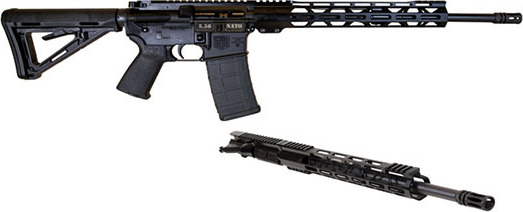
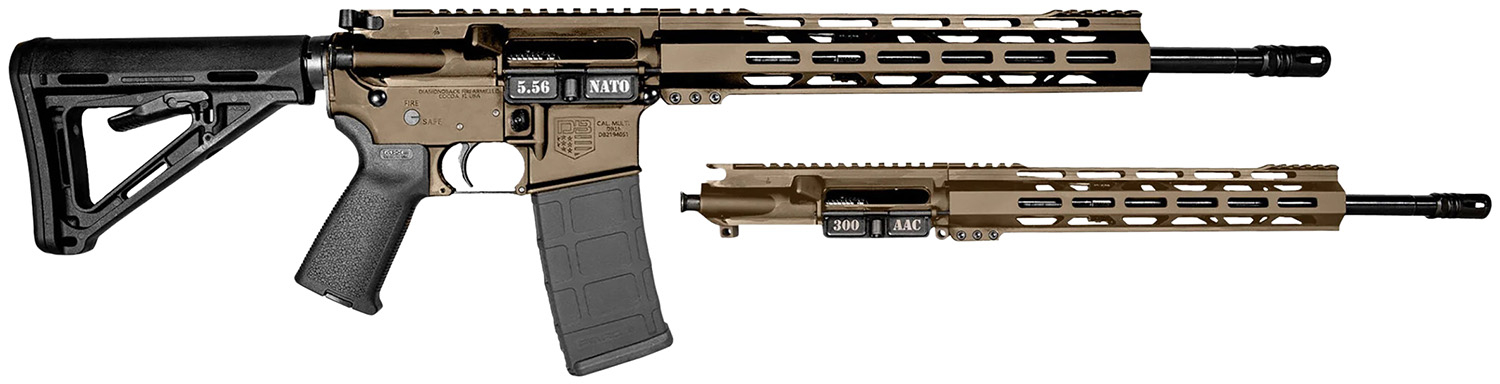
The video introduces the Diamondback DB15 combo rifle for shooters deciding between 5.56 NATO and .300 Blackout. Diamondback packages a 5.56 rifle with an additional complete .300 Blackout upper in the same box, allowing quick caliber changes on a single lower. The host notes that the rifle comes ready to support both cartridges without needing a separate gun. The review is framed as a straightforward look at what comes in the box and how the platform is configured, with a focus on practical details rather than published specs that were difficult to find online.
The package includes two Magpul magazines, one marked for .300 Blackout and one for 5.56, helping prevent caliber mix-ups. The rifle ships with two 16-inch uppers, one in 5.56 NATO and one in .300 AAC Blackout, each with a 16-inch barrel and a 12-inch handguard. The handguards feature Picatinny rail at the front and at the optic mounting area, with M-LOK slots on all four sides for accessories. Both uppers are equipped with A2 flash hiders. The dust covers are labeled to indicate caliber, making it easy to distinguish the 5.56 NATO upper from the .300 AAC upper. The lower includes a Magpul grip, a Magpul stock, and a slightly flared magwell that is noticeable but not extreme.
The host inserts the correctly labeled 5.56 magazine and walks through the DB15’s controls. The rifle uses a mil-spec charging handle, a left-side bolt release, and a right-hand magazine release, consistent with a standard AR-15 layout. A 90-degree safety selector is present on the left side only. The trigger is tested after confirming the rifle is unloaded. It shows a small amount of take-up before breaking, with a similarly modest amount of movement on reset, giving the impression of a clean, typical mil-spec trigger. The trigger guard area can be changed from the flat configuration to a curved style if desired. The Magpul carbine stock is adjustable and operates in the familiar “quick rip and lock” fashion, allowing easy length-of-pull changes.
Because factory weight data was hard to find, the host measures the rifle on a scale. With the magazine removed, the base gun weighs approximately 6.13 pounds. With a magazine inserted, the weight is about 6.42 pounds. The magazine weight is noted separately, and the host compares the .300 Blackout magazine to the 5.56 magazine, observing an unexpected difference in weight between them despite similar appearance. The .300 Blackout upper is weighed on its own and comes in at about 3.32 pounds. The host comments that the 5.56 upper would likely be very close in weight, though not measured in detail during this segment.
A trigger gauge is used to quantify the DB15’s trigger pull. Initial readings taken toward the lower portion of the trigger shoe show unusually light values around 3.1 pounds and even as low as 2.13 pounds, which the host finds surprising. Additional measurements are taken with the gauge positioned more centrally on the trigger. These pulls produce more typical results in the 4-pound range, including readings of 4.0, 4.1, 4.5, and 4.8 pounds. The variation demonstrates how pull location on the trigger can affect gauge readings, with lower placement tending to register lighter pulls. Overall, the trigger is characterized as breaking somewhere around 4 to 5 pounds, consistent with a decent mil-spec unit.
The host uses a tape measure to document the rifle’s dimensions. With the stock adjusted shorter, the overall length is about 32.5 inches, measured from the back of the buttstock to the muzzle. With the stock extended, the rifle reaches a total length of roughly 36 inches. Height is measured with a magazine inserted, coming in around 8 to 12 inches at the tallest point, depending on reference. From the grip area, which is likely more relevant to handling, the height is about 7.5 inches. These measurements provide a practical sense of the DB15’s size range as the stock is adjusted between its shortest and longest positions.
The video concludes with an invitation for owners of the Diamondback DB15, particularly those who have used both the 5.56 NATO and .300 Blackout uppers, to share their experiences in the comments. The host expresses interest in how the rifle has run for different users and how it feels in actual use. Viewers are encouraged to leave reviews and questions, with the promise that the host will be in the comment section responding as much as possible. The review then wraps up with a brief sign-off and a note that the shooting portion will follow off camera.





















 Loading...