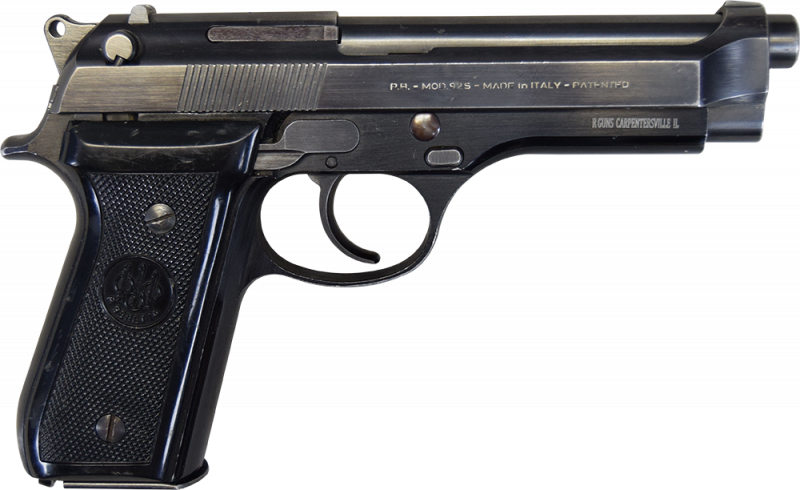
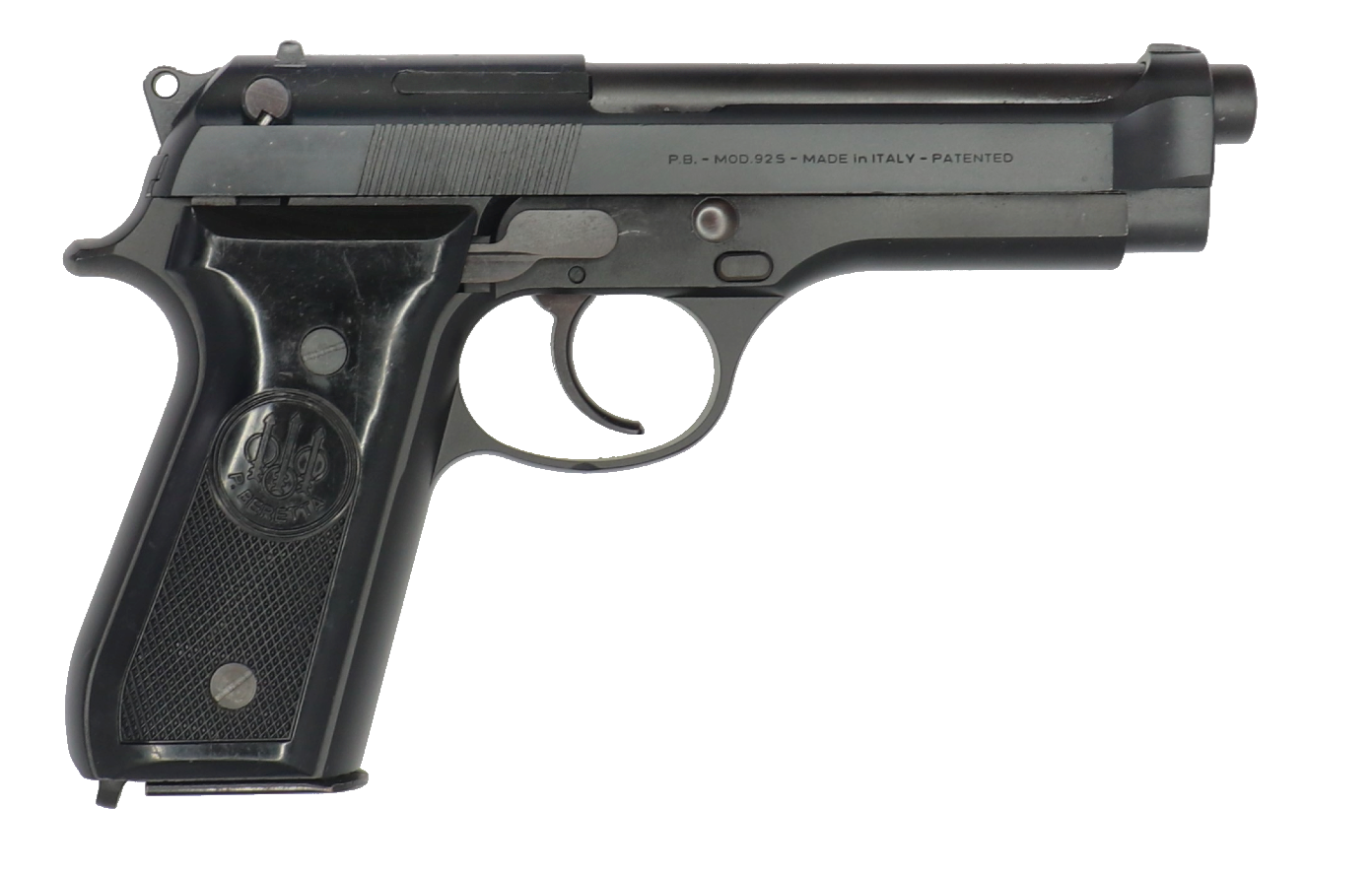
The hosts introduce a table full of Italian police trade-in Beretta 92S pistols and explain that these are surplus handguns now available through Classic Firearms. The Beretta 92S is presented as a full-size, Italian-made 9mm pistol strongly associated with 1980s and 1990s action and police movies, as well as military service through the related M9 platform. The video’s focus is on examining real examples of these trade-ins, discussing their features, and showing the kind of cosmetic wear and character that can be expected from pistols that have seen actual duty use in law enforcement holsters.
The discussion moves into the background of the Beretta 92 series. Beretta designed the original 92 in 1975, with production starting in 1976. The design later evolved into the M9, adopted by the U.S. military in 1985 as its standard sidearm. The 92S variant appeared in the late 1970s and was widely adopted by Italian law enforcement and military units. The pistols on the table are described as genuine law enforcement trade-ins that previously served with the Italian police. The hosts emphasize that, beyond their movie associations, these pistols represent a long-serving duty sidearm with decades of real-world use behind them.
Several individual pistols are shown to highlight the range of cosmetic conditions typical of surplus. Some slides display small lines or marks that may or may not have broken through the finish, while others show noticeable wear on the grips or holster wear on the slide. One pistol has areas where the finish has taken on a brown or copper-like tone as the bluing composition aged and wore differently on various parts. The hosts note that these marks and finish variations are cosmetic and add character, reflecting time in service. The factory grips are smooth plastic with relatively small textured areas, and it is suggested that shooters who prefer more traction, especially with sweaty hands, might consider aftermarket grips while preserving the original Beretta-logo panels for future resale or passing the pistol down.
The Beretta 92 series is discussed in terms of calibers and support. The 92 is chambered in 9mm, while the 96 variant is in .40 Smith & Wesson and the 98 is in 9x21mm, a cartridge developed to allow Beretta pistols and some IWI designs to be sold in markets where 9x19mm was restricted as a military caliber. The 92S pistols shown are full-size 9mm handguns with 15-round magazines that use a heel-style magazine release, a feature common in Europe but less typical in the United States. Each surplus pistol comes with one Beretta-manufactured magazine, and the hosts note that there is plentiful aftermarket magazine support from brands such as Mec-Gar and others. Aftermarket grips are also readily available, making it easy to tailor the pistol’s feel while keeping original parts intact.
Attention turns to the mechanical design of the Beretta 92S. The pistol uses an alloy frame to keep weight down, paired with a steel slide. Its operating system is a short-recoil action with a distinctive falling locking block. The hosts point out rectangular areas on the top of the barrel assembly that interface with the slide. As the pistol fires and the slide and barrel move rearward together, the locking block drops down into recesses in the frame, stopping the barrel while allowing the slide to continue rearward to complete the cycling process. This locking block system is highlighted as a key feature of the 92 design, contributing to its reliability and smooth operation while differentiating it from more common tilting-barrel systems.
The hosts demonstrate how simple it is to field-strip the Beretta 92S for cleaning and maintenance. With the slide slightly retracted, a button on the right side of the frame is pressed while a lever on the left side is rotated downward, allowing the slide assembly to come off the frame. The recoil spring and guide rod are removed, and the barrel is then slid slightly forward and lifted out, exposing the wedge-shaped locking block. This makes it easy to see how the locking block engages the slide when in battery and drops into the frame recesses during recoil. The process is presented as straightforward and user-friendly, reinforcing that these surplus pistols are practical to maintain and keep running with regular cleaning.
The video returns to the external condition of the trade-in pistols, emphasizing that holster wear and minor dings are to be expected. Some examples show more bluing loss on hard edges such as the trigger guard and the rear of the frame, while others have more noticeable wear on the grips. Certain pistols display more pronounced finish thinning on corners and contact points, reflecting frequent handling and carry rather than heavy firing. The hosts describe these marks as cosmetic issues that do not affect function and instead provide visible evidence of service history. A hand-select option is mentioned for buyers who want more control over cosmetic condition, but the overall message is that these pistols are mechanically solid surplus guns with varying degrees of external wear.
The Beretta 92S controls and practical use are discussed to close out the overview. The pistol features a slide-mounted safety that also functions as a decocker. After firing or when initially chambering a round, the shooter can rotate the safety fully downward to safely decock the hammer. An internal locking block prevents the firing pin from striking the cartridge during this process, allowing the pistol to be carried with a round in the chamber and the hammer down. With the safety off, the first shot is fired in double action with a heavier trigger pull, followed by lighter single-action shots. The hosts note that 9mm is one of the most common defensive and general-use calibers, and that the Beretta 92 platform enjoys broad parts and accessory availability. While this 92S is not the exact M9 model used by the U.S. military, it is closely related, making it suitable as a full-size range gun, home-defense pistol, or collectible tied to Italian and U.S.-linked service history.





















 Loading...