The episode opens with the Classic Firearms crew reintroducing Bust Your Builds and clarifying that submissions are judged on configuration, taste, and practicality rather than raw dollar value. They emphasize that budget guns can score as well as expensive ones if the setup is thoughtful. The first rifle is a high-end showcase: an SR-15 upper on an LMT MARS lower with a KAC URX Mod 2 rail, Law Tactical folder, B5 grip and stock, and a KAC three-prong muzzle device. Optics include a Vortex Razor 1-10x in a Unity 1.93-inch 34mm mount, plus a Steiner MPS on a Unity offset mount. Illumination is handled by a Cloud Defensive Rain 3 and a full-power laser/illuminator built from rare “chocolate chip” PEQ parts. The hosts immediately dive into why the laser is mounted on the side instead of the top rail, given the tall LPVO, and speculate about activation since there is no visible hot button or pressure pad. They praise the Goon Tape and Grovtech rail wrap that both protect from heat and neatly manage the Cloud Defensive pressure pad wiring.
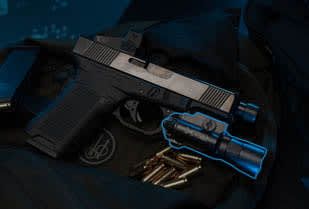
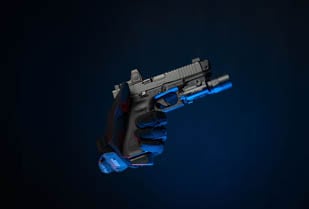
Continuing with similar high-end rifles, the hosts highlight another build using a Cloud Defensive light whose pressure pad is tucked under rail heat wrap, doubling as cable management. They like the clean wire routing and functional ergonomics but are distracted by a mismatched B5 buttstock color that clashes with the rest of the rifle. A PEQ unit’s placement draws criticism, as does the ambiguous finish on a Vortex optic riding in a tall 1.93- or 1.75-inch mount, paired with an offset Steiner. They start assigning scores in the 7 to 8.5 range, emphasizing that even well-equipped rifles lose points for small setup choices. The crew then pivots sharply into comedy with a so-called “Mark 23 killer” High Point 9mm pistol wearing a Vortex UH-1, SureFire Scout Turbo, and Osprey 45 suppressor. They question whether the submission is serious, mock its ergonomics and lack of a laser, and joke about the owner bragging that it only malfunctions once or twice per magazine.
The roasting escalates as they examine a High Point carbine similarly dressed in premium gear: a Vortex UH-1, SureFire Scout Turbo, and Osprey 45 suppressor. Instead of focusing on performance, they riff on the absurdity of such expensive accessories on a bargain-basement gun, even commenting on the nice carpet and odd staging of the photo. A running argument breaks out over whether the optic and light are actually mounted or just resting on the gun for the picture. Despite acknowledging the quality of the accessories, they hand out very low ratings, using the build to revisit their own past “meme cannon” High Point project and debate whether dressing up a bad gun with top-tier parts ever truly fixes its shortcomings. The tone shifts when a Sig 308 DMR/battle rifle appears, equipped with a Vortex Razor in an Aero Precision mount, a SilencerCo Velos suppressor, and 45-degree offset irons. They critique the rear sight placement, a basic bungee two-point sling, and the rifle’s somewhat plain character, but still give it relatively high scores for being a clean, functional, and serious setup.
Staying on the 308 battle rifle, the hosts dig into ergonomics, disliking the bungee sling and undersized stock, and recommending a beefier SOPMOD-style option for better cheek weld and control. They debate the comfort of the SIG grip and note that while the scope glass is excellent, the overall rifle feels heavy, suggesting a sturdier sling and possibly a grip change to optimize handling. The episode then pivots to a rattle-canned 10.5-inch 300 Blackout build. Its parts list includes a KAW Valley linear comp, Anderson adjustable gas block and upper, Aero Precision lower, Odin Works BCG, and Strike Industries charging handle and buffer components. Furniture consists of a Magpul pistol grip, Magpul sling, and SP3 brace, with a Primary Arms 1x prism optic and a budget FIA tactical light from Amazon. The hosts immediately question whether the optic is mounted backwards and challenge the owner’s claim that the handguard is from Midwest Industries, insisting it looks like a Strike Industries Megafin XL. This sparks a fact-checking mission to verify the rail’s true identity.
The crew follows through on the fact-check, pulling up images of Strike Industries Mega Fin XL and Midwest Industries free-float rails to compare against the submitted photos. They conclude the viewer misidentified the rail, calling out inaccuracies in the spec sheet while still acknowledging the decent cable management. The apparently backwards-mounted Primary Arms prism optic becomes a major talking point, with hosts debating whether it is an intentional troll or a genuine mistake. Scores range from 3 to 6, with one host jokingly dropping a 1 before settling on a 4, underscoring how configuration errors can tank an otherwise functional budget build. The tone shifts dramatically with the next rifle, featuring an AGM TC35 640 thermal clip-on and what appears to be a SIG Rattler-style host. They praise the overall layout, including a Trijicon Credo 1-8 and Aimpoint P2 on a Badger 45-degree mount. A detailed parts list reveals a Geissele 16-inch complete upper and lower, Nano BCG, Airborne charging handle, Radian Talons and bolt catch, Law Tactical folder, Sun Shadow cheek riser, Modlite on an Arisaka body with SureFire button, Harris bipod on an ADM QD mount, Otter Creek Labs Polonium suppressor, Onward Research sling, and 100 Concepts caps. The hosts rate it around 9 to 9.5, praising its transport-friendly folding configuration and mission-ready execution.
The hosts continue discussing the high-end SPR, with most ratings landing between 9 and 9.5 out of 10. They highlight the full-size can, folding stock for easier transport, and Geissele components as hallmarks of a well-thought-out precision-oriented rifle. Nitpicks center on it not being fully ambidextrous and the absence of a small foregrip, which some see as helpful for standing shots, though others argue it is unnecessary for a primarily posted-up SPR role. The next submission immediately draws attention for what looks like a magazine not fully seated and a lower receiver sitting at an odd angle, possibly due to the Diamondback “gold” model’s aesthetics. They read Brett Van Winkle’s meticulous parts list for his SPR’d former DB15 pistol: BCM stock Mod 1 with storage compartment, Radian Raptor LT charging handle, Magpul pistol grip, CMC two-stage flat trigger with a 2-pound set and 3-pound release, GBRS mount with EOTech EXPS2, BCM MCMR-9 9-inch M-LOK handguard, BCM vertical grip, Streamlight ProTac HL-X with pressure pad, SureFire Warcomp and SOCOM RC2 suppressor, Magpul MS4 sling, and cable-management/heat-guard wraps. One host even speculates Brett might be former military based on how he underlined items in the list.
Examining Brett’s Diamondback-based AR-15 in more detail, the hosts note its Digi Camo-style wrap used for cable management and visual breakup, which reminds them of “team guy” setups. They rate the build between 7 and 8.5, praising its simplicity, SBR/can configuration, and overall functional layout. Critiques include the light-colored wrap that stands out more than they would like, a high optic mount that increases height-over-bore, the choice of a 10-inch barrel instead of a preferred 11.5-inch, and the absence of a visible sling in the photos. They connect the build’s style to influences like GBRS Group and Seal Team Six veteran Jim Foreman, whose minimalist, wrapped rifles have become iconic. The next submission is a full Radian rifle that immediately impresses. The hosts focus on its matching upper and lower, ambidextrous controls, and the FDE/black color mix. Accessories include a Unity gas cap and a SureFire Warden, with M-LOK attachments and clean cable routing. They joke about how many black parts appear on an otherwise FDE-themed gun, but the overall reaction is strongly positive, with high preliminary scores.
The Radiant AR build continues to draw enthusiastic praise as the hosts point out its integrated hand stop, vertical grip, and M-LOK flashlight setup with tidy cable management. They appreciate how the Warden device is used to tame blast while keeping the rifle compact. Alongside it, the submitter includes a three-lug HK SP5K/MP5K-style SBR, which instantly becomes a favorite. The hosts hand out 9.5 to 10 scores for both guns almost immediately, citing their cohesive parts selection and clear purpose. They reference, but mostly skip reading, the extensive spec sheet for the Radian Weapons FDE 10-inch builder kit SBR and the H&K SP5K SBR, noting that viewers can pause the video to study the details. The owner, Chris Wilson, mentions plans to add a SureFire RC3 suppressor and an IR illuminator/laser to the Radian setup and thanks the channel for its content. One host raises a tactical concern about the all-FDE look, arguing that under night vision the uniform color would glow and be visible from far away in an urban environment, even while still awarding a high score for execution.
The discussion of the FDE Radian rifle continues with a deeper dive into color and signature management. The hosts acknowledge that a complete Radian upper and lower in matching FDE is rare and desirable, but reiterate that the solid color block lacks pattern breakup and could stand out too much, especially in urban or night-vision contexts. Suggestions include adding contrasting accessories or camo patterns to reduce IR signature and visual monotony. Attention then returns to the MP5K-style build, which they describe as tastefully done with a B&T stock, Aimpoint T2, and Dead Air Wolfman suppressor. They emphasize how quiet the setup is likely to be and reference the movie “The Kingdom” to capture its cinematic, special-operations vibe, awarding scores up to 10 out of 10. Further technical discussion touches on an RC3 can used in place of a traditional suppressor, a Warden device, and a Criterion Core barrel paired with a properly headspaced BCM bolt head, which they say probably makes the rifle shoot exceptionally well. The segment closes by introducing Caleb Hughes’ multi-gun submission, starting with a Taipei build that appears clean and well set up, with a top Picatinny sling attachment and room for a future PEQ or laser.
Caleb Hughes’ Taipei build receives praise for its clean lines, thoughtful accessory placement, and overall readiness, though the hosts suggest adding a PEQ or similar IR laser to fully exploit its potential. They note a sling attachment point on the top Picatinny rail, indicating the owner has already considered practical carry options. The next rifle is a Type A build that sparks a legal and configuration discussion. The hosts focus on the lack of SBR status and the use of a brace instead of a stock, debating how certain state laws can allow suppressors while restricting SBRs, citing examples like Massachusetts and Illinois. Despite the brace, they commend the quality of the Type A rifle and a Holosun 507 optic, assigning scores around 8.5 to 9. Some dock points specifically because it is not SBR’d and still wears a brace, while acknowledging that legal, political, or financial reasons may drive that choice. They then move to another build featuring a Radian lower with ambidextrous controls that can lock the bolt back when pressing the mag release, and a Unity mount whose integrated front and rear sights are used in conjunction with a fixed front sight as a reference point.
The hosts critique an A3-style wire brace, identified as coming from Double Star or Dark Star, calling it flimsy and uncomfortable for serious use. They recommend either formally SBRing the gun and installing a proper stock or at least switching to a buffer tube extension with an SBM4 brace for better feel and appearance, while again acknowledging that some shooters avoid SBR registration for political or financial reasons. The focus then shifts to an AR9 build that uses Glock magazines. Key components include an Aero EPC9 lower, a BRN-9 upper, and a Gen 2 N4 configuration with an ARS blast shield or linear compensator. The right-side light placement sparks debate as they try to determine whether the shooter is right- or left-handed and how easily the light can be activated. They criticize the use of fixed sights on a 9mm PCC, the flashlight ergonomics, and especially the tall optic mount that unnecessarily increases height-over-bore for close-range 9mm work. Suggestions include removing the cheek riser to lower the optic. Ratings range from 6 to 8.5, and one host bluntly admits a strong dislike for PCCs that take Glock magazines.
The final featured gun is a compact Angstadt PDW-style build, referred to as an Angstat upper, configured as a simple bag gun. It runs an AB F4 aluminum suppressor, a short barrel, a Romeo AT optic, a Maxim stock, and a B5 grip. Scores generally land between 6 and 7.5 out of 10. The hosts stress that the gun urgently needs a sling and, most importantly, a weapon light to be truly practical. They recommend upgrades like a TCMC drop-in trigger to better handle how filthy the direct blowback system gets, and suggest considering a KAC 9K or HuxWrx semi–flow-through suppressor, while noting that blowback guns will still run dirty regardless. They comment that the F4 can is very quiet and praise the setup as a straightforward, effective bag gun within its limitations. As the episode wraps, the crew reflects on this being a high-end installment that nearly produced a double 10 rating. They provide submission instructions via the bustyourbuilds@gmail.com address and share Instagram handles such as Chef JBF, undersc_tac daddy, Copper Kaya, and Ryan Cobalt, mentioning a backlog of emailed builds that will appear in future episodes.












 Loading...