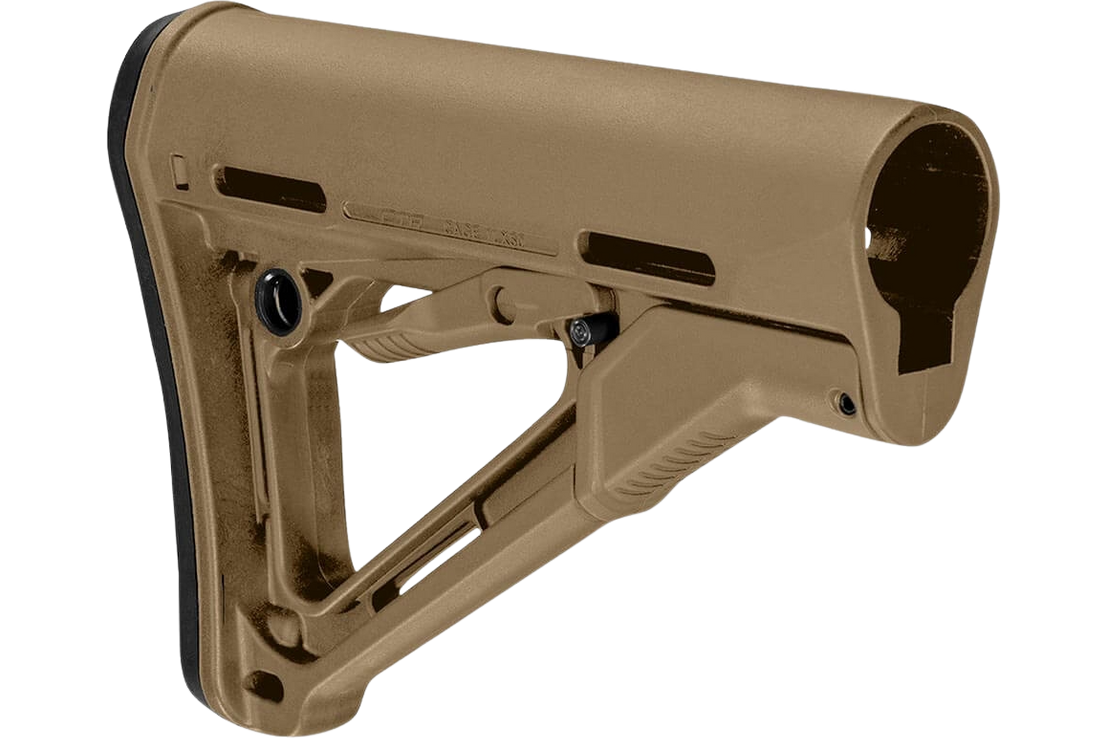
The video focuses on the Magpul CTR stock, presented as an earlier design that predates the DT series of Magpul stocks. It is described as a well-known carbine stock largely because of its dual locking system on the buffer tube. One control allows the stock to slide along the mil-spec buffer tube and lock into position when released. A secondary latch then clamps the stock more firmly, reducing wobble compared to standard carbine stocks and older Magpul models without this latch. The presenter contrasts the CTR with a similar stock lacking the locking latch and with a standard A2-style adjustable stock, noting the audible and noticeable wobble on those options versus the tighter lockup on the CTR when the latch is engaged. A Galil rifle is used as a host to demonstrate the difference in movement with and without the lock engaged.
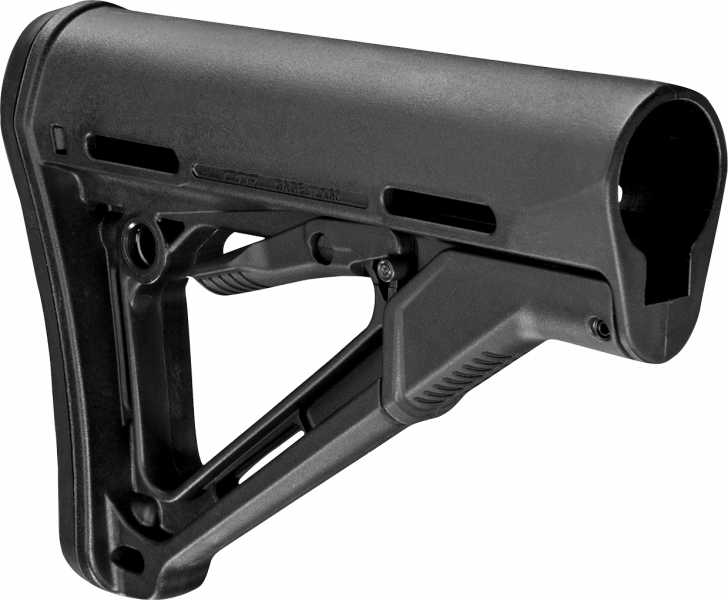
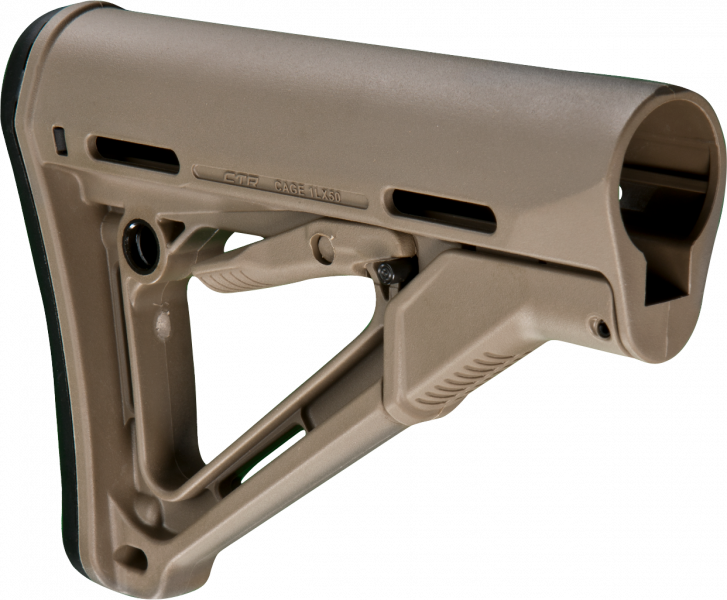
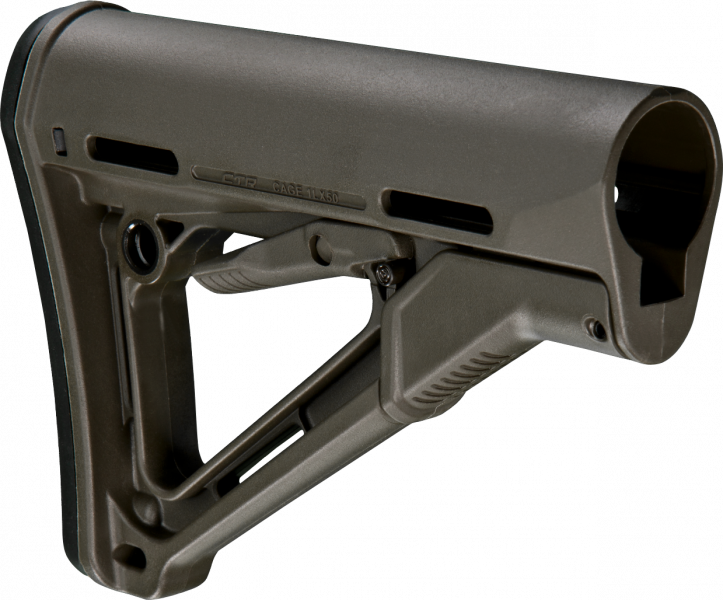
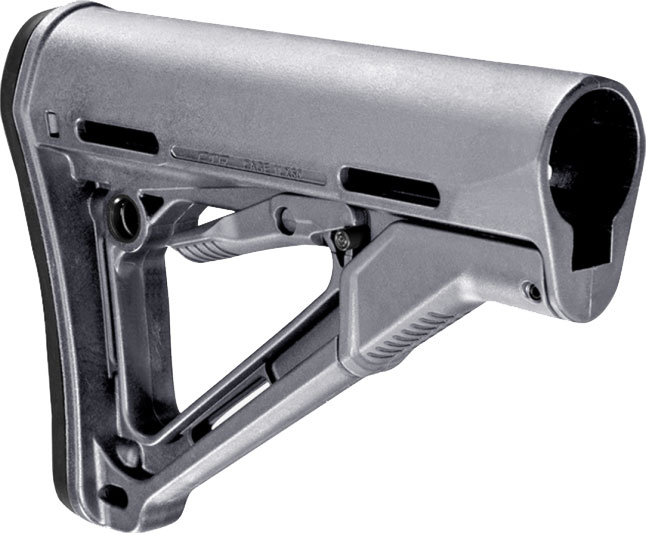
The CTR, DT, and DTPR stocks share a similar protective shape around the adjustment lever, intended as an anti-snag feature. This contour helps reduce the chance of gear or kit catching the lever and unintentionally changing the stock length. The CTR also accepts an optional cheek riser, allowing users to raise the cheek weld if desired. Technical specifications are outlined: overall length is approximately 7 inches, height about 5.2 inches, and weight 8.9 ounces. The stock width is about 1.7 inches, giving it a relatively slim profile. It offers roughly 3.3 inches of length-of-pull adjustment along the buffer tube. These measurements are noted as being very similar to other Magpul carbine stocks in the same family, emphasizing that the CTR’s main distinction is its locking mechanism rather than major dimensional differences.
The CTR stock includes a thin rubber butt pad that provides a modest cushion between the shooter’s shoulder and the polymer body of the stock, helping to soften felt recoil slightly. The butt pad can be replaced with a thicker option if more padding is desired. The stock incorporates an ambidextrous QD sling swivel socket, allowing sling attachment on either side, along with two traditional sling tie-in points for users who prefer fixed sling loops or paracord-style attachments. A legal caution is emphasized: installing a stock like the CTR on an AR pistol that is not configured as a short-barreled rifle is described as a felony, while using it on a rifle with a 16-inch barrel (or a barrel and muzzle device pinned and welded to 16 inches) or on a properly registered SBR is presented as acceptable. This reminder is aimed at newer firearm owners who may not be familiar with these regulations.
The host demonstrates the CTR mounted on a standard mil-spec buffer tube, noting that it fits almost flush at the rear with only a small visible gap. This slight gap is described as normal and comparable to what is seen with common M4-style adjustable stocks and A2-style setups. The video then addresses extended buffer tubes that offer more adjustment positions, such as seven, eight, nine, or more slots. On these longer tubes, the rearward gap between the stock and the end of the tube can appear larger, simply because the tube itself extends farther back. The point is made that the CTR’s interface with the tube remains the same; only the tube length and number of adjustment positions change the visual gap. The example rifle used in the demonstration is a Galil, but the explanation is framed as applicable to AR-15 and similar platforms using mil-spec diameter buffer tubes.
The CTR is shown as shipping by itself without a buffer tube, which is highlighted because some product listings explicitly state that the buffer tube is not included. The stock arrives as a standalone component ready to be installed on an existing mil-spec tube. Available accessories include cheek risers that attach to the top of the stock to provide a higher cheek weld, particularly useful for optics setups that sit higher over the bore. Additional aftermarket attachments can be installed through the bottom of the stock to create a flatter surface, functioning as a bag rider for more stable support when shooting from a rear bag. These accessories are described as separate purchases that increase cost but allow the CTR to be configured for more precision-oriented or prone shooting roles, while the base stock remains a general-purpose carbine option.
The video compares the CTR to Magpul’s DT and DTPR stocks. The DT, or dual tension, stock uses an internal system that achieves a similar anti-wobble effect as the CTR’s external latch but does so through tension rather than a separate locking lever. The DTPR variant is described as more squared-off in shape compared to the regular DT, which more closely resembles the CTR’s profile. Both DT and DTPR stocks include QD sling points and have slightly different surface texturing. The DTPR can be configured with a more aggressive, grippy butt pad designed to pull into the shoulder and can incorporate a dedicated bag catch or bag rider feature. Pricing is noted as similar across the CTR and DT series, with all typically falling in the roughly $60 to $65 range depending on the retailer, making the choice largely about preferred features and ergonomics rather than cost.
The CTR is characterized as the older design among the Magpul stocks discussed but still regarded as a well-known and widely used option. A small chamfered edge on some of the newer stocks is mentioned, which can allow the stock to either dig more firmly or sit more softly into the shooter’s shoulder, depending on personal preference; the CTR lacks this particular chamfer. Viewers are encouraged to research the CTR, DT, and DTPR stocks and to consider how features like the external latch versus dual tension, cheek riser compatibility, and bag rider options align with their intended use. The presenter invites users who have experience with the CTR, DT, or DTPR to leave reviews and comments, indicating interest in real-world feedback. The video closes with the host noting plans to take the Galil used in the demonstration out for training, underscoring that the stock is intended for practical use on working rifles.






















 Loading...