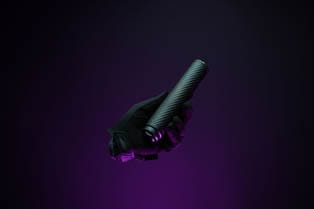
The video opens at ClassicFirearms.com with Matt joined by Daryl from Huxwrx to introduce the Flow 762 Ti, a long-awaited 30-caliber addition to the Flow series. They explain that this suppressor is a 3D-printed, Grade 5 titanium can designed around Huxwrx’s flow-through technology rather than traditional baffles. Key specs include a 1.8-inch diameter, 6.77-inch overall length, and an impressively light weight of about 11.8 ounces. Compared to the older HX-QD 762 Ti, the Flow762 Ti is shorter, slightly fatter, significantly lighter than the roughly 15-ounce predecessor, and delivers better sound performance. The hosts describe how moving from CNC machining and welded components to additive manufacturing eliminates internal dead space and allows more efficient internal geometry. This design reduces back pressure, helping keep bolt velocity closer to unsuppressed behavior and cutting down on toxic gas exposure to the shooter. They emphasize that the Flow762 Ti is built for a wide spectrum of modern .30-caliber cartridges, from 300 RUM and 30 PRC to other popular 30-cal platforms.
The focus shifts to live fire with a SCAR fitted only with a Huxwrx QD brake. The shooter notes that the brake alone delivers a sharp, loud blast but does a good job controlling felt recoil, while still producing noticeable gas. After this baseline, they attach the new Flow762 Ti, highlighting how light it feels on the end of the SCAR’s already substantial barrel. The can uses reverse, left-hand threads and features a clear directional indicator so users know which way to twist for tightening. Under firing, the mount is designed to self-tighten rather than walk loose. With the suppressor installed, they discuss Huxwrx’s flow-through design, which vents gases forward and away from the shooter instead of back into the action and face. This is especially relevant on notoriously gassy platforms like the SCAR and AK when suppressed. The hosts point out that left-handed shooters, who typically suffer more gas blowback, benefit significantly from this reduced gas-to-face behavior.
Next, the Flow 762 Ti is moved to a CMMG Mk47 Resolute, a direct impingement 7.62x39 rifle. During a rapid 30-round string, the shooter comments on the minimal gas to the face, even under sustained fire, underscoring the comfort advantage of flow-through suppressors over traditional baffle designs. They explain how this reduced blowback is particularly valuable for night hunting under night vision, where conventional cans can cause eye-watering gas clouds that obscure vision and make extended shooting miserable. The Flow762 Ti’s compact length and sub-12-ounce weight are emphasized again, making it a strong match for front-heavy rifles like the SCAR. Although the can is 3D-printed as a one-piece unit without discrete baffles, Huxwrx can still service it by cutting and re-capping when necessary. The hosts stress the importance of barrel concentricity and using alignment rods, especially on AK-type rifles, to prevent baffle or end-cap strikes. They note that most strike issues trace back to user setup or host alignment problems rather than flaws in the suppressor or mounting system.
The discussion turns to how Huxwrx designs its suppressors so that rifles, including FN platforms, continue to operate as their manufacturers intended. Rather than forcing users into secondary mounting systems, heavy gas blocks, or drastic tuning changes, the Flow series aims to maintain factory reliability and timing. The hosts argue that many suppressor-related malfunctions and frustrations stem from end-user tinkering—changing gas settings, buffers, or springs in ways that create a domino effect of new problems. By minimizing added back pressure and weight, the Flow762 Ti reduces the need for such modifications. They caution that chasing tiny performance gains through aggressive tuning can compromise overall function and safety. The segment reinforces the idea that a well-designed suppressor should integrate cleanly with the host weapon, preserving its original operating envelope. Huxwrx’s approach is to engineer the can so that most shooters, especially those new to suppression, can simply mount it and run their rifles without complex adjustments or specialized knowledge.
Attention shifts to Huxwrx’s warranty and service process for its one-piece, 3D-printed cans. The hosts explain that true manufacturing or concentricity issues are rare but, when they occur, Huxwrx can repair or replace the suppressor without requiring a new tax stamp, as long as the serialized portion remains compliant. However, misuse—such as mounting the can on inappropriate hosts or ignoring alignment checks—is not covered. To reduce user error, Huxwrx incorporates safety-focused design choices into its mounting ecosystem. One key feature is mount incompatibility that prevents a 5.56 can from locking onto a 7.62 setup, helping avoid catastrophic caliber mismatches. The Flow762 Ti uses left-handed threads, which naturally resist loosening under firing, and the latest models include more pronounced lock and unlock markings so shooters can quickly see which direction to turn. These visual and mechanical cues are intended to make mounting more intuitive, reduce cross-threading, and help ensure the suppressor is fully seated before firing.
The hosts explore how a 30-caliber suppressor like the Flow762 Ti can be shared across very different platforms, such as a SCAR 17 and various AKs, without extensive gas tuning. While many rifles with different operating systems typically require adjustments when suppressed, the Flow design’s low back pressure helps keep modifications to a minimum, which is especially helpful for newer suppressor owners. They emphasize the can’s caliber flexibility: it works well on 5.56/.223 and other smaller rounds, as well as larger .30-caliber cartridges within its rating. However, they caution against heavy use with unjacketed .22 LR because lead buildup in a non-user-serviceable, 3D-printed can is difficult to remove; for extensive rimfire shooting, a dedicated, cleanable suppressor is recommended. Demonstrating the mount system, they show that the 30-cal Flow762 Ti will attach to a 5.56 host using compatible mounts, but a 5.56-specific can will not mount on a 30-caliber gun. This asymmetry is an intentional safety feature to prevent undersized bores from being used on larger calibers.
In the closing portion, the presenters reiterate that the new 30-caliber Huxwrx Flow suppressor is designed as a highly versatile option for shooters who want one can to cover multiple rifles and calibers. The Flow762 Ti answers long-standing customer requests for a 30-cal Flow model that combines low back pressure, 3D-printed titanium construction, and compatibility with a wide range of .30-cal cartridges while still working effectively on smaller calibers like 5.56. They highlight that this is not a distant trade show announcement; the suppressor is officially launching the day of the video and is already on shelves at local retailers and SOTs. The segment underscores the benefits of the new 3D-printed flow-through architecture, including reduced gas-to-face, lighter weight, and improved sound performance over previous Huxwrx 7.62 offerings. The video wraps up with encouragement for viewers to try the new Flow762 Ti on their preferred platforms and experience the advantages of the updated design firsthand.












 Loading...