The video opens on a live-fire demonstration at roughly 655 yards, where the shooter dials a 6.1 mil elevation value and confirms an impact on steel. This practical sequence sets the stage for how modern ballistic tools streamline long-range shooting. The hosts then shift focus to an image-stabilized spotting optic that dramatically reduces the need for a tripod. By electronically stabilizing the image, the scope allows shooters and spotters to maintain a steady sight picture even when shooting off barricades, bags, or other improvised supports. This stability makes it easier to read mirage, track wind, and see both impacts and near misses, which in turn enables more precise corrections. The segment emphasizes how stabilization improves wind calls and speeds up follow-up shots. From there, the discussion introduces the SIG KILO WARP system as a comprehensive on-gun solution, combining a laser rangefinder, bubble level, onboard Applied Ballistics solver, weather station, wind input, multiple rifle profiles, and tactical or commercial laser options in one integrated package.
Building on the introduction, the next portion explains how the KILO WARP system, with its integrated Applied Ballistics engine, replaces a traditional collection of separate tools. Instead of juggling a Kestrel, dope cards, and a standalone laser rangefinder, shooters receive ballistic solutions directly on the rifle. Instructors highlight how this simplifies long-range shooting, especially for newer users. The Bravo scope, even when used alone, can significantly shorten the learning curve by letting shooters simply read the distance, dial or hold the indicated value, and press the trigger without worrying about losing zero. This reduces intimidation and speeds up confidence-building at extended ranges. One of the hosts decides to test the system by attempting hits around 650 yards, mirroring the earlier 655-yard demonstration. The narrative reinforces that the KILO WARP and Bravo combination is designed to make accurate long-range engagement more accessible, consistent, and repeatable without extensive prior experience or complex external gear.
The scene transitions to product managers introducing SIG’s latest observation and ranging products. They spotlight the Zulu 6 HDX 42mm fourth-generation image-stabilized binoculars, which feature an improved field of view and a new Omni Lock mode that helps maintain a steady image on target. Alongside the Zulu 6 HDX, the lineup includes Kilo 8K and 10K rangefinders, the compact Kilo Micro, and the Kilo WARP weapon-mounted system. The Oscar 6 optics are shown mounted on DMR-style rifles and tripods, while Bravo 6T scopes appear on carbines and precision rifles. An upcoming demonstration with the Oscar 6 image-stabilized spotting scopes is teased to highlight how shooters can achieve tripod-like stability while shooting or spotting handheld. This portion underscores SIG’s broader optics ecosystem, tying together handheld rangefinders, stabilized binoculars, spotting scopes, and rifle-mounted solutions into a cohesive family aimed at hunters, competitors, and tactical users seeking better stability and faster ballistic data.
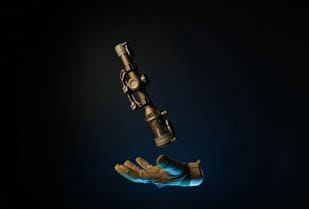
Attention turns to the Oscar 6 optic’s image stabilization, controlled via a front dial that activates and adjusts the stabilization mode. Viewers see how this feature reduces hand shake, allowing smooth panning and effective spotting even without a tripod, and enabling a quasi hands-free feel when the optic is braced. The Bravo 6T scope is then showcased with its modified light transfer system that projects a heads-up display into the shooter’s view. This HUD presents profile and zero information plus a dial-to-distance feature. On a roughly 200-yard target, the demonstrator dials elevation until the turret matches the displayed distance, confirming alignment. The WARP (weapon attached ranging platform) is introduced as a laser rangefinder that communicates directly with the Bravo 6T. It must be zeroed to a specific point in the reticle and used at mechanical zero for accurate ranging. On a 655-yard target, the WARP outputs a 6.1 mil solution, and the HUD shows both the recommended hold and the actual dialed value so the shooter can choose to dial or hold over.
In the final segment, shooters apply the on-gun data to engage distant steel around 650–655 yards. Using the Bravo 6T heads-up display, they dial elevation based on the WARP’s ballistic solution and confirm the turret setting matches the indicated distance. The rifle in use differs from the earlier .308 setup, prompting discussion about how .308 bullets at this distance experience noticeable spin drift. To compensate, the shooter holds on the left edge of the target while maintaining the correct elevation. Several shots are taken as they work through faint HUD visibility in bright conditions and discover that one of the steel targets is approximately 30 yards closer than expected. This leads to a quick correction in the dialed distance and point of aim, illustrating how real-time ranging and ballistic updates help resolve range mismatches. After wrapping up the long-range work with Chris and Steve, the group transitions away from the precision bay to the MCX LT AW rifle side at Freedom Range to continue exploring SIG platforms.










 Loading...