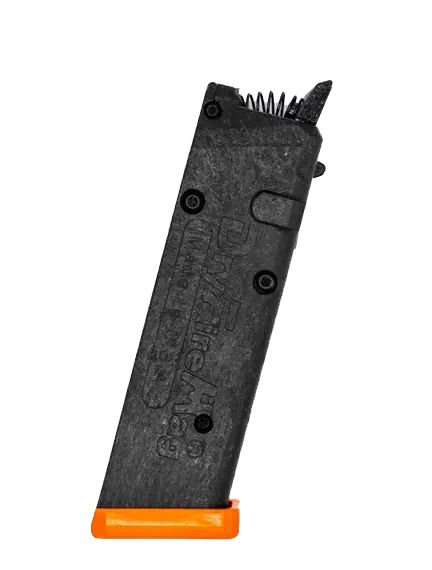
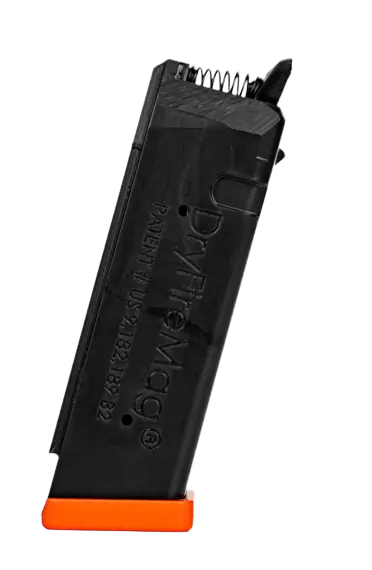
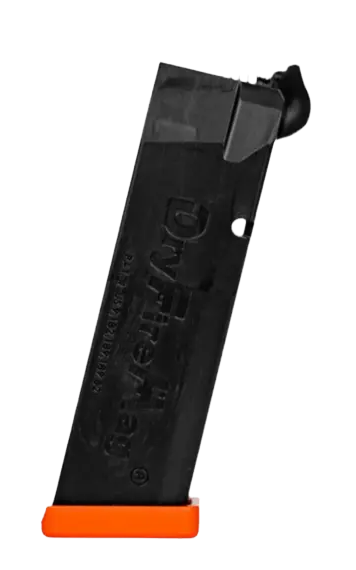
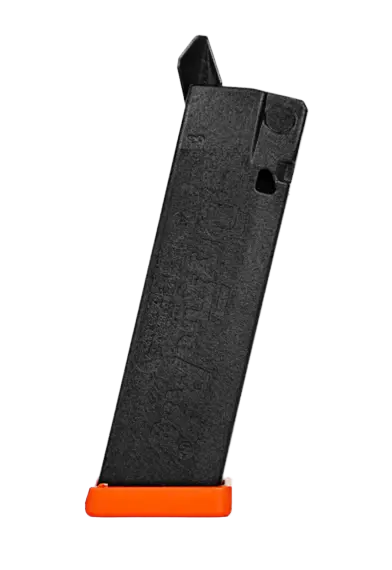
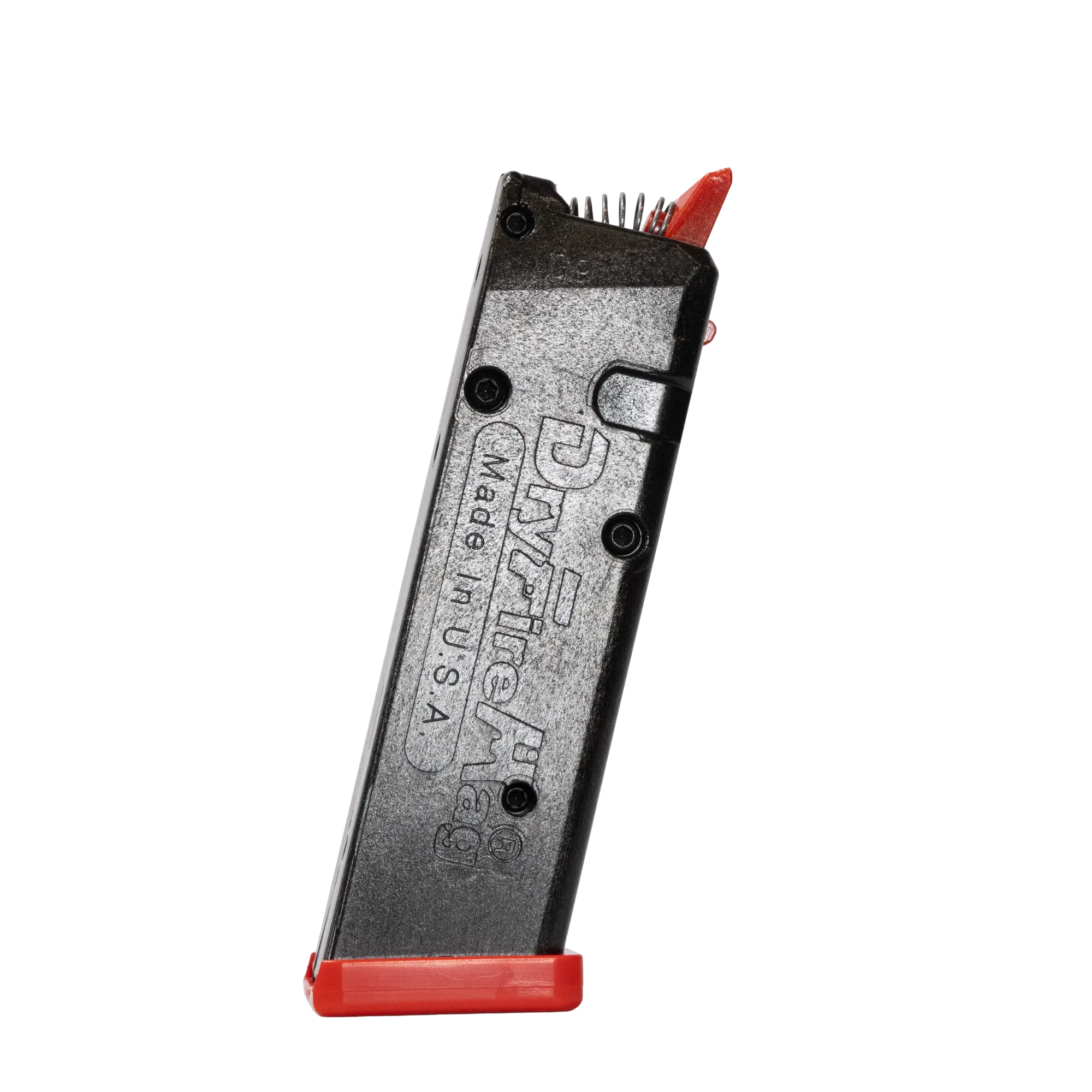
The video opens by introducing DryFireMag as a dedicated dry fire training magazine designed to improve trigger discipline without using live ammunition. The host explains that these mags typically cost between about $90 and $100 and are available for several popular handgun platforms. Specific models highlighted include DryFireMag options for the Sig Sauer P320, Smith & Wesson M&P, Glock double-stack pistols such as the Glock 45, and Ruger RXM or Glock 19-style platforms. Demonstrations are primarily shown using a Glock 17 Gen 5. Viewers see that the DryFireMag looks like an empty magazine but contains an internal mechanism that creates a tactile and audible click when the trigger is pressed. This allows shooters to practice realistic trigger presses and follow-up shots at home or on the range without cycling the slide each time, setting the stage for more detailed explanations of how the system works and how it supports structured dry fire routines.
The host explains how the DryFireMag functions inside the pistol. On the first trigger press, the shooter feels a slightly heavier pull because the gun’s trigger mechanism and the magazine’s internal paddle are both being cocked. After that initial press, subsequent trigger pulls only actuate the DryFireMag’s clicker, giving a consistent break and reset sensation without needing to rack the slide. This enables realistic multi-shot dry fire drills, such as drawing from the holster and firing two rounds to the chest and one to the head, or running controlled pairs and transitions. The video emphasizes using these repetitions to refine trigger discipline, focusing on smooth, even pressure and consistent finger placement. The presenter contrasts DryFireMag with single-shot laser training devices, noting that while lasers can show point-of-impact, they usually require resetting after each shot. DryFireMag instead prioritizes continuous trigger work. The host also acknowledges that the feel and sound are not perfectly identical to a live trigger press because the pistol’s internal mechanics are not fully cycling.
Attention shifts to the DryFireMag’s construction and safety-focused design. The magazine body is polymer, which matches the feel of factory Glock magazines but differs from metal magazines used in platforms like the Sig P320. A blaze orange baseplate is prominently featured on Glock and M&P versions, while the Ruger RXM model uses a red base plate, making each clearly identifiable as a training magazine rather than a live mag. The product also includes an extra spring to handle heavy training use over time. The host walks through safe setup: first, completely clear the pistol, remove any live magazine, and visually and physically inspect the chamber. The trigger must be in the ready-to-fire position before inserting the DryFireMag so the internal paddle can engage correctly. Once inserted, the shooter can press the trigger repeatedly to feel the click and simulate live fire. This section reinforces that the bright baseplate colors and strict clearing procedures are critical for safe dry fire practice in any environment.
In the final portion, the video demonstrates how DryFireMag can reveal subtle issues in trigger control and sight alignment. With the training magazine installed, the shooter watches the front sight or red dot closely while pressing the trigger. Any slight dip of the muzzle or leftward movement, especially common with heavier Glock triggers, becomes more noticeable because the shooter can fire multiple simulated shots without interruption. This feedback helps diagnose problems such as jerking the trigger, tightening the whole hand, or inconsistent finger placement. By repeatedly running drills and observing sight movement, users can refine their trigger press until the sights remain stable through the break. The host encourages shooters of all experience levels, from new gun owners to seasoned practitioners, to share their results, tips, and reviews in the comments. Emphasis is placed on building a supportive training community focused on safe, consistent dry fire practice and continual improvement using DryFireMag products.





















 Loading...