The discussion focuses on the Sig P320 Spectre Comp, with the pistol presented and handled on camera. The hosts note that this particular Spectre Comp belongs to one of the crew members, who provides most of the observations from actual range use. The conversation is framed as a closer look at what sets this P320 variant apart, emphasizing its configuration and how it behaves when fired. The goal is to walk through the major components and features, then relate those details to how the pistol feels and performs in use.
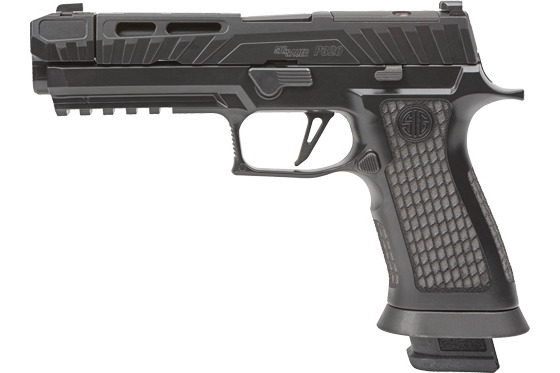
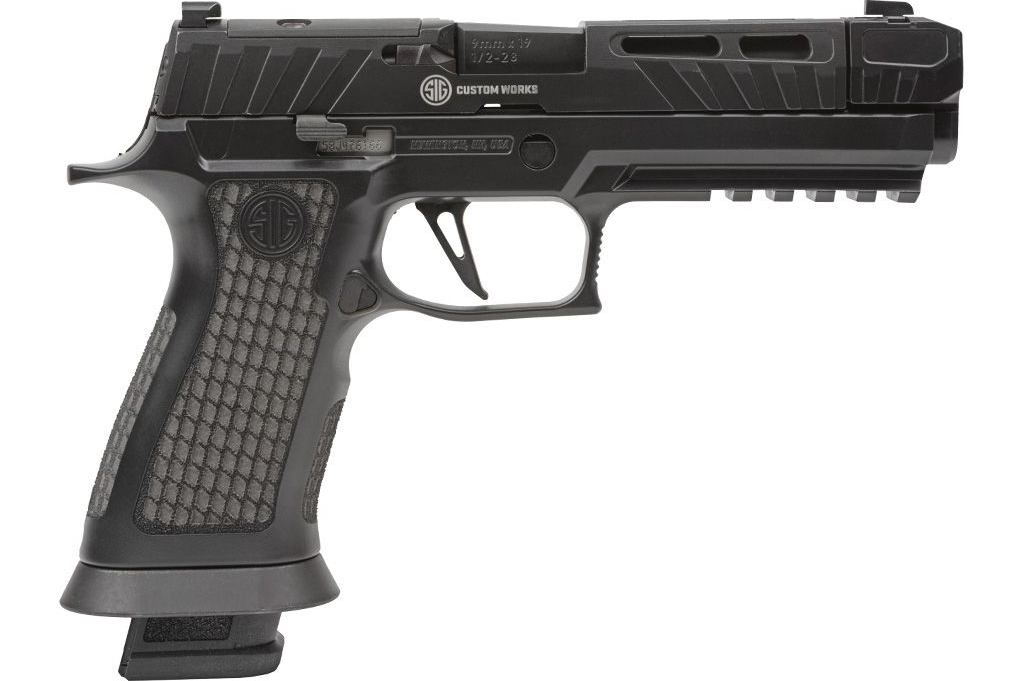
The Spectre Comp uses a compensator mounted at the front of the slide, which gives the pistol its name. The compensator is not an integral part of the barrel; instead, it attaches via two screw points and threads onto the barrel. The barrel itself is not ported, so the gas redirection is handled entirely by the compensator body. The shooter describes the pistol as a very smooth, flat shooter with repeatable performance, noting that it feels controlled and consistent under recoil. When the slide is in battery, the compensator and slide appear almost like a single piece, which is highlighted as a visually clean design detail.
The pistol is equipped with Sig’s X-RAY3 day/night sights. These are described as easy to pick up in low light, with the owner mentioning walking around a dark house to confirm how well they glow and align. The rear sight is mostly blacked out but still incorporates the night sight elements. The slide features lightning cuts on the top and sides, along with a flat top profile and a contrasting barrel finish. There is an optics cut on the slide that accepts Sig Romeo optics and other optics using a similar footprint, as well as options that share the DeltaPoint Pro footprint. Mounting optics such as an RMR or RMR HD would likely require an appropriate base plate to ensure compatibility.
Moving to the frame, the hosts explain that the grip module is not entirely polymer. It incorporates a tungsten-infused section that adds weight, giving the pistol more of a competition-oriented feel and helping it sit more solidly in the hand. The added mass is noticeable and contributes to the overall balance. The dust cover includes a sizable Picatinny rail with multiple cross slots, allowing a variety of weapon lights or other rail-mounted accessories to be attached. The trigger guard is squared off but slightly oval in its internal shape, providing room for the trigger finger while maintaining a defined profile for certain grip styles.
The trigger is demonstrated with the pistol cleared. As pressure is applied, there is an immediate and distinct wall, followed by a clean break with a bit more tension. The reset is not extremely short but is described as easy to feel and suitable for both duty and competition-style shooting. The break occurs close to a 90-degree angle, giving a consistent and predictable pull. Overall, the trigger is characterized as having a good feel for a pistol in this role, balancing control and speed without being overly light or vague.
The grip texture is laser-engraved and notably aggressive, covering all four sides of the grip module. This texture is intended to keep the pistol secure in the hand even when palms become sweaty during extended range sessions. At the bottom of the grip, there is a large metal flared magwell. The magwell is described as generous, helping guide magazines into place and forgiving minor alignment errors during reloads. The pistol ships with two 21-round magazines, which complement the extended grip and magwell, and visually complete the overall profile of the Spectre Comp.
The beavertail on the Spectre Comp is highlighted as a feature that allows a high, secure grip on the pistol. This supports the competition-oriented nature of the build, helping the shooter drive the gun out, control recoil, and maintain a positive grip during rapid strings of fire. The combination of the compensator, tungsten-infused grip module, aggressive texture, and flared magwell contributes to a configuration that feels tuned for performance. The hosts invite viewers who have experience with the Sig P320 Spectre Comp to share their impressions or reviews, and then conclude the segment.





















 Loading...