The video opens with a side-by-side comparison of the surplus CZ-50 and CZ-70 pistols, laying out a plan to examine specifications, dimensions, weight, and trigger pull data. The presenters clarify that while commonly called CZ-50 and CZ-70 in the U.S., the correct military-style designation is Vz. 50 and Vz. 70, with “Vz” meaning “model.” Both pistols are chambered in .32 ACP, also known as 7.65 Browning or 7.65x17mm, and use 8-round detachable magazines. They are direct blowback, fixed-barrel designs on steel frames, visually reminiscent of the Walther PPK, prompting a joking James Bond reference. The operation is traditional double-action/single-action with a rebounding hammer, giving a second-strike capability. Basic disassembly is demonstrated using a single takedown button, with the fixed barrel remaining on the frame. The hosts note that both pistols feel well balanced and point naturally, but the sights are low-profile and unremarkable, reflecting their utilitarian police sidearm origins rather than target pistol aspirations.
The discussion shifts to how these pistols fit into their historical and ballistic context. The CZ-50 and CZ-70 are described as old-school, all-metal surplus sidearms with visible holster wear but solid construction. They were originally police pistols, and their .32 ACP chambering reflects that role. The presenters explain that .32 ACP was invented by John Moses Browning in 1899 and became widely used for civilian self-defense, police, and some military officers throughout the 20th century. Today it is less common, largely displaced by compact 9mm pistols, though ultra-light guns like the Kel-Tec P32 keep the caliber relevant. The cartridge is positioned between .22 LR and .380 ACP in power, with similar case length to .380 (both 17mm) but a smaller bullet diameter. For modern defensive use, they recommend full metal jacket ammunition to achieve around 18 inches of penetration, warning that typical jacketed hollow points in .32 ACP often under-penetrate and may not meet accepted self-defense performance standards.
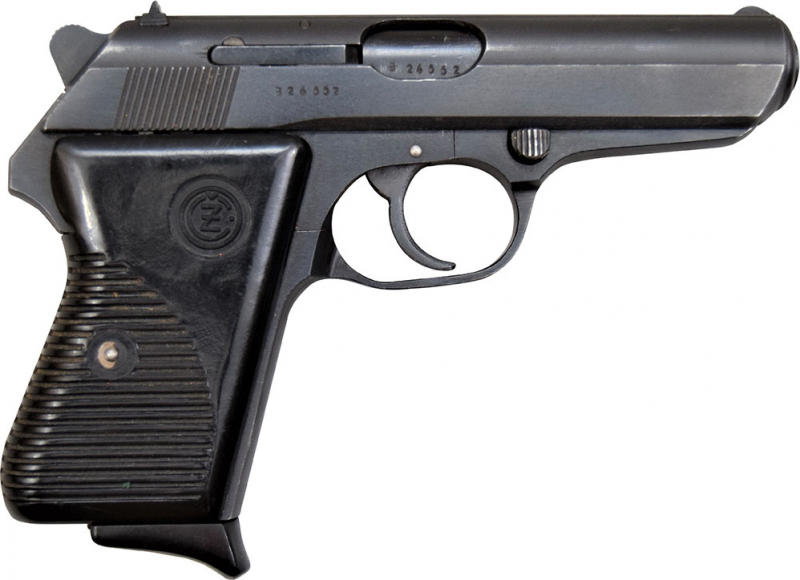
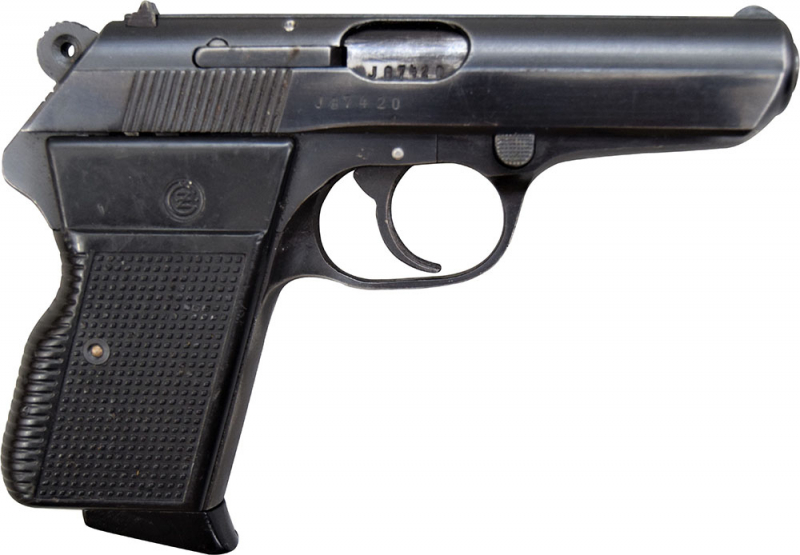
Attention turns to how the CZ-50 and CZ-70 differ externally while remaining mechanically similar. The CZ-70 is presented as an updated version with mostly cosmetic and ergonomic changes rather than internal redesigns. Grip panels are a major distinction: the earlier CZ-50 typically wears grips with horizontal lines, while the CZ-70 uses a dot-matrix style stippling and wraparound panels that create a more pronounced palm swell. The CZ-70’s frame lines are slightly more squared-off, giving a subtly more modern look. Hammer styles also differ, with the CZ-50 often sporting a smaller, rounded hammer spur, and the CZ-70 featuring a larger, serrated hammer with a lightening hole. The hosts note that surplus guns often have mixed parts, so hammers and grips may not strictly follow factory patterns. Slide serrations on the CZ-70 are deeper and more uniform, with a different count compared to the CZ-50, though the sights remain essentially identical and equally low-profile. Magazine base plates show slightly different contouring, yet magazines are interchangeable between the two models, and both typically sell in the same surplus price band around the high-$200 range.
The presenters compare the safety and decocker levers on the CZ-50 and CZ-70, noting that both pistols share the same basic safety/decocking system but can feel different in use. On these surplus examples, one lever feels stiffer and less smooth, which is attributed to individual wear, storage, and the need for cleaning rather than a design change. They emphasize the appeal of these Czech surplus pistols for collectors and CZ enthusiasts, joking that they are like owning a better, more obscure version of the classic James Bond-style gun. Using a tape measure, they check overall length and height, finding both pistols to be essentially the same size, roughly 6.5 to 6.75 inches long and about 4.75 inches tall. On a scale, each pistol is weighed with an empty magazine inserted. The original CZ-50 comes in at about 1.53 pounds, while the later CZ-70 is slightly lighter at around 1.5 pounds, indicating only a minor weight reduction despite the updated grips and frame contours.
The focus narrows to small but telling details, starting with magazine weights. The hosts compare magazines with different base plate shapes, including one with a filled-in palm swell that visually appears heavier. Surprisingly, the scale shows this base plate configuration still weighs around 1.5 ounces, defying their expectation that the extra material would add noticeable weight. They then conduct systematic trigger pull tests. On the Vz. 70, single-action pulls are measured multiple times, with most readings clustering around 5.8 to 6 pounds. An anomalous 9-pound reading is discarded as an obvious error. Moving to double action on the Vz. 70, the trigger pull exceeds the 10-pound limit of their gauge, confirming a very heavy double-action stroke. The presenters explain that such a stout double-action pull is typical for a service pistol designed with safety and duty use in mind, prioritizing deliberate trigger presses over light competition-style triggers.
The Vz. 50’s trigger is then evaluated and compared directly to the Vz. 70. Single-action measurements on the Vz. 50 fall in the roughly 4.3 to 4.6 pound range, clearly lighter than the Vz. 70 by at least a pound. Double-action on the Vz. 50 is measured at about 11 pounds, still heavy but subjectively smoother and easier to manage than the newer pistol. The hosts attribute this difference largely to wear-in, as the older Vz. 50 likely has seen more use and internal polishing through repeated firing and dry practice. They broaden the discussion to the appeal of collecting police-style surplus and Cold War-era Czech firearms, especially in traditional calibers like .32 ACP. A metal-framed .32 ACP such as these is described as very flat-shooting and easy to control, making it suitable for casual plinking or introducing younger or smaller shooters to centerfire handguns. The segment closes by inviting viewers to share their experiences with CZ-50s, CZ-70s, and other .32 ACP pistols in the comments, thanking the community for its engagement before heading out to shoot the guns.





















 Loading...