The video opens by laying out a structured comparison between the new Flux Redux chassis for Glock and both a bare Glock 17 Gen 5 and the P320-based Flux Raider. A Glock 17 Gen 5 with an RMR is run in the Redux chassis and also as a standard handgun to see how much the brace improves shot placement, hit count, and overall accuracy. The hosts explain that the Raider integrates an optic riser, while the Redux keeps the optic on the pistol slide, changing sight height and recoil feel. Control layouts differ as well: the Raider links the primary and spare magazine releases, whereas the Redux uses separate mag controls. Pricing is highlighted, with the Raider chassis around $420–$450 and the Redux around $350, and the original limited-run Redux from around 2018 is briefly mentioned. To quantify performance, they set up a timed drill of 18 rounds on close steel, followed by a reload and two hits on distant steel, first running it with the standard Glock and recording a 50.06-second time.
The testing moves into repeated timed drills, revealing that hits at distance tend to trend high-right, prompting discussion of sight picture and how a brace can tighten the spread between first and last shots. A Glock shooter running a Glock 49 and Glock 19 demonstrates a strong, consistent cadence on close steel targets but forgets a planned reload, illustrating how stage planning affects times as much as hardware. Dark conditions and sunglasses make target visibility more challenging, further emphasizing the benefit of a more stable, braced platform. The hosts compare raw times and note that braced pistols clearly outperform standard handguns in speed and control, especially when transitioning from close to distant steel. These early runs set a baseline for how much improvement the Flux Redux and Flux Raider can offer over traditional pistol shooting, particularly in managing recoil and maintaining accuracy under time pressure.
Attention shifts to direct comparison runs between a Glock in the Flux Redux and a SIG P320 in the Flux Raider. Timed strings fall roughly in the 17–22 second range, a dramatic improvement over the unbraced handgun baseline. However, the Raider’s manual safety and the use of 20-round magazines introduce complications, occasionally slowing reloads or adding steps under stress. Shooters remark that both braced setups are significantly faster overall, but the Raider feels like it has a lower recoil impulse, with the gun tracking flatter. At the same time, the heavier P320 slide and elevated riser height make it feel like more mass is moving back toward the shooter’s face during recoil. These characteristics help explain why the Redux exists for Glock users who want a lighter, slide-mounted optic solution. The segment underscores that while both systems boost performance, their recoil characteristics and control layouts create distinct shooting experiences.
The shooters discuss their greater familiarity with the P320 platform and how that translates into faster, more confident magazine changes in the Raider compared to the Glock-based Redux. The P320’s mag release and overall ergonomics allow noticeably quicker reloads, while the Glock-based system feels slightly slower and more awkward under time. To isolate the effect of support and sight height, they run the Flux Redux with 10 rounds in each magazine, testing it both with and without the riser. With the riser installed, cheek weld improves and recoil control tightens, making follow-up shots more predictable. Without the riser, the gun feels lower but less locked-in to the shooter’s face. These runs highlight how small ergonomic differences, such as riser height and control placement, can significantly influence real-world performance, even when both platforms are using similar drills and round counts.
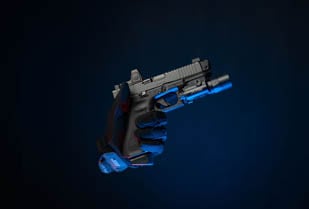
The hosts explain how the Flux Redux chassis interfaces with a Glock frame, noting that Glock’s non-modular design forces different engineering choices than the P320-based Raider. The Redux locks into the backstrap area via a pin and also engages the front grip section to support the angled foregrip, creating a rigid connection without the modular fire control unit concept used by SIG. This design allows the Glock to function as a compact braced platform while still using its original slide-mounted optic. After additional timed drills, the shooters conclude that brace-equipped chassis systems significantly improve accuracy and follow-up shot consistency compared to bare pistols. One shooter ultimately prefers the Redux over the Raider, describing it as tighter and more efficient in feel, even while acknowledging the Raider’s advantages, such as its modular front section, optional support lip, and accessory mounting options like a SureFire light under the chassis.
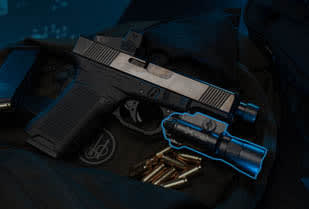
In the closing segment, the discussion turns to customization and potential configurations for both the Raider and Redux systems. The hosts highlight the ability to mount a SureFire light on the bottom of the chassis and mention other accessory options that can tailor the setup to defensive or competition roles. They speculate about compatibility with different Glock sizes, noting that the system can already fit a Glock 19 and may also work with a long-slide Glock 17L, which they plan to test in future videos. Emphasis is placed on the Redux platform’s strength as a compact, backpack-friendly gun that is hard to beat for discreet carry with enhanced stability and capacity. The video wraps up with plans for more training and competition use, and an invitation for viewers to suggest future tests and comparisons against other pistol-caliber carbines or backpack gun setups.














 Loading...