


















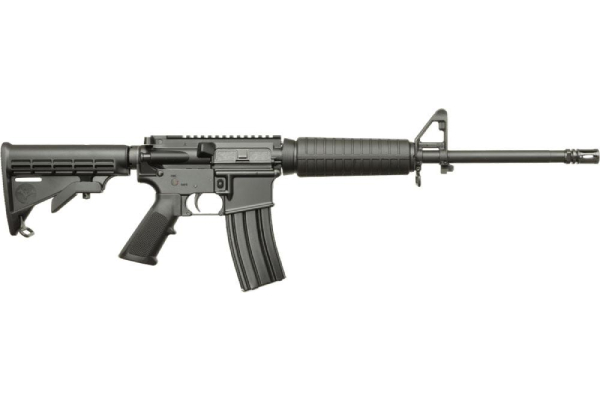
DoubleStar STAR-15 .223/5.56 AR-15
Carbines
Standard definitions by non-firearm enthusiasts can hardly ever be trusted. For instance, they describe carbines as shorter versions of standard rifles; in other words, a mini-rifle. A few online dictionaries describe a carbine; "they are typically issued to high mobility troops or non-infantry personnel whose roles do not require full-size rifles." Has anyone at these directories ever seen a gun? Maybe a picture of one, perhaps? Carbines' definition of less than 20 inches seems to be a catch-all phrase. With the popularity going through the roof, manufacturers have brought to market anything that can fire a bullet and sells, regardless of sound design or bad.History of the Carbine
Infantry soldiers in the early 1800s traveled on horseback but preferred to fight on foot. These soldiers used shortened rifles rather than full-size muskets. The soldiers would also use a horse pistol or big handgun for fighting on foot. The soldiers were part of what they called a carbineer. Through the decades, shortened rifles and horse pistols became known as carbines. Carbines (chopped muskets) fell out of favor with the advent of black powder revolvers. Colt's Dragoon, Colt Walker, and Remington New Model Army were the new way to fight. Six shots instead of one gave soldiers the punch they needed. A new breed of carbine emerged during the civil war. Lever actions, including Henry, Spencer, and the famous Sharps Carbine, helped write the war. In 1873, the Trapdoor Springfield Carbine replaced the Sharps and Spencer rifles as the primary service firearm for the US Army. "The Gun That Won The West" was invented that same year, the 1873 Winchester. The carbine was light, accurate, and portable. Chambered in .44-40, it could carry ammo for both the carbine and a pistol.Modern Carbines
When the bolt-action rifle entered the scene, the world seemed to forget carbines. However, the modern carbine by way of the military came into focus early in the 20th century. Carbines today are usually semi-automatic with 30 round magazines. Barrels have remained in the 18 to 20-inch range. A few carbines set the tone for what was to come, the M1 and AR-10. Both models eventually led to the M16 and AR-15. Many military family M16 carbines suffered the same problems, lower muzzle velocity and more significant muzzle flash.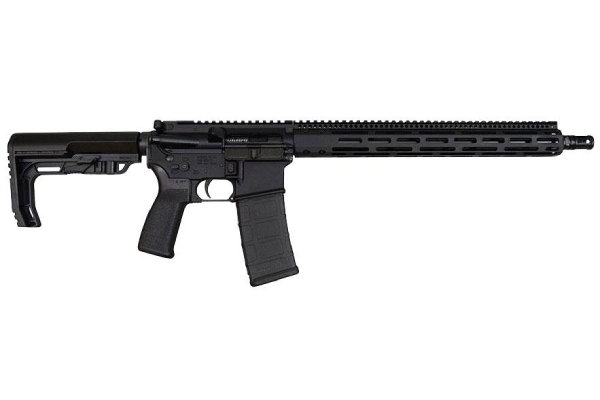
Radical Firearms AR-15 16" Barrel With MFT Minimalist Stock
Rifles
The consensus definition of a rifle is a long-gun with a barrel length greater than 20 inches. Again, this description falls into the category of "trap all term." There has been plenty of innovation with unique designs connected with long-guns throughout the generations. No other advancement in rifle design has contributed to the popularity and accuracy of a rifle is the Twist Rate. Given the extra inches added to the length of a barrel, this distinction increased accuracy by leaps and bounds. Rifling is the machined grooves cut in the internal bore of a rifle. When the bullet makes impact on these grooves, they produce a spin along the axis. After the bullet leaves the barrel, spin persists adding stability. Rifling advancements led to more aerodynamically efficient ammunition, which improved range, and again accuracy. Shooters often refer rifling to; as the twist rate. The twist rate indicates the distance it takes for a complete revolution. Shorter twist rates give the bullet greater velocity. Rifling saw its beginning in the 14th and 15th centuries; however, wide acceptance did not occur until the 19th century.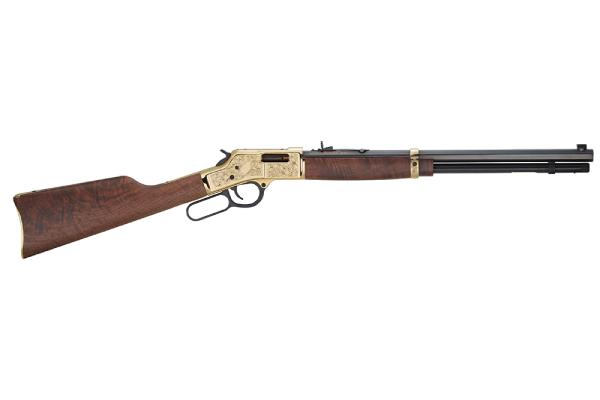
Henry Big Boy Deluxe Engraved 20" Barrel Lever Action Rifle
Recent Advancements in Twist Rate
- Polygonal; this rifling has its roots back several generations, with sharper edges and longer groove lines.
- Full Bore, Extended Range; used mostly in military applications.
- Gain Twist/Progressive; starts with a slow rate and increases down the bore. As the bullet moves down the bore, it gains momentum and increases its spin rate and torque.
Engraved.44 magnum, with a 1:38" twist. OMG! This rifle has a 20 inch barrel.
Final Thoughts
The question continues; what is the difference between a rifle and carbine? How important is the designation? The question is great around a campfire. Both the rifle and carbine have an iconic heritage. As long as manufactures insist on making the designation the question will always exist. IMHO, I will not make a purchasing decision based on a couple inches of barrel length. If I am hunting whitetail at 50 or 300 yards and a rifle fits my needs, I buy it. Shop All Long GunsShop All AR-15 Style Rifles
Shop AK-47 Style Rifles


 Loading...