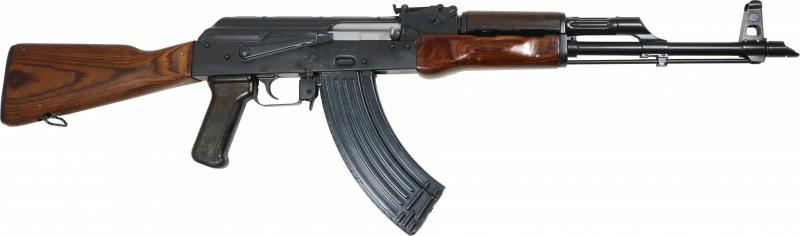
The video focuses on a James River Armory Polish AKM semi-automatic rifle with a 16-inch barrel, chambered in 7.62x39. This particular example uses laminated wood furniture, giving it a distinctive appearance. The hosts note that James River Armory has extensive experience rebuilding surplus parts kits into functional rifles. They emphasize that this rifle represents a Polish-made AKM pattern, closely aligned with standardized AKM rifles from countries like Romania and Russia. The discussion sets up the rifle as a semi-auto configuration that visually and mechanically reflects a classic Polish service-style AKM while remaining compliant for the U.S. market.
The rifle began life as a Polish AKM parts kit imported into the United States. It retains matching original Polish components such as the front trunnion, bolt carrier, and bolt. American-made parts include the receiver and barrel, while the original Polish wood furniture is preserved. The hosts highlight that the critical interacting components responsible for reliable function are forged Polish parts, similar to those found on military rifles. They point out that original Polish rifles like the Beryl and Archer have appeared in limited import runs, making this parts-kit build a practical way to approximate an original Polish service rifle configuration.
Starting at the muzzle, the rifle uses a standard 45-degree compensator. It is canted to counteract the typical up-and-right recoil impulse for right-handed shooters by pushing the muzzle down and to the left. The hosts note that this can be less ideal for left-handed shooters but remains a simple and effective device. The front sight is a standard AK pattern, adjustable for elevation via the front sight post and for windage by drifting the front sight assembly left or right. A traditional cleaning rod is mounted under the barrel, mainly for completeness and field use rather than everyday utility.
The Polish handguard features palm swells, which the hosts describe as improving the rifle’s feel in the hand. The original wood furniture provides a tactile grip and contributes to the rifle’s classic appearance. The rear sight is the typical AKM tangent sight, adjustable for elevation and marked in meters rather than yards, reflecting its European origin. This particular rear sight is not adjustable for windage. Overall, the combination of palm-swell handguards and traditional wood stocks is presented as comfortable and consistent with a service-style Polish AKM layout.
The discussion moves to the trigger guard and fire control group, which includes the trigger, hammer, and disconnector. The hosts describe AK triggers as generally very good, with a crisp break and minimal take-up. They mention the possibility of trigger slap on some AKs, where the trigger is forced forward against the shooter’s finger, but note no issues with this example. A demonstration highlights a short, distinct trigger pull and an audible, tactile reset. The safety is the standard large AK lever on the right side of the receiver: fully up for safe and fully down for fire. On original select-fire rifles, a middle position would indicate full-auto, but this rifle is semi-automatic only.
The rifle uses an unfinished, silver-colored bolt carrier that contrasts with the black finish of the receiver, giving it a distinctive look. This carrier is an original forged Polish part. The buttstock showcases the laminated wood construction, with visible layers and color variations that differentiate it from standard hardwood stocks. The hosts note that other variants may use traditional hardwood, but they favor the appearance of the laminate. Sling attachment points are located on the left side of the rifle and at the rear of the stock. The rifle also retains a bayonet lug, which is described as more of a classic feature than a practical necessity for most users.
In closing, the hosts describe the James River Armory Polish AKM as a semi-automatic AK-47 pattern rifle with laminated wood furniture and the essential components needed to run it immediately. They emphasize that it accepts standard AKM-pattern furniture, allowing users to swap in Romanian or other Polish wood sets, as well as various aftermarket options, though some may require minor fitting. The rifle is presented as a representative example of a Polish AKM built from surplus parts with a U.S.-made receiver and barrel. Viewers are encouraged to share their experiences with James River Armory Polish AK rifles in the comments or reviews.


















 Loading...