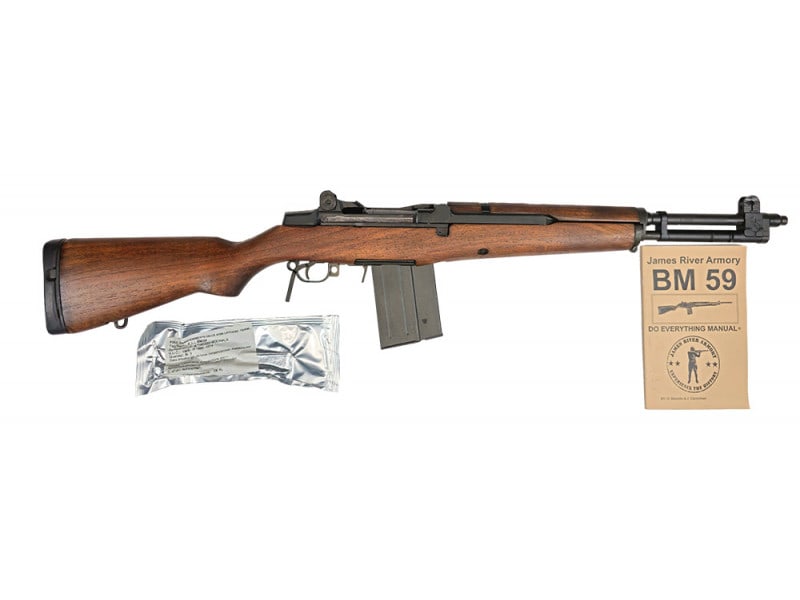
The video opens by framing the Beretta BM59 as what the M14 arguably should have been, then introduces Mark from James River Armory. He explains that JRA specializes in restoring and manufacturing historically significant rifles such as the M1 Garand, M14, and BM59, using new billet receivers and new barrels. The discussion traces U.S. small arms development after World War II, starting with the M1 Garand’s eight-round en bloc clip limitation. As NATO standardized on 7.62x51mm (.308), the U.S. sought a magazine-fed successor, leading to the M14, while Italy and Beretta pursued their own evolution that became the BM59. This early portion sets up the central comparison: two rifles sharing M1 Garand DNA but diverging in execution. The hosts emphasize that both platforms aim to modernize the Garand concept with detachable box magazines and 7.62 NATO, but Beretta’s approach incorporated more extensive mechanical refinements.
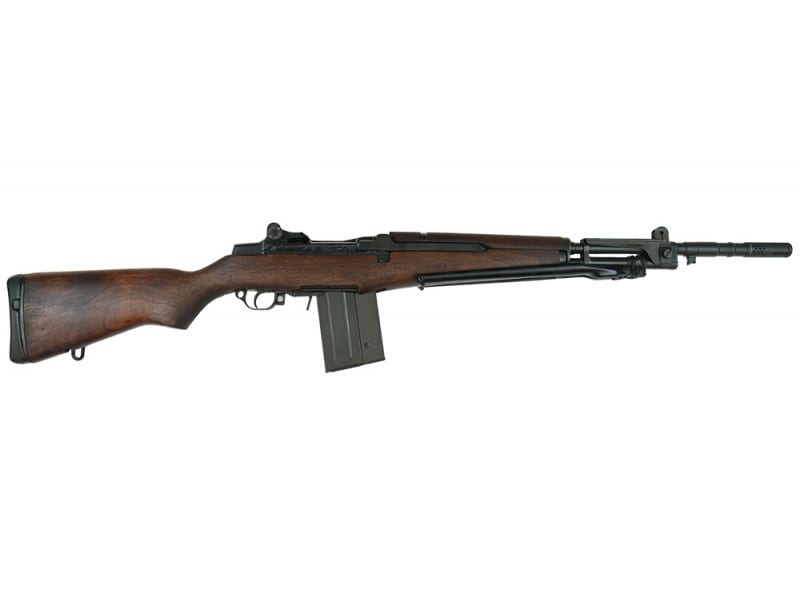
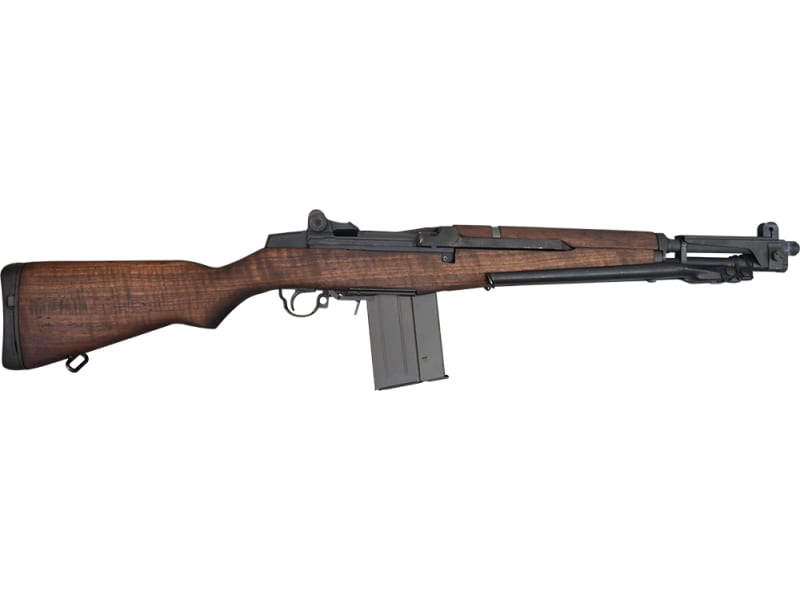
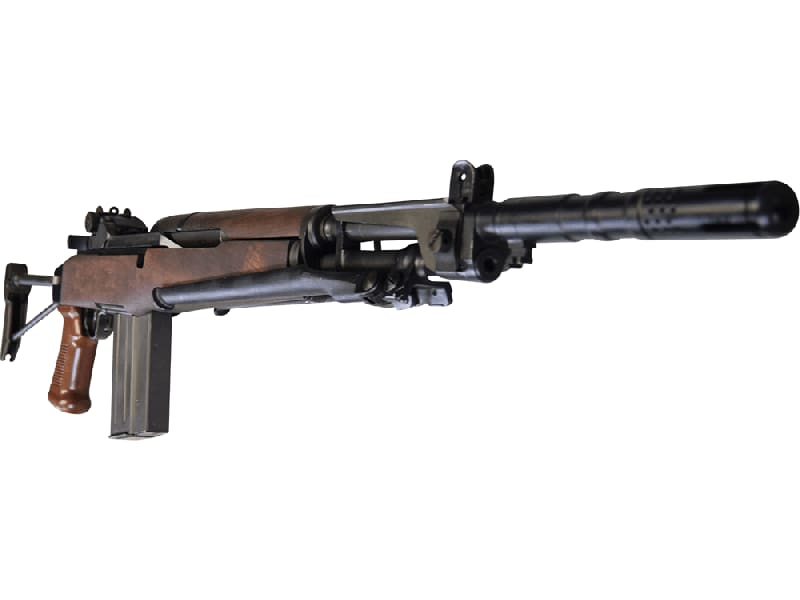
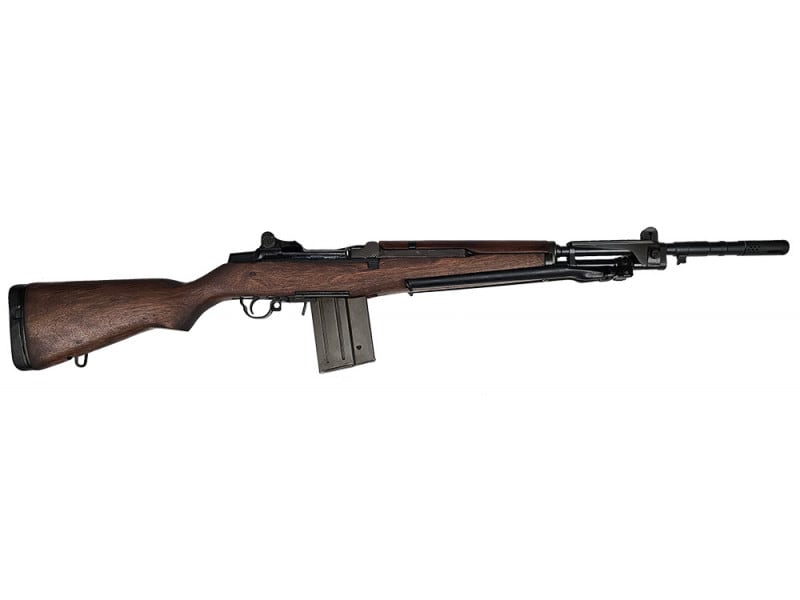
The focus shifts to specific engineering changes that distinguish the BM59 from both the M1 Garand and the M14. Mark describes how Beretta shortened the receiver and returned to a straight, inline operating rod instead of the Garand’s curved design. The BM59 uses a shorter, very reliable gas system and a softer direct-piston arrangement, contrasted with the M14’s harsher gas piston impulse. Beretta literally milled out surplus M1 Garand receivers to accept detachable magazines, then upgraded the operating components for improved function. A key highlight is the BM59’s advanced muzzle brake, which is credited with dramatically reducing felt recoil and muzzle rise. The hosts note that this combination of gas system and muzzle device makes the BM59 noticeably smoother to shoot. They also mention a canceled 1962 Remington contract that would have converted roughly two million M1 Garands into a BM59-style configuration using M14 magazines, suggesting how close the U.S. came to adopting a similar concept.
Attention turns to the BM59’s reliability and its lineage. The rifle retains the robust rotating-bolt system of the M1 Garand, a design that influenced later platforms including the AK-47. The hosts argue that the BM59 offers at least M14-level reliability while improving on gas system behavior and muzzle control. They place the BM59 in its postwar Italian context: Beretta operated in a devastated country with large stocks of surplus M1 Garands. Converting these rifles to 7.62x51mm NATO allowed Italy to align with NATO standards while leveraging existing inventory. The BM59 was marketed through foreign military sales as an economical upgrade path for nations already fielding Garands. Originally, the BM59 was a select-fire battle rifle. Shooters who have run it in full-auto describe it as surprisingly controllable, with behavior likened to a Browning Automatic Rifle. The hosts attribute this controllability to the refined gas system and effective muzzle device, which help keep the rifle on target during bursts.
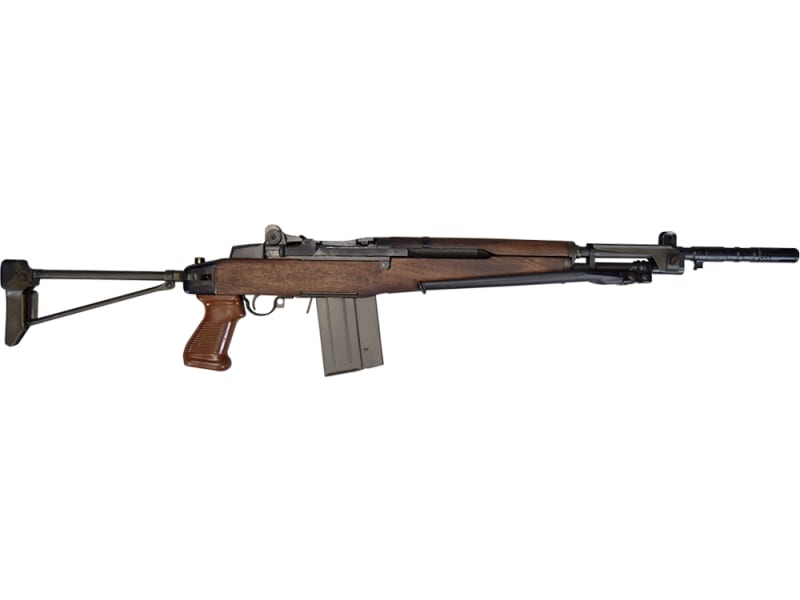
The conversation moves into how BM59 ideas influenced later M14 developments and specialized variants. During the Vietnam era, the U.S. attempted to tame the M14’s recoil and full-auto characteristics with versions like the M14E2. These rifles gained bipods, modified stocks, and recoil-control features that echo Beretta’s earlier solutions on the BM59. The hosts highlight that many of these changes essentially tried to retrofit BM59-style controllability onto the M14 platform. They then showcase unique BM59 variants designed for specific roles, including a side-folding stock model intended for Alpine ski troops and paratroopers. This compact configuration emphasizes ease of carry in mountainous terrain and during airborne operations, while still delivering 7.62 NATO firepower. The folding stock and specialized furniture demonstrate how the BM59 family was adapted to different mission profiles, contrasting with the more limited standard-issue configurations of the M14 during the same period.
A hands-on demonstration of a BM59 paratrooper-style folding buttstock shows how it deploys, locks, and shoulders. Despite the narrow steel buttplate, the shooters remark that it is more comfortable than expected, especially when combined with the pistol grip that improves control. The video then introduces the Beretta BM62, a semi-auto 7.62x51/.308 carbine developed around 1962 for law enforcement and foreign military sales. With a 17-inch barrel and tanker-style profile, it offers good accuracy and compactness but lacks the BM59’s effective muzzle brake, making it more of a handy truck or hog-hunting gun than a soft-recoiling battle rifle. To anchor the comparison, the M1 Garand is presented as the baseline design from which both the M14 and BM59 evolved. The shooter is coached through proper loading technique, including how to avoid the infamous “Garand thumb,” before firing at 100 yards to illustrate the original platform’s handling.
The hosts pause to explain the M1 Garand’s feeding system in detail, contrasting it with the detachable magazines of the M14 and BM59. The Garand uses an eight-round en bloc clip that is inserted into the internal magazine, then automatically ejected with a distinctive ping when empty. They emphasize that these clips are reusable and were a major advantage over the five-round stripper-fed bolt-action rifles fielded by many World War II adversaries. The discussion clarifies the often-confused terminology: a clip holds cartridges for loading, while a magazine is the device from which the rifle actually feeds during firing. In combat, the Garand’s combination of semi-automatic operation, eight-round capacity, and quick clip changes gave U.S. troops a significantly higher rate of fire and easier reloading under stress. This historical context underscores why both the M14 and BM59 sought to retain the Garand’s strengths while adding modern magazine-fed capability.
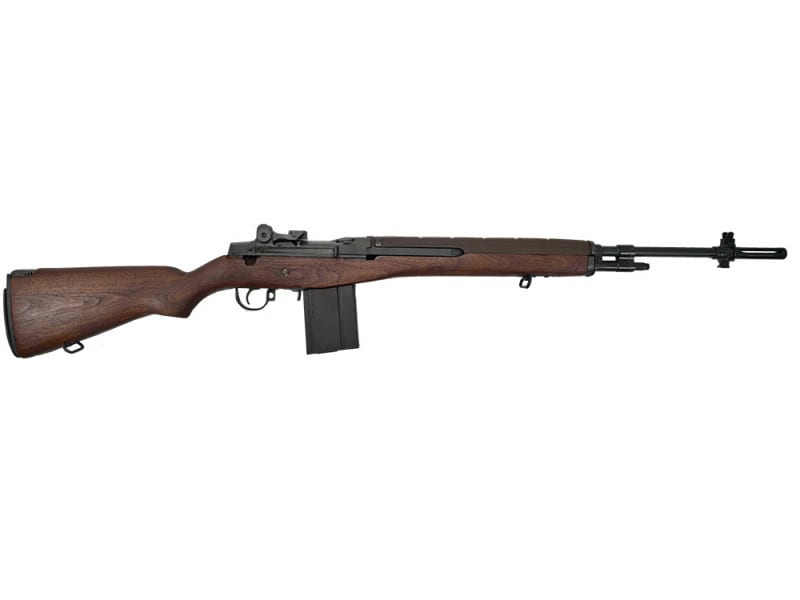
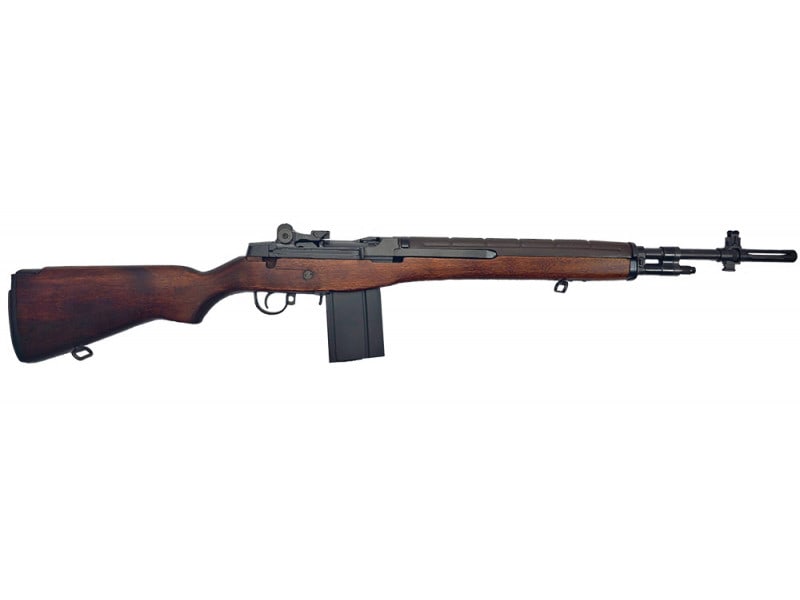
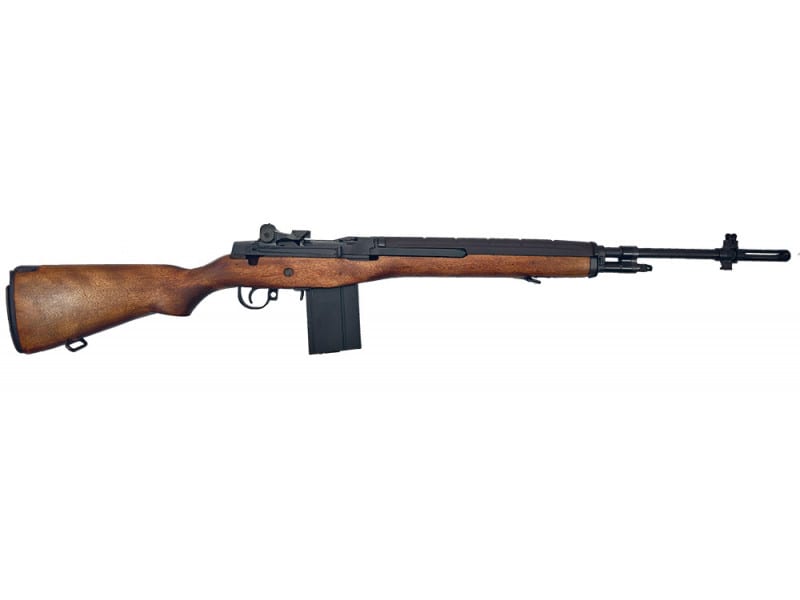
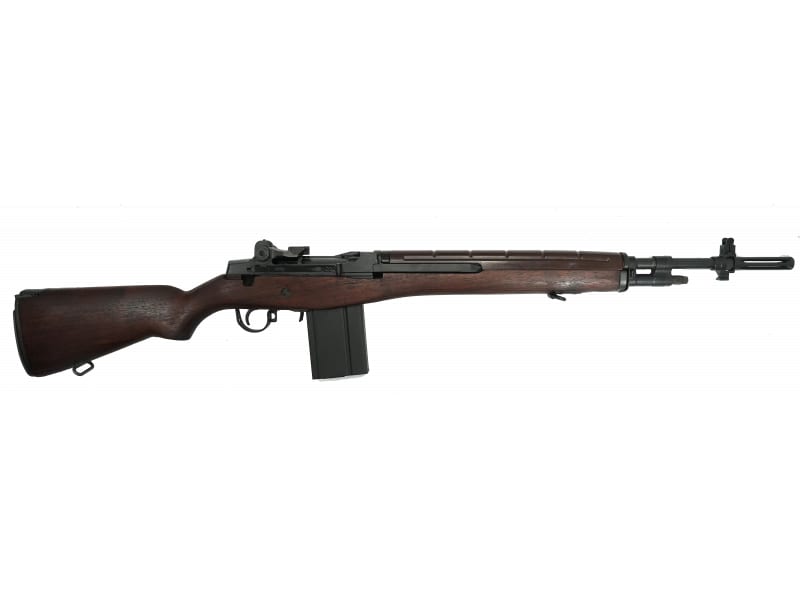
The video transitions from historical groundwork to live-fire evaluation of the M14. The hosts note that the M14 was officially adopted in 1957, with production ramping up around 1960, chambered in 7.62x51 NATO and equipped with a 20-round detachable box magazine. They mention that many users load these magazines to about 18 rounds to avoid potential reliability issues at full capacity. On the range, they fire the M14 and experience a minor feeding hiccup, which they attribute to a brand-new magazine rather than the rifle itself. Both shooters comment that the M14 exhibits noticeably more recoil than the M1 Garand, describing the impulse as sharper and more abrupt. This sets a baseline for later comparisons with the BM59 family, highlighting that while the M14 modernized the Garand concept, it did not necessarily improve perceived recoil or controllability in semi-automatic fire.
After shooting the M14, the hosts move to the BM59 to directly compare recoil and handling. Firing the BM59, they immediately note that it has significantly less felt recoil than the M14, despite both rifles being chambered in 7.62x51/.308. The BM59’s recoil is described as a smoother, more linear push rather than the M14’s abrupt snap. They attribute this difference to the BM59’s refined gas system and its sophisticated muzzle brake, which together reduce muzzle rise and soften the impulse. Reliability and ergonomics are said to be on par with the M14, but with a more pleasant shooting experience. The short-barrel BM62 “tanker” version is then introduced. With its 17-inch barrel and lack of a true muzzle brake or compensator, the hosts predict it will recoil more than the standard BM59, setting up a comparison to see how the compact configuration stacks against the full-length rifles and the M14.
The shooters conduct a more nuanced recoil comparison between a BM59 equipped with a muzzle brake and the M14. They conclude that while the total recoil energy feels broadly similar, the character of the recoil is very different. The M14 delivers a sharper, more abrupt impulse that can be fatiguing over extended shooting, whereas the BM59’s recoil feels like a smoother, more controllable push. This difference becomes more apparent when transitioning between targets or firing faster strings. They then test the BM59 paratrooper version, noting the narrow steel buttplate and the added control provided by the pistol grip. Despite the seemingly unforgiving stock design, recoil is less punishing than expected, again credited to the gas system and muzzle device. The short-barrel BM62 is also evaluated, and as anticipated, it exhibits more noticeable recoil due to the shorter barrel and lack of an effective brake, making it livelier than the braked BM59 but still manageable.
Focus returns to the BM59 paratrooper configuration, emphasizing its real-world ergonomics. The folding stock’s compactness is balanced by a pistol grip that enhances control during rapid fire, and the narrow buttplate proves surprisingly tolerable under recoil. A distinctive feature demonstrated is the BM59’s auxiliary winter or mitten trigger. This oversized secondary trigger allows the shooter to fire the rifle while wearing thick gloves, even using multiple fingers, without compromising function. On the range, the winter trigger works reliably and illustrates Beretta’s attention to cold-weather usability. As the shooting comparisons wrap up, both presenters clearly state a preference for the BM59 over the M14. They cite the BM59’s significantly smoother shooting characteristics, better recoil management, and versatile family of configurations, including the BM62 short-barrel carbine, the paratrooper with folding stock and pistol grip, and more traditional wood-stocked models that can deliver near match-grade performance.
In the final segment, the hosts discuss BM59 features that stood out during testing. They highlight the BM59’s notably good trigger, which they feel contributed to improved accuracy and easier recoil management compared to the M14. Stock options are revisited, from the paratrooper-style folding stock with pistol grip to classic fixed wood stocks that preserve a traditional battle rifle aesthetic. Despite one of the presenters having grown up with and been issued the M14, both agree that, given the choice today, they would rather shoot the BM59. The M1 Garand still receives praise as an exceptionally pleasant and historically important rifle, even decades after its introduction. The video closes with a shout-out to James River Armory for their work producing modern BM59s, M14s, and Garands, and a promotion for CFContest.com, a site offering chances to obtain iconic and unique firearms, followed by standard channel sign-off remarks.






















 Loading...