The video opens on the show floor at Enforce Tac 2025 in Nuremberg, Germany, immediately setting the scene as a professional trade event for military, law enforcement, and security professionals. The host explains that Enforce Tac is a European-focused show, meaning many of the firearms and pieces of equipment on display are tailored to European defense and police requirements and may never be imported into the United States. This context frames the coverage as a rare opportunity to see hardware that is usually only discussed in specialist circles or seen in official procurement photos. The introduction emphasizes that the goal is to walk viewers through notable new guns and gear, highlighting technical changes and design decisions rather than just giving a superficial booth tour.
After the initial greeting, the video reinforces that Enforce Tac is not a general consumer gun show but a tightly focused exhibition for defense, law enforcement, and military equipment. The host notes that many of the products are designed around European doctrines, procurement standards, and operational needs, which can differ significantly from those in North America. This includes rifles, carbines, sidearms, and specialized accessories that are often configured for specific national tenders or agency contracts. Viewers are reminded that some of these systems may never be commercially available in the U.S., underscoring the uniqueness of the coverage. This framing prepares the audience for a deep dive into platforms like the CZ Bren 3 and a new FN handgun, both of which are shaped by European government requirements.
The first major product focus is the CZ Bren 3, presented as the next evolution of CZ’s modern service rifle line following the Bren 2. The host positions the Bren 3 as a response to feedback from military and law enforcement users, as well as lessons learned from fielding the earlier generation. Rather than a cosmetic refresh, the Bren 3 is described as a comprehensive update that touches both external ergonomics and internal reliability. The video sets up a comparison between Bren 2 and Bren 3, promising to walk through what has changed and why those changes matter for professional users. This introduction makes clear that the Bren 3 is intended to compete in current and upcoming European procurement programs where modularity, durability, and user-friendly controls are critical.
Attention turns to the external redesign of the CZ Bren 3, starting with the buttstock. The new stock is described as being made from a carbon-fiber-reinforced polymer, a material choice aimed at reducing weight while maintaining rigidity and durability under hard use. It features four telescoping positions, allowing users to adjust length of pull to accommodate body armor, different shooting positions, or personal preference. Additional QD sling points have been integrated, giving operators more flexibility in how they mount single-point or two-point slings. These ergonomic refinements are presented as direct responses to user feedback, improving comfort and handling without compromising robustness. The stock’s updated geometry and materials signal CZ’s intent to modernize the Bren platform for current tactical expectations.
The video then examines the front end and receiver area of the Bren 3. Unlike the Bren 2’s monolithic upper, the Bren 3 moves to a non-monolithic configuration with a separate M-LOK handguard. This change increases modularity, making it easier to swap or service the handguard and to mount accessories exactly where needed along the rail. The upper receiver is designed to be universal, compatible with both traditional folding stocks and compact PDW-style telescoping stocks. This flexibility allows agencies to configure the rifle for standard infantry roles, vehicle crews, or specialized units needing a shorter overall length. The host underscores that these structural changes are not just cosmetic; they are meant to simplify maintenance, broaden configuration options, and align the Bren 3 with modern accessory ecosystems centered on M-LOK and modular upper assemblies.
Moving inside the rifle, the Bren 3 receives several key internal upgrades aimed at reliability and longevity. One of the headline changes is the addition of an extra ejector on the rotating bolt head. By using more than one ejector, the system can provide more consistent ejection patterns and maintain reliable operation even as components wear over time. The host explains that these changes are particularly important for military and law enforcement users who may fire high round counts in adverse conditions. The internal redesign is framed as a way to reduce stoppages, improve extraction and ejection under fouling, and keep the rifle running smoothly across a wider range of ammunition and environmental variables than the previous generation.
The discussion of internals continues with a closer look at the bolt carrier group. Beyond the additional ejector on the bolt head, the Bren 3 incorporates a kinetic mass within the bolt carrier designed to mitigate bolt bounce during full-auto fire. Bolt bounce can cause reliability issues in automatic modes, so this added mass helps ensure that the bolt stays locked when it should, improving consistency in burst or sustained fire. The host highlights this as a feature clearly aimed at professional users who rely on select-fire capability. Together with the revised ejector setup, these carrier changes show that CZ has focused on making the Bren 3 more forgiving and stable under high rates of fire, aligning it with the expectations of modern service rifles used in demanding operational environments.
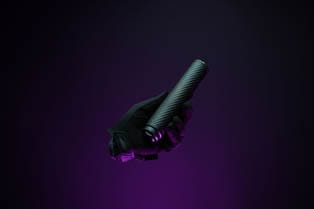
Durability is further addressed through a replaceable steel guide rail for the bolt’s cam pin. Instead of the cam pin wearing directly against the aluminum or polymer of the upper, it now rides on a steel insert that can be replaced if it becomes worn. This design extends the service life of the upper receiver and simplifies long-term maintenance for armories. The video also notes that CZ is offering a 300 AAC Blackout variant of the Bren 3, including a version with an integrated suppressor. This configuration is tailored for suppressed use, particularly in roles requiring reduced sound and muzzle flash, such as special operations or law enforcement tactical teams. The mention of 300 Blackout underscores the platform’s adaptability to different mission profiles and ammunition types beyond standard 5.56 NATO.
After covering the Bren 3’s external and internal changes, the video transitions to another major European manufacturer: FN. The host frames this shift as moving from a modernized rifle platform to a new handgun developed in response to specific government requirements. This segment underscores how Enforce Tac serves as a venue where companies present not just catalog items but also contract-driven designs tailored to national tenders. The transition reinforces the theme that much of what is shown at Enforce Tac is shaped by formal procurement processes, with features and ergonomics often dictated by detailed government specifications. Viewers are prepared to see how FN has interpreted these requirements in a fresh pistol concept aimed at the German market.
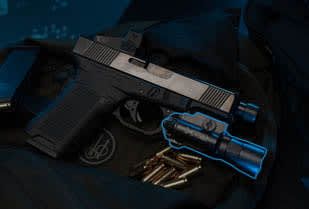
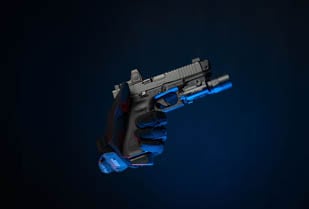
The spotlight turns to a new FN handgun reportedly developed at the request of the German government. Rather than being a generic commercial pistol, this design is presented as a response to German law enforcement or military procurement criteria. The host notes that the pistol’s layout and control scheme are clearly influenced by those requirements, aiming to satisfy both right- and left-handed shooters and to streamline manipulation under stress. While specific model naming may not be emphasized, the context makes it clear that FN is positioning this handgun as a contender in German tenders, potentially competing with established service pistols already in use. The segment sets the stage for a closer look at the pistol’s ambidextrous controls, slide stop placement, and other distinctive features.
A key focus of the FN handgun segment is its fully ambidextrous control layout. The pistol features mirrored controls on both sides, allowing left- and right-handed shooters to operate the gun without compromise. The slide stop is positioned further to the rear than on many traditional designs, enabling shooters to release the slide with their thumb without significantly altering their firing grip. This rearward placement is highlighted as a deliberate ergonomic choice to speed up reloads and reduce the need for grip shifts under stress. The host explains that such details are often specified or strongly influenced by government end users, who want a pistol that can be efficiently run by a wide range of personnel with minimal retraining or adaptation.
The FN pistol also introduces a distinctive pull-style magazine release, differing from the more common push-button or paddle designs. This pull-type control is described as an unusual but intentional solution, likely aimed at balancing security against accidental activation with ease of use once the shooter is trained. The trigger system is a two-part design incorporating an integrated safety, similar in concept to other modern striker-fired pistols that require deliberate trigger engagement. This built-in safety helps prevent unintentional discharges if the trigger is bumped or snagged. Together, the ambidextrous layout, rearward slide stop, pull-style mag release, and two-part trigger safety illustrate how FN has engineered the pistol to meet stringent safety and handling requirements set by German authorities.
With the technical features outlined, the video situates the new FN handgun within the broader European service pistol landscape. The pistol is implicitly compared to other contenders for German and European contracts, where ambidextrous controls, robust safety mechanisms, and intuitive ergonomics are increasingly standard. The host suggests that FN’s design choices reflect a careful reading of German procurement expectations, aiming to offer a sidearm that can integrate smoothly into existing training programs while providing modern enhancements. This segment reinforces the idea that Enforce Tac is where such contract-focused designs are first shown publicly, giving viewers an early look at firearms that may soon be carried by European police or military units but may never be widely sold on the civilian market.
As the Enforce Tac coverage winds down, the video looks ahead to continued reporting from the IWA OutdoorClassics show, also held in Nuremberg. The host indicates that after highlighting key military and law enforcement products like the CZ Bren 3 and FN’s new handgun, the plan is to move into IWA’s broader environment, which includes both professional and civilian-oriented gear. This transition underscores that the content will not stop with Enforce Tac’s closed, trade-focused halls but will expand into IWA’s larger exhibition spaces. The audience is invited to follow along as the creator shifts from tightly controlled defense exhibits to a venue where filming policies are more relaxed, allowing for more spontaneous and wide-ranging coverage of firearms, accessories, and outdoor equipment.
Near the end of the video, the focus shifts explicitly to IWA and its approach to media coverage. The host repeatedly expresses appreciation for the fact that IWA allows unrestricted filming in the hallways and throughout much of the venue. This openness is contrasted with more restrictive policies at some trade shows, where cameras may be limited to certain areas or require special permissions. The creator emphasizes that being able to film freely makes it easier to capture candid moments, detailed product shots, and behind-the-scenes views that would otherwise be difficult. This segment sets an enthusiastic tone for the upcoming IWA coverage, highlighting that the event’s media-friendly stance directly benefits viewers by enabling more comprehensive and dynamic content.
Building on the praise for IWA’s policies, the host outlines plans to move around the entire venue, including hallways and common areas, with a camera rolling. The idea is to take advantage of the lack of filming restrictions to document not just booth displays but also the overall atmosphere of the show. The creator mentions the intention to roam, explore, and capture a wide variety of footage, from product close-ups to broader shots of the exhibition environment. This freedom is framed as a key ingredient in producing engaging coverage, as it allows for spontaneous encounters with exhibitors, unexpected product finds, and more natural transitions between segments. The repeated emphasis on unrestricted movement underscores how unusual and valuable this level of access is for content creation.
The host repeatedly stresses that the ultimate goal of this extensive filming at IWA is to create enjoyable, high-quality content for viewers. Phrases about having a good time while making great content are echoed several times, reinforcing a dual focus on both creator experience and audience value. The plan is not just to document products mechanically but to present them in a way that is entertaining and informative. This includes capturing the energy of the show, the variety of exhibitors, and the nuances of new firearms and equipment. The segment makes clear that the combination of open filming policies and a deliberate content strategy is intended to deliver a richer viewing experience than would be possible under tighter restrictions.
As the IWA-focused outro continues, the host uses a recurring motif to signal readiness: mentioning having coffee and a microphone in hand. This simple checklist—coffee for energy, microphone for audio—serves as a lighthearted way to show that the creator is geared up for a long day of filming. The phrase “let’s do this” is repeated as a kind of informal catchphrase, marking the transition from planning to action. These lines convey enthusiasm and a sense of momentum, suggesting that the upcoming coverage will be fast-paced and extensive. While no specific firearms or accessories are discussed in this moment, the emphasis on preparation and mindset underscores the commitment to capturing as much of the event as possible for the audience.
The video closes with a short, somewhat glitchy sequence where the host’s intro-style phrase loops and truncates. Variations of “got my coffee, got my mic, let’s do this” repeat several times, sometimes partially cut off or overlapped, indicating an audio or editing hiccup. There are also brief mentions that the microphone is ready, reinforcing the idea of a final mic check before diving back into filming. No new information about firearms, calibers, optics, or suppressors is introduced here; instead, the segment functions as a stylized outro and transition into future content. Despite the technical stutter, the repeated lines maintain the upbeat tone, ending the video on a note of enthusiasm and readiness for continued coverage at IWA.












 Loading...