The video opens with an overview of Geissele’s AR-15 and SCAR trigger lineup, laying out how the models are positioned from more economical to premium duty offerings. The hosts start around the G2S, which typically sits near a $170 MSRP, and then move up through the SSA, SDC, SD3G, and into the Super Duty and SCAR-focused triggers that climb into the $240–$330 range. They emphasize that all of these are built on Geissele’s reputation for reliability and consistent pull weights, generally in the 2.8–4.5 lb window depending on model. Early on, the discussion frames the video as a practical comparison for shooters trying to decide which Geissele trigger best fits their AR-15 build, whether for general use, duty, or competition, and why some models command significantly higher prices despite similar advertised pull weights.
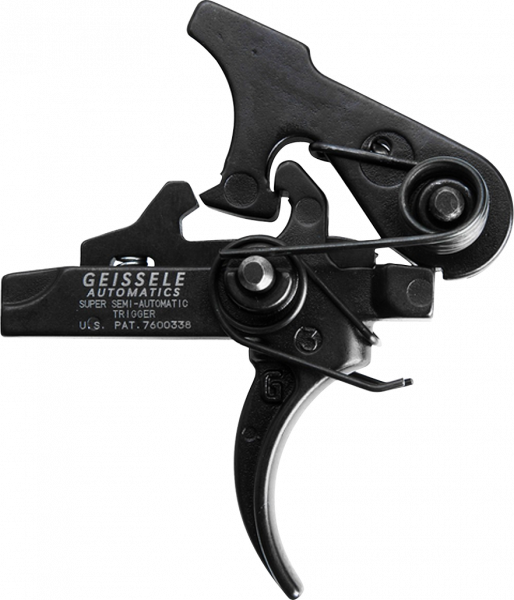
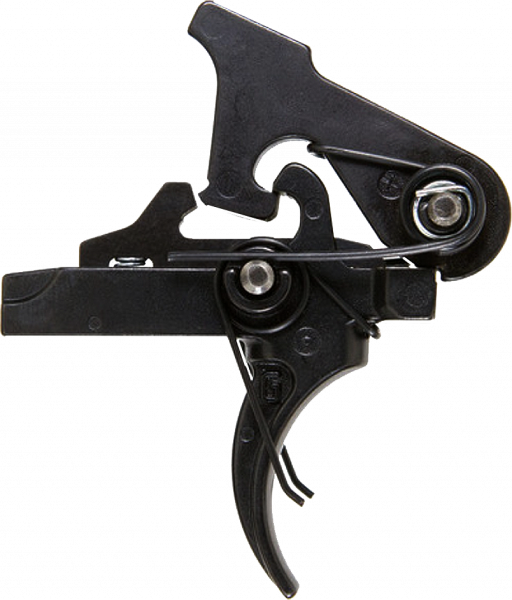
The focus then narrows to the G2S and SSA, presented as the core two-stage duty-style triggers in the Geissele lineup. The G2S is highlighted as the budget-conscious choice, offering much of the SSA’s feel and reliability at a lower price point, around $170 MSRP. Both are described as two-stage triggers with a total pull weight around 4.5 lb, suitable for defensive or duty rifles where a clear first stage and predictable break are valued. The hosts explain how the G2S slightly simplifies construction compared to the SSA to save cost, while the SSA is treated as the benchmark Geissele combat trigger. They compare the curved bow geometry, the consistent wall before the break, and how these triggers balance safety, control, and speed for shooters who want a robust, mil-spec-compatible upgrade over stock AR-15 fire-control groups.
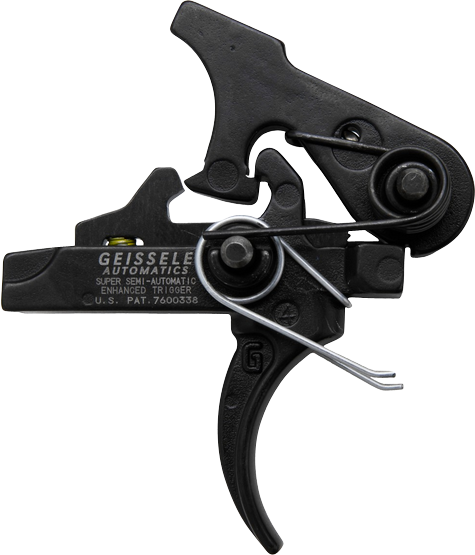
Next, the SSA-E enters the discussion as a refinement of the SSA concept, tuned for enhanced precision. The hosts note that the SSA-E maintains the familiar two-stage architecture but drops the overall pull weight to about 3.5 lb, making it more attractive for shooters prioritizing accuracy and a cleaner break. They describe how the first stage is light and smooth, leading into a very crisp second stage that feels more like a precision rifle trigger while still retaining Geissele’s duty-grade reliability. Comparisons are drawn between the SSA’s slightly heavier, more combat-oriented feel and the SSA-E’s more refined, lighter break that benefits longer-range or more deliberate shooting. The video emphasizes that despite the lighter weight, the SSA-E is still robust enough for serious use, giving users a middle ground between a pure duty trigger and a competition-only design.
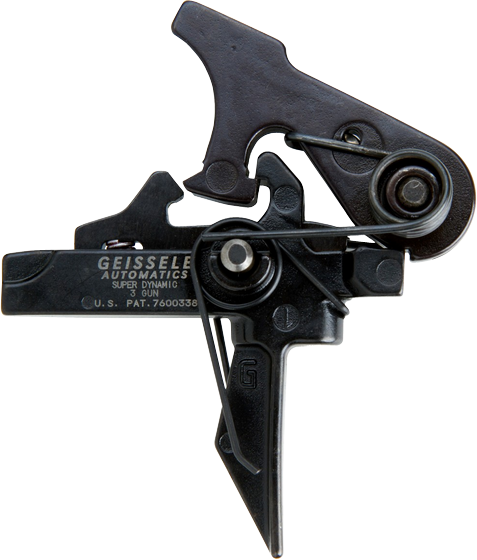
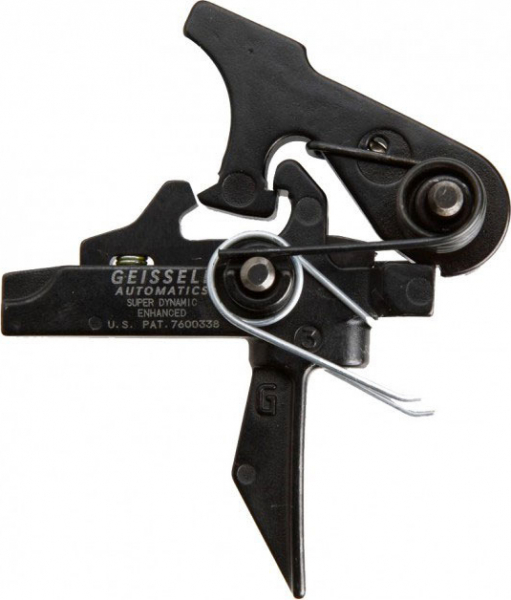
The conversation then shifts to Geissele triggers with different bow shapes, such as the Super Dynamic Combat (SDC) and SD3G. These models introduce flat or hybrid-style trigger bows instead of the traditional curved profile, changing how the finger contacts and presses the trigger. The SDC is portrayed as a combat-oriented option with a flat bow that some shooters find offers better leverage and a more consistent finger placement. The SD3G, by contrast, is described as a fast, competition-focused trigger with a very short, almost blended two-stage feel that many experience as close to a single-stage in use. Pull weights around 4 lb are mentioned, with emphasis on rapid follow-up shots and minimal perceived travel. The hosts explain that these bow variations are not just cosmetic; they meaningfully alter the feel, control, and speed of the trigger press for different shooting styles.
A significant portion of the video is devoted to clearing up confusion about single-stage versus two-stage triggers, especially within the Geissele lineup. The hosts repeatedly stress that all SSA variants, including models that feel very short and crisp, are technically two-stage triggers. They describe how the first stage can be so minimal on some versions that shooters might mistake them for single-stage designs, but mechanically there is still a distinct take-up before the wall. The explanation covers how a true single-stage trigger has essentially no deliberate first-stage travel, breaking as soon as pressure is applied, whereas a two-stage provides a defined initial movement followed by a second-stage break. This clarification helps viewers understand why marketing or user impressions sometimes label certain Geissele triggers as single-stage in feel, even though their internal geometry and operation remain two-stage for control and safety.
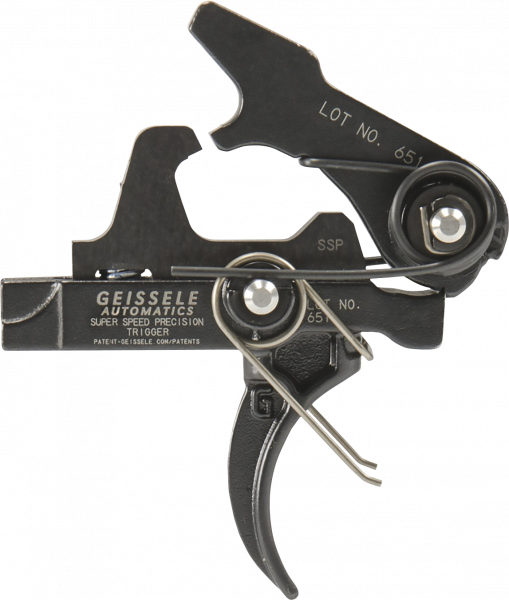
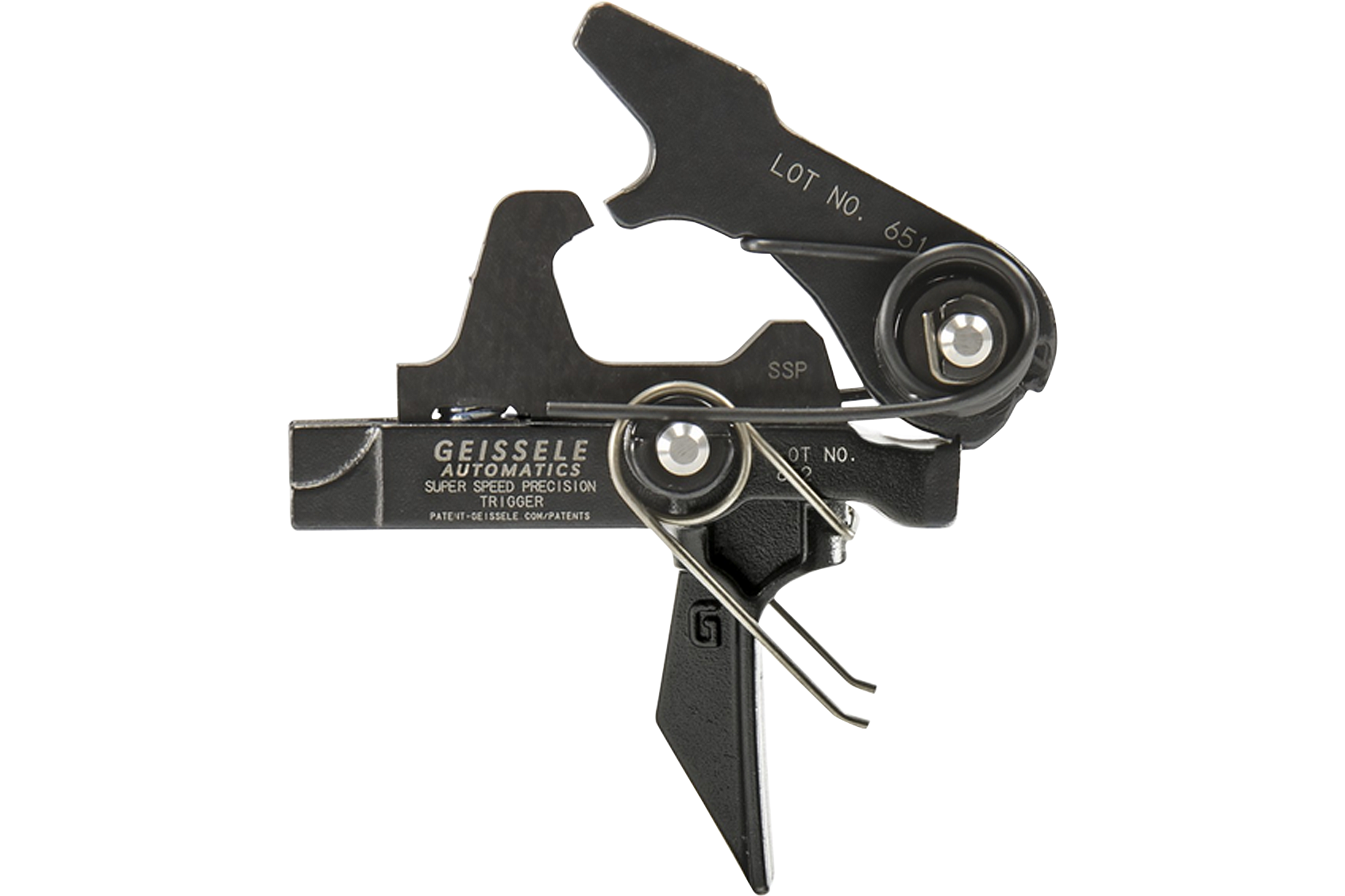
The hosts also touch on the Geissele SSP and other AR-platform variants, broadening the comparison beyond the core SSA family. The SSP is highlighted as a true single-stage trigger option in the Geissele catalog, with a pull weight in the 3.5–4.5 lb range and a very direct, no-take-up feel aimed at shooters who prefer immediate breaks. They mention that Geissele produces triggers for platforms like the Tavor and X95 as well, underscoring the brand’s reach beyond standard AR-15 lowers. Within the AR context, the SSP is contrasted with the two-stage SSA and SSA-E, giving viewers a clear choice between a crisp single-stage and more traditional two-stage designs. This section reinforces how Geissele segments its products by feel, application, and platform compatibility, helping users match a trigger to their specific rifle and shooting style.
Attention then turns to the Super Duty line, including triggers referred to as SSX or SAX, which are designed with internal enhancements for hard-use, combat-oriented rifles. The hosts explain that these Super Duty triggers are beefed up inside compared to standard models, with geometry and materials optimized for reliability under adverse conditions and high round counts. While pull weights remain in a familiar 3–4.5 lb window, the emphasis is on durability and consistent ignition rather than shaving every possible ounce of pull weight. The discussion highlights that these triggers are intended for serious duty or defensive roles, where reliability and robustness outweigh the marginal gains of an ultra-light competition trigger. Viewers are encouraged to consider whether their build is more duty-focused or range-focused when deciding if the extra cost of the Super Duty internals is justified.
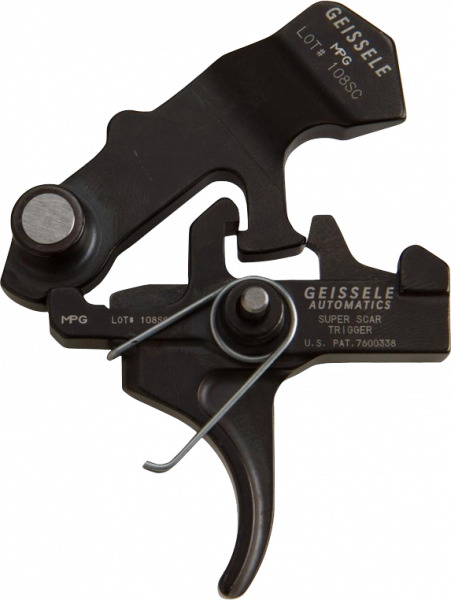
The video also covers the Geissele Super SCAR trigger, using it as a key example of why some models reach the $330 price range. The hosts note that SCAR triggers require different engineering and reinforcement due to the unique operating characteristics and recoil impulses of the FN SCAR platform. Internally, these triggers are further strengthened and tuned for reliable operation in a rifle known to be harder on fire-control components than a standard AR-15. The pull weights still fall in the familiar 3–4.5 lb band, but the cost reflects specialized design, materials, and testing. The hosts question and then justify the price difference compared to lighter, cheaper AR triggers, explaining that platform-specific demands and combat reliability drive the premium. This helps viewers understand why a SCAR owner might reasonably invest more than an AR owner in a Geissele trigger.
As the comparison progresses, the hosts repeatedly tie each trigger model back to practical use cases. The SD3G and similarly fast-feeling triggers are framed as ideal for competition or high-speed shooting, where minimal travel and rapid reset are prized. The SSA and G2S are positioned as workhorse duty or defensive triggers, balancing safety, a clear two-stage feel, and robust construction. The SSA-E and comparable lighter two-stage options are recommended for precision-oriented builds where a cleaner, lighter break aids accuracy without completely sacrificing durability. Super Duty and SCAR triggers are reserved for the most demanding combat or hard-use environments. Throughout, the hosts encourage viewers to think about their rifle’s primary role—home defense, patrol, competition, or general range use—before deciding which Geissele trigger offers the best blend of feel, weight, and reliability for that specific application.
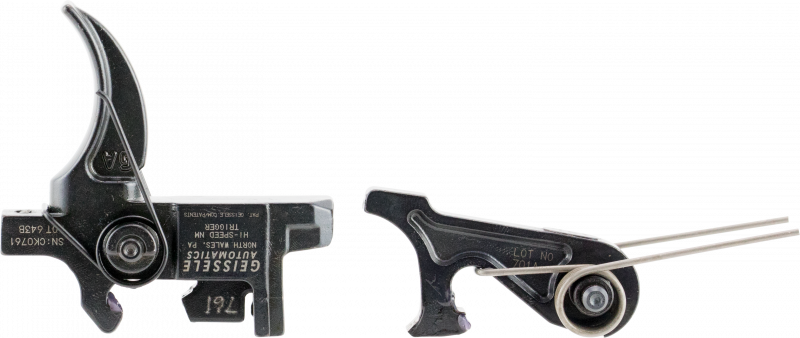
Near the end, the hosts briefly step outside the Geissele catalog to acknowledge other AR-15 trigger brands. They mention competitors such as Trigger Tech, Timney, Hyperfire, and a name or brand referred to as Guy, noting that many shooters cross-shop these options against Geissele products. Rather than diving into detailed comparisons, they invite viewers to suggest additional triggers and brands that should be covered in future videos. The comment section is presented as a place for feedback on favorite triggers, desired head-to-head tests, and real-world experiences. This segment underscores that while the video focuses on Geissele, the broader trigger market is diverse, and user input will help shape upcoming content that may pit Geissele models directly against other popular aftermarket AR-15 triggers.
The video closes with a series of repeated outro lines. The hosts ask if there is anything else to add, conclude that all key points have been covered, and then thank viewers for watching and for their business. They express genuine appreciation for customers and the audience, emphasizing gratitude for continued support. A religious blessing is offered with the phrase “God bless,” followed by a promise to see viewers “on the next one,” signaling more firearm and trigger content to come. The final seconds consist of this sign-off being echoed and gradually truncated, functioning purely as a stylistic outro without adding new technical information. The overall tone is warm and appreciative, reinforcing the channel’s connection with its audience and inviting them back for future videos.





















 Loading...