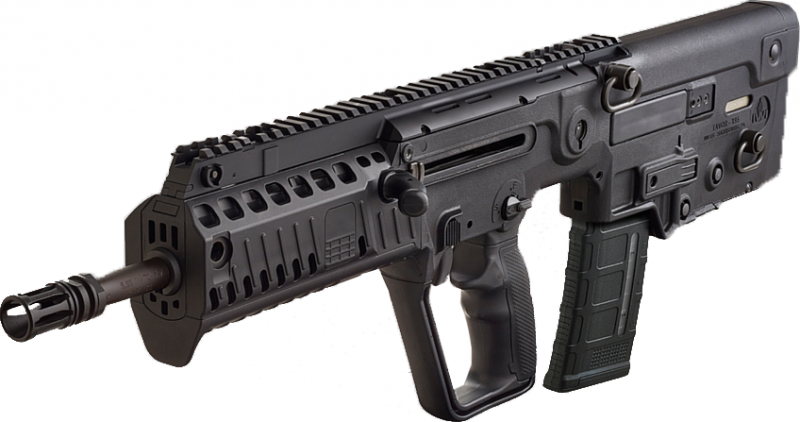
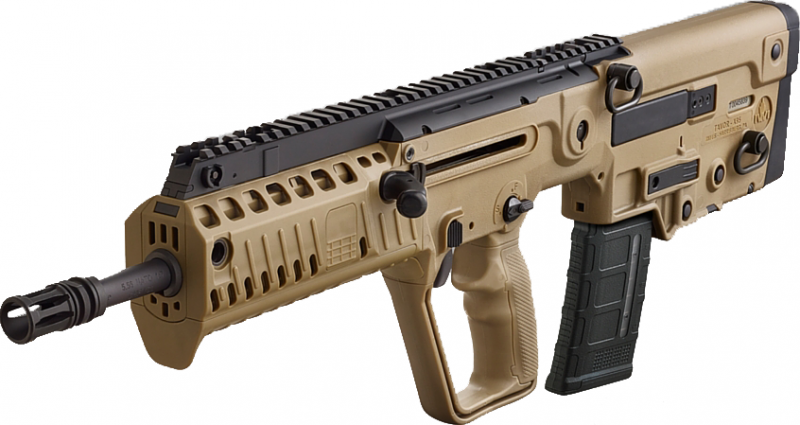
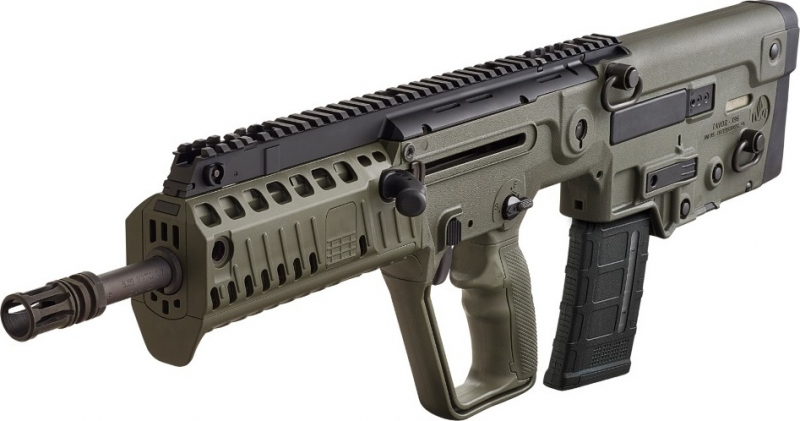
The discussion centers on the IWI Tavor X95, a 5.56 NATO bullpup rifle that has become closely associated with military units worldwide, especially the Israeli Defense Forces. The original Tavor design dates to 1995, was fielded in 2001, and was later updated in 2009 into the X95 configuration shown here. The rifle has a distinctive, futuristic appearance but is described as highly functional and capable. It uses a long-stroke piston-driven operating system, which is emphasized as a proven and reliable design choice. The hosts frame the X95 as a refined evolution of the earlier Tavor concept, intended to maintain combat effectiveness while improving handling and user-focused features.
Attention turns to the X95’s controls and built-in features. The rifle includes cutouts on both sides of the receiver, allowing the charging handle to be swapped for ambidextrous use. Integrated front and rear sights are built directly into the top Picatinny rail, so the rifle can be used effectively without adding separate iron sights. The hosts note that mounting an optic on the top rail will likely cover these sights, but they remain available as a backup. Removable side panels reveal additional Picatinny slots at the 3, 6, and 9 o’clock positions for mounting accessories such as lights or lasers. Rail covers are included so unused sections can be kept smooth and protected.
The conversation moves to the barrel and overall layout. The X95 uses a 16-inch barrel, yet the bullpup configuration keeps the overall length compact while still allowing near full powder burn from 5.56 ammunition and remaining compliant with regulations. The hosts point out the extensive use of polymer in the chassis, with the action located at the rear and the trigger group forward. Polymer is presented as a way to keep weight manageable; an all-metal build of this size would be heavy and awkward. Key structural areas, such as the Picatinny rail and portions of the handguard under the covers, are metal. Overall, the rifle feels solid, durable, and not like a loosely assembled design, and it has performed well in their shooting experience.
Focus shifts to the trigger and its unique characteristics in a bullpup layout. Because the trigger group is located toward the rear of the rifle, a long connecting bar links the forward trigger to the sear. This can introduce additional movement compared to a conventional AR-style trigger. The stock X95 trigger is described as having some initial take-up or “mush,” similar to the feel of a double-action pistol starting from hammer down, followed by a distinct wall and a clean break just past that point. The reset is characterized as both audible and tactile. The hosts note that, despite the bullpup linkage, the factory trigger feels good out of the box. They also mention that aftermarket options exist, such as a Geissele Tavor trigger specifically for the X95 platform, for users who want a different feel.
The enlarged trigger guard on the X95 is highlighted, large enough to accommodate a full hand and gloves, which supports use in varied conditions. The rifle includes a substantial rubber buttpad, which helps mitigate the already modest recoil of the 5.56 cartridge and contributes to comfortable shooting. Ergonomics are emphasized as a major focus of this X95 iteration. Compared to the earlier TAR-21, also known as the SAR, the X95 is described as having more user-oriented refinements rather than being a purely utilitarian combat weapon. Controls and features are designed to be more accessible and comfortable, reflecting lessons learned from the original Tavor’s service use and feedback from shooters.
The hosts summarize the key specifications and offer comparative impressions. The X95 features a 16.5-inch barrel, hidden Picatinny slots under removable panels, and integrated front and rear sights. It is a 5.56 bullpup rifle weighing approximately 7.9 pounds, with a 1-in-8 twist rate barrel. The design is described as compact and distinctive, with many built-in features that reduce the need for additional parts. In a comparison to the Steyr AUG, one host states a preference for the X95, citing magazine compatibility, integrated features, and oversized controls as advantages. The AUG’s quick-change barrel system is acknowledged as a benefit the X95 lacks, but overall the X95 is characterized as the superior bullpup in this discussion. Viewers are invited to share their own experiences with the IWI Tavor platform.





















 Loading...